
During the worst months of the COVID-19 pandemic — when many New Jersey residents suffered untimely job losses — accessing jobless benefits proved difficult due to an outdated and overwhelmed unemployment system.
Since then, state officials, with the help of federal grants, have completely overhauled the unemployment application process, work that includes making applications available in a more mobile-friendly format.
Most of the questions on the application have also been rewritten or removed, and applications can now be saved and revisited later without having to start from scratch.
A Spanish language version of the application is also now available, and identity-verification and call-center improvements have also been made, officials said.
Easing stress
As part of the rollout of these and other “human-centered” changes, officials stressed that improving access to jobless benefits is a key part of making New Jersey more equitable, including by improving services for those looking for work.
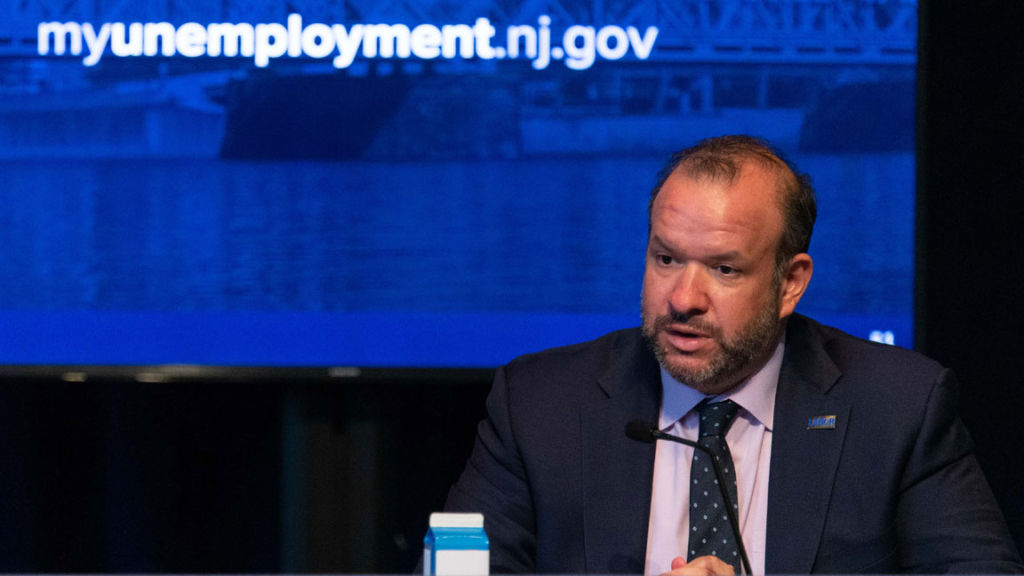
“Being between jobs is stressful enough,” said state Labor Commissioner Robert Asaro-Angelo during a news conference held earlier this week to highlight the recent changes to New Jersey’s unemployment application process. “Any time someone loses their job, it’s an emergency for them, their families and their community.”
“We are completely flipping the status quo of government service on its head,” he said.
Meanwhile, what’s been done to overhaul New Jersey’s unemployment application process — which officials said has already dramatically sped up the time it takes to complete applications and, in turn, increased how many residents are completing their applications in one day — is also being looked at as a national model.
“We want to help other states come along,” Gov. Phil Murphy said during the news conference.
Several years ago, New Jersey was selected as one of two states to participate in a national unemployment pilot program led by the U.S. Department of Labor. Last year, New Jersey was also awarded an $11.25 million federal grant to undertake changes to its unemployment system, including improving the application process.
“By spearheading a more modern and reliable Unemployment Insurance program, Governor Murphy and Labor Commissioner Asaro-Angelo are setting a national example for how to make sure unemployment benefits are easily accessible for workers who have hit hard times and are looking for re-employment,” said acting U.S. Labor commissioner Julie Su.
Old system overwhelmed
In all, more than 2 million New Jersey residents applied for unemployment benefits following the onset of the COVID-19 pandemic in early 2020.
And while New Jersey won praise at the time for its ability to distribute billions of dollars in benefits to its out-of-work residents, state lawmakers were also inundated with complaints from constituents unable to access benefits as they struggled to navigate an unemployment system that had long been identified as overdue for technological upgrades.
‘That gives us confidence that the application is ready to withstand an event like that should we ever see one — although, we of course hope that we don’t.’ — NJ Chief Innovation Officer Dave Cole
Part of the issue was an application process that had last been overhauled in 2008 — a time when smartphones were still relatively new technology.
Looking back at that time during the news conference earlier this week, Murphy said “too many families saw unacceptable delays.”
“In turn, many were deprived of their hard-earned and desperately needed benefits, when they needed them the most,” he said. “We are working hard to make sure that never happens again, both in New Jersey, and hopefully soon, across America.”
Preparing for next crunch
New Jersey’s revamped unemployment application debuted last month and some of the changes were discussed by Asaro-Angelo during a recent appearance before the Senate Budget and Appropriations Committee as part of its ongoing review of Murphy’s proposed budget for the fiscal year that begins July 1.
And while unemployment remains relatively low by historical standards in New Jersey, Murphy and Su suggested now is the time to overhaul things like the benefit application process to ensure the system is ready to handle the next crush, whenever that comes.
Meanwhile, recent testing of the unemployment system conducted to gauge its overall resiliency has replicated the volumes experienced during the peak pandemic, said Dave Cole, the state’s chief innovation officer.
“That gives us confidence that the application is ready to withstand an event like that should we ever see one — although, we of course hope that we don’t,” Cole said.
