
 Credit: Edwin J. Torres/ Governor's Office
A day after New Jersey Transit’s board authorized fare hikes for the first time in nearly a decade, the cash-strapped bus and rail agency’s financial woes were a key topic for lawmakers leading an ongoing review of Gov. Phil Murphy’s latest state spending plan.
Perhaps most controversial in his nearly $56 billion proposed budget, Murphy is asking lawmakers to go along with a call to hike taxes on the state’s highest-earning corporations and earmark the new revenue to help support NJ Transit’s shaky annual spending.
Doing so, Murphy has argued, would help put the statewide mass-transit agency on more solid fiscal footing as it continues to face rising costs, even as ridership has yet to recover to pre-pandemic levels.
Moreover, significant federal aid the agency has received to offset the effects of the pandemic will run out in a little over a year, creating a wide projected gap, according to agency budget documents.
‘Most companies really look to … what’s the labor force and the access to the labor force? And we provide that access.’ — NJ Transit president CEO Kevin Corbett
Even with revenue from fare hikes approved unanimously by the agency’s board on Wednesday — a 15% increase that goes into effect July 1, followed by 3% hikes each year thereafter — the agency would still face a more than $750 million gap starting in the 2026 fiscal year unless Murphy’s proposed tax hike is approved, according to the budget documents.
Dedicated funding is ‘crucial’
NJ Transit president and CEO Kevin Corbett testified before the Senate Budget and Appropriations Committee on Thursday and said establishing dedicated funding for his agency is “crucial to maintaining frequent and reliable service for all the customers who depend on it every day.”
“While I know this remains a proposal at this time, the most important thing from my perspective is the recognition that NJ Transit is an essential public service that underpins the state’s economy and quality of life,” Corbett said.
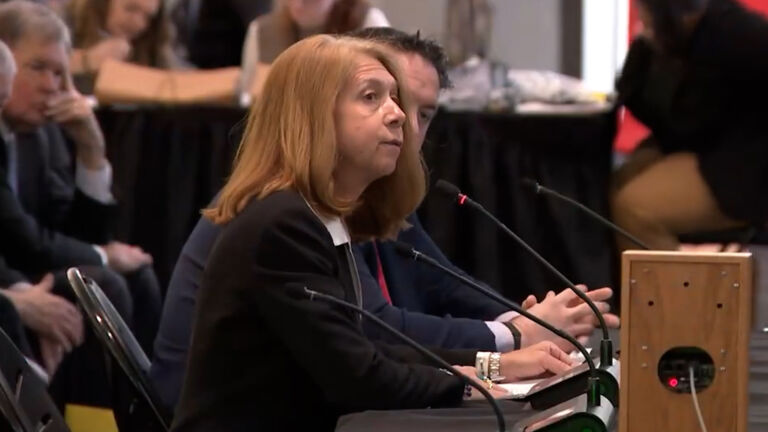
Those comments came during a lengthy hearing that also saw members of the Senate budget panel go over the latest financial plans for the state’s Department of Transportation and Motor Vehicle Commission.
Taken together, the three agencies cut a broad swath across New Jersey and serve millions of residents in one way or the other, from pedestrians to motorists to bus and rail riders.
And this year, issues related to transportation funding have been among the most pressing for lawmakers to resolve amid a period of persistent inflation and rising interest rates.
Other transportation-related spending
Within just the last few weeks, they voted to reauthorize the state’s Transportation Trust Fund, an off-budget account that pays for the annual upkeep of roads, bridges and rail infrastructure throughout the state.
A plan approved by lawmakers and signed into law by Murphy last month also sets the stage for a series of gas-tax hikes due to go into effect annually over the next several years, as well as the establishment of a registration fee for the owners of electric vehicles, all to maintain billions of dollars in new spending on transportation infrastructure over the next five years.
During his own testimony before the Senate panel, acting Department of Transportation Commissioner Fran O’Connor detailed ways the trust fund, or the TTF, can ease costs on local taxpayers. That comes via a portion of trust fund revenues that are distributed each year to county and municipal governments to help maintain the roads and bridges within their own borders.
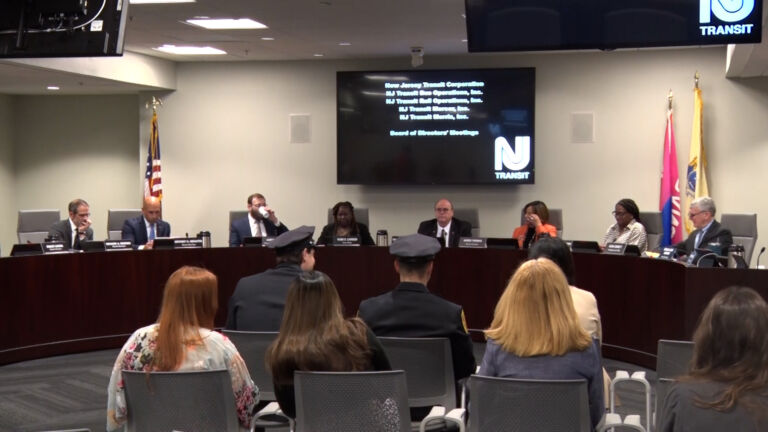
“The TTF is vital to maintaining and improving our state’s transportation infrastructure, funding projects that improve safety and quality of life for our communities,” O’Connor said.
In his prepared remarks submitted to committee members, Corbett also highlighted ways public investments in transit can deliver economic benefits to residents that go beyond simply providing them with a way to get to work.
“Municipalities and homeowners benefit significantly from public transit through improved property values and taxes,” he wrote in the prepared remarks.
How businesses benefit
Still, top of mind for many on the committee was the proposed tax hike Murphy, a second-term Democrat, is calling a “corporate transit fee” in budget documents prepared by his administration.
Under Murphy’s plan — which has yet to be converted into legislation — companies earning more than $10 million in annual net profits would be forced to pay an extra 2.5% tax on top of the state’s 9% top-end marginal corporation-business tax rate, which is already one of the nation’s highest corporate taxes.
The proposed tax would apply to about 600 companies and raise about $1 billion, retroactive to Jan. 1, according to the Murphy administration.
And while the tax proposal has faced stiff pushback from business-advocacy groups, it’s drawing widespread praise from environmentalists and transportation advocates who have long called for a dedicated source of funding for NJ Transit’s operating budget.
Asked about the proposed tax hike on Thursday, Corbett told members of the committee “it’s up to you all [to decide] what is the most acceptable, as any increase for anyone is never pleasant.”
But he went on speak about ways that corporations specifically can benefit from investments in mass transit.
“The reality is, for employers, for major employers, even if their CEOS are taking limos to their headquarters, the fact is that their employees, and the workers and people who work in the hospitals, etc., they need our service,” Corbett said.
“Most companies really look to … what’s the labor force and the access to the labor force? And we provide that access,” he said.
Under the state Constitution, lawmakers have until July 1 to draft a new annual spending bill. Budget hearings such as the one held Thursday will continue for the next several weeks as lawmakers continue to review Murphy’s proposals.
