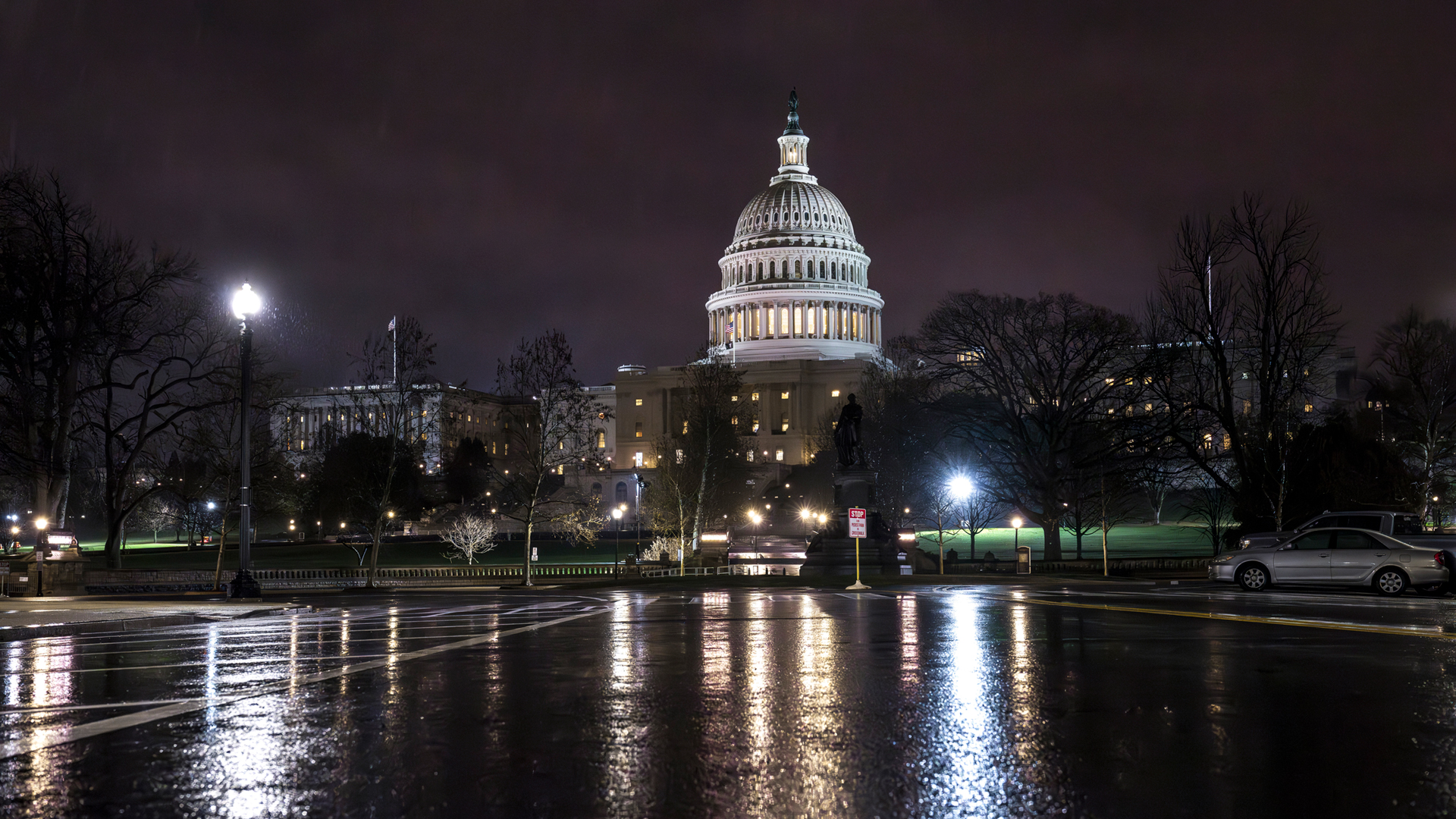
 Credit: (AP Photo/J. Scott Applewhite)
WASHINGTON — The House passed short-term legislation Thursday to keep portions of the federal government running, like programs that provide food aid and help for vulnerable mothers, buying time for Congress to pass broader legislation to fund the government through September with a roughly $1.66 trillion budget.
The Senate then passed the bill, sending it to President Joe Biden for his signature before a midnight Friday deadline, when portions of the federal government would begin shutting down without fresh legislation.
Rep. Jeff Van Drew (R-2nd) was the only House member of New Jersey’s congressional delegation to vote against the bill, which passed the chamber 320-99.
“I’d like to see us try to control spending,” said Van Drew, who was the lone New Jersey lawmaker to vote against another short-term bill to fund the government in January.
“I haven’t voted to just continue the ‘CRs’ one after another,” Van Drew said in an interview with NJ Spotlight News, using the shorthand for continuing resolution, a stopgap bill that provides temporary funding. “Hopefully we get some good bills with some meaningful changes in them.”
Big hurdles remain
Finishing the federal budget for the year remains one of the large tasks looming over Congress, along with navigating a potential weapons package for Ukraine into law and reaching an immigration deal.
 Credit: (AP Photo/J. Scott Applewhite)
The federal government largely runs on 12 separate bills, four of which would have expired Friday without congressional action.
Programs funded within that cluster of bills include portions of the Veterans Administration and the Department of Agriculture, as well as programs like the Supplemental Nutrition Assistance Program, formerly called “food stamps,” and the Women, Infants and Children program, or WIC, which provides food and health assistance for mothers and children younger than five.
Rep. Frank Pallone (D-6th), the top Democrat on the Energy and Commerce Committee, which has jurisdiction over broadband and internet issues, is pushing to fold funding for a low-income internet assistance program into the budget.
‘I think we’re spending too much on things like DEI. I believe in equality but I don’t necessarily believe in diversity, equity and inclusion and all the money that it costs.’ — Rep. Jeff Van Drew
That program, run through the Federal Communications Commission, received $14.2 billion through an infrastructure law Biden signed in 2021. But it is running out of money and will close in May unless it gets more funding.
“These days, high-speed internet is not a luxury — it’s a necessity. Americans depend on the internet to apply for jobs, run their small businesses, study for school, and connect with family and friends,” Pallone said last week.
Van Drew’s take on DEI
Standing off the House floor following the vote, Van Drew said the federal government spends too much money on so-called diversity, equity and inclusion, or DEI, programs and he said that no federal dollars should go to wind turbines.
“I think we’re spending too much on things like DEI,” Van Drew said. “I believe in equality but I don’t necessarily believe in diversity, equity and inclusion and all the money that it costs.”
A bugbear for many right-wing politicians, DEI is the general idea that companies, schools and other organizations should consider those three themes — diversity, equity and inclusion — in their day-to-day operations.
Along with Rep. Chris Smith (R-4th) and other House Republicans, including Andy Harris, who represents Maryland’s Eastern Shore, Van Drew has sought to link deaths of the North Atlantic right whale, an endangered species, with the construction of offshore wind turbines.
Scientists say whale deaths are overwhelmingly due to entanglement with fishing gear and collisions with speeding boats.