

Imagine a vibrant tapestry — a community garden where diverse cultures come together, not just to grow fresh, healthy food, but also to cultivate a sense of belonging and new beginnings. Refugees often arrive in new countries facing financial hardship and limited access to culturally familiar food.
Community gardens bridge this gap by providing access to fresh produce, often at a lower cost than traditional grocery stores. This not only improves dietary diversity, but also empowers refugees to grow food that connects them to their cultural heritage and traditions. These gardens also contribute to sustainable local food systems, providing fresh, healthy produce both to refugees and to longtime residents of the community.
For refugees, these spaces celebrate the rich fabric of our local community, fostering healthy eating habits and strengthening social connections. In addition, these spaces can serve as a backdrop for skills training and job readiness. Global Grace Farm (GGF) in New Brunswick is a blossoming example, showcasing the range of benefits of community gardens.
GGF is entering its fourth growing season and has already witnessed firsthand the transformative power of its mission. Recently resettled refugee participants have reported a significant improvement in both diet quality and community connectedness. In addition, residents of the New Brunswick area participated in the subscription farm shares produced by the refugee clients.
As one participant noted, “I enjoy farming and have missed it all on my long journey to America.”
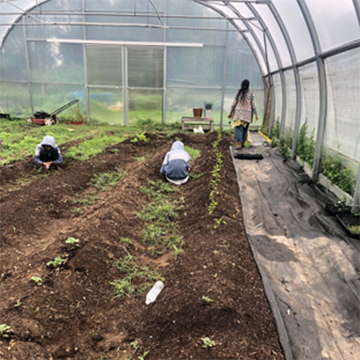 Credit: (Courtesy of Emily V. Merchant)
GGF comprises individual garden plots, larger vegetable garden and chicken coop, home to 25 egg-laying hens. Refugee can participate in the community garden by cultivating an individual plot or serving as a regular volunteer for the larger vegetable garden. Participants also receive training in gardening and general job skills, including the opportunity to work as chefs in the Global Grace Café that has a “pay-as-you-can” honor system.
Many refugee clients come to the United States with their families, including small children. Community gardens can provide a safe space for families to enjoy the benefits of being outdoors. One refugee client reported, “My children like it when they are at the farm doing activities, and I get fresh food.” The community garden has a range of benefits for both the body and the soul.
Nourishing more than bodies
Beyond nourishing bodies, community gardens nourish community connectedness — a vital component of overall health. The collaborative nature of gardening fosters social connections, allowing refugees to build relationships with local residents, share cultural experiences and learn from each other’s agricultural knowledge. This sense of belonging is crucial for refugees navigating the challenges of resettlement and building a new life. Through participation in the GGF, refugees have reported feeling an increased sense of community. Many participants reported that they met people through this program that they would not have met otherwise and that these individuals were folks they could go to if they needed help. They were also folks who they would readily offer assistance to if needed. One program participant noted that, “(the farm) gave me confidence and job training.”
GGF received a four-year U.S. Department of Agriculture grant on the heels of Gov. Phil Murphy’s 2019 executive order to promote immigrant integration and create welcoming policies and empowering immigrants and refugees throughout the state. In addition, in 2019, in collaboration with the International Rescue Committee, New Jersey resumed the state’s role in managing refugee resettlement efforts in New Jersey, which in 2016 had been relinquished to the federal government. GGF is within Interfaith-RISE and under the RCHP-Affordable Housing Corp., which serves as one of the refugee resettlement affiliate agencies in New Jersey. Aspects of New Jersey’s resettlement program mission include ensuring that refugees have seamless access to the federal and state assistance and social services programs for which they are eligible. Through the GGF project, refugees are oriented to their new food system and provided tools needed with demonstrated success as they establish themselves as new Americans.
However, realizing the full potential of community gardens requires addressing existing challenges. Language barriers can hinder participation, and cultural sensitivity is essential to ensure the garden space is welcoming and inclusive. Additionally, providing resources and support, such as gardening workshops and translation services, can empower refugees to fully participate in and benefit from these spaces.
Investing in community gardens is not just about providing food; it’s about fostering resilience, promoting cultural exchange and creating a sense of belonging for refugees. By nurturing these vibrant spaces, we can cultivate a more inclusive and nourishing community for all.
With the refugee population growing, initiatives like community gardens become even more critical. They offer a powerful solution, addressing food insecurity while nurturing a sense of belonging in our newest residents. Additionally, these gardens promote sustainable local food systems, benefiting both refugees and established community members seeking fresh, healthy produce.