
 Credit: (NJ Spotlight News)
Almost a decade after the courts pressed for a fix, Gov. Phil Murphy is expected to hammer the final nail into the coffin of the state’s old affordable housing system, formalizing a new process for determining local housing obligations in New Jersey.
Both the state Senate and Assembly this week gave final approval — largely along party lines — to the bill that would codify a new system for ensuring that municipalities meet the state Supreme Court’s Mount Laurel doctrine first established nearly a half-century ago. The rulings require that all communities provide for their “fair share” of the state’s need for homes affordable to people with low and moderate incomes.
That need statewide, according to bill co-sponsor state Sen. Troy Singleton (D-Burlington), is now about 224,000 units.
The new bill would replace the state’s moribund Council on Affordable Housing, the agency that had set local affordable housing obligations for two decades before failing in that mission during the administration of former Gov. Chris Christie. In its place, the state Department of Community Affairs would manage the process in a manner similar to how it has been overseen by the courts over the last eight years. During this period, Singleton said, some 21,000 affordable homes and apartments have been built, making it the most prolific period since the first Mount Laurel decision in 1975.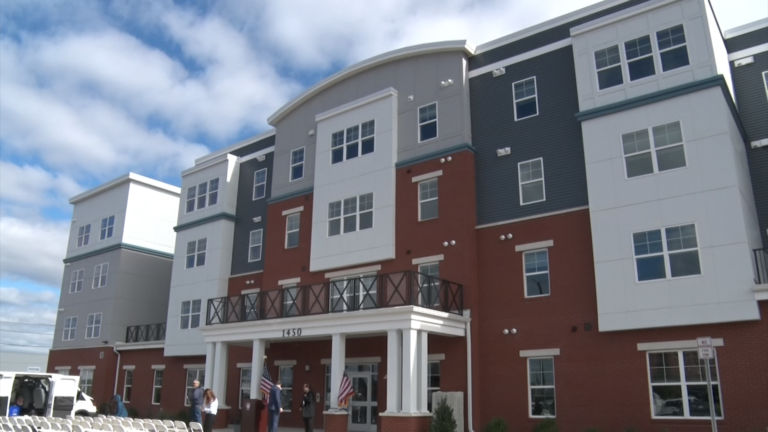
“There’s a need to provide clarity for municipalities, reduce legal conflicts costs, and set clear timelines to ensure that this round can deliver affordable housing opportunities as quickly as possible,” Singleton said from the floor of the Senate.
“Everyone wins when our neighbors have an affordable place to live,” he added. “The creation of affordable housing creates construction jobs and stimulates economic growth. Manageable rent allows working families to have more flexibility and more resources for better food and better health care, no longer straining other systems. Housing stability removes barriers to getting better education and work opportunities. Integrated affordable housing builds stronger communities and connections while alleviating the burden on social services.”
Sharp debate
Final debate Monday in the Senate rehashed many of the arguments that have been made for decades. Some lawmakers said the need to build more affordable homes is paramount in one of the most expensive states in the country. Others contended municipalities can’t accommodate the large numbers of units the bill would likely require.
No community would have to provide for more than 1,000 units or a number that would lead to an increase of more than 20% of the current number of households in the municipality.
“This legislation I believe, will have a direct negative impact on our communities that will only get worse over time,” said Senate Minority Leader Anthony Bucco (R-Morris).
Bucco said the law could lead to the construction of nearly 500,000 new housing units statewide, about 97,000 of them affordable.
“It seems like an impossible task,” he said. “And we haven’t even done a market analysis to determine if the state can even absorb that number of units.”
State agency in key role
Under the process envisioned in the bill, the Department of Community Affairs would calculate the initial affordable housing obligations as soon as mid-October. Municipalities would then use those numbers to either draft housing plans that provide the zoning for the construction of the homes or propose a number they think is more accurate based on available land and other constraints.
Any individual or organization could challenge a housing plan that they contend does not meet the requirements of the law, and a dispute-resolution program would seek to mediate such challenges. Some could still wind up in court.
Currently, all housing plans are approved by a judge, forcing municipalities to pay legal and other costs. Some communities could see lower costs, according to an analysis of the bill by the nonpartisan Office of Legislative Services. It could not calculate the total cost of the bill, which would allocate $16 million to the DCA to calculate the obligations and for the dispute resolution process.
The bill would set requirements for the kinds of affordable housing municipalities would have to permit.
For instance, about half of all homes would have to be suitable for families with children, and 13% would be available to people with very low incomes. There would be bonuses and caps for certain types of housing, with a municipality able to devote only 30% of its obligation for senior citizen housing.
No community would have to provide for more than 1,000 units or a number that would lead to an increase of more than 20% of the current number of households in the municipality.
Oversight
The bill sets clear timelines and guidelines for the new round of affordable housing obligations set to begin next year. Since the enactment of the Fair Housing Act in 1985, local housing needs have been recalculated every decade.
‘Everyone wins when our neighbors have an affordable place to live.’ — Sen. Troy Singleton (D-Burlington)
And for the first time in more than a decade, the law would also require public reporting of the number of homes that have been built and how municipalities are spending their affordable housing trust funds, which are financed by a portion of real-estate transfer fees.
“This legislation will help tear down the walls that have denied too many access to opportunity — and create new affordable homes near jobs, schools, and transportation,” said Adam Gordon, executive director of the Fair Share Housing Center, which has been the main driver of the court settlement process over the last several years. “It’s good news for families across the state who are struggling to keep up with the soaring cost of housing.”
Originally planned for passage during last year’s lame-duck legislative session, the bill wound up being held until January and underwent several amendments before final passage Monday, first by the Senate, and then by the Assembly to concur with the last changes in the bill.
The Senate also gave final passage to five other measures designed to further increase affordable housing opportunities, including one that would allow municipalities to exempt certain projects from property taxes in favor of Payment in Lieu of Taxes (PILOT) agreements.
