Credit: (AP Photo/David Zalubowski, File)
 A majority of new cars, light-duty trucks and SUVs sold in the U.S. by 2032 will be either purely electric or hybrids under an Environmental Protection Agency rule unveiled Wednesday.
The regulation, one of the largest regulatory efforts the administration has made to slash heat-trapping greenhouse gases, sets a target of cutting emissions from vehicles’ tailpipes in half by 2032, eliminating more than 7 billion tons of carbon pollution, according to EPA estimates.
The industry could meet the EPA target if 56% of new cars sold by 2032 are electric, the agency said.
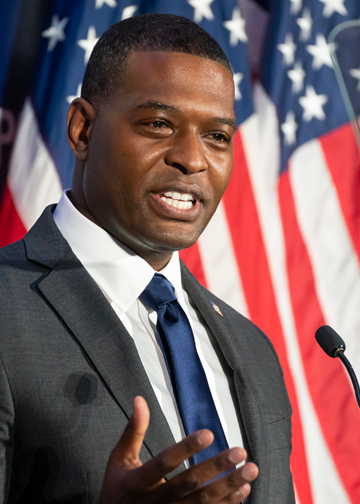
“Folks, these new standards are so important for public health, for American jobs, for our economy and for our planet,” said Michael Regan, the EPA administrator.
An oversized carbon footprint
Transportation is the largest source of carbon pollution in the United States among sectors, edging out the electric-utility industry, and the rule is President Joe Biden’s most significant regulatory move to rein in climate-warming pollution.
 Credit: (AP Photo/Nathan Howard, File)
It’s also one of the few remaining climate-related arrows the Biden administration has in its regulatory quiver before Election Day in November. The president set a goal to prod the automobile industry into making electric vehicles half of new vehicles sales by 2030.
“Every decision we make is to increase our footing and ability to rein in more carbon pollution,” Regan told reporters.
The final regulation covers vehicles with the model years 2027 through 2032. Gov. Phil Murphy pushed New Jersey to end the sales of new internal combustion vehicles after the 2035 model year.
At an event held at the D.C. Armory on the east side of Washington, D.C., Biden administration officials, environmentalists and John Bozzella, the head of a trade group that represents automakers, touted the rule as a boon to the climate and economy.
A voice from Newark is heard
Asaha Rashidi of Newark spoke first, detailing how growing up near heavy industry in northern New Jersey has affected her life, in particular her two brothers with asthma.
“Sadly, they’re not alone,” said Rashidi, who sits on a youth advisory panel to the EPA and is Black. “Pollution has been a constant reality.”
People in the U.S. who are poor, not white or both are significantly more likely to live near and be exposed to air pollution, researchers consistently find.
A 2022 study published in the scientific journal “Nature” found income is linked in the United States with exposure to fine particulate matter, or soot, after the researchers cross-referenced environmental data with ZIP codes.
NJ in step with EPA
The new standard will improve air quality as tougher tailpipe emission standards are phased in, and it will align with New Jersey’s goal of electrifying the transportation sector.
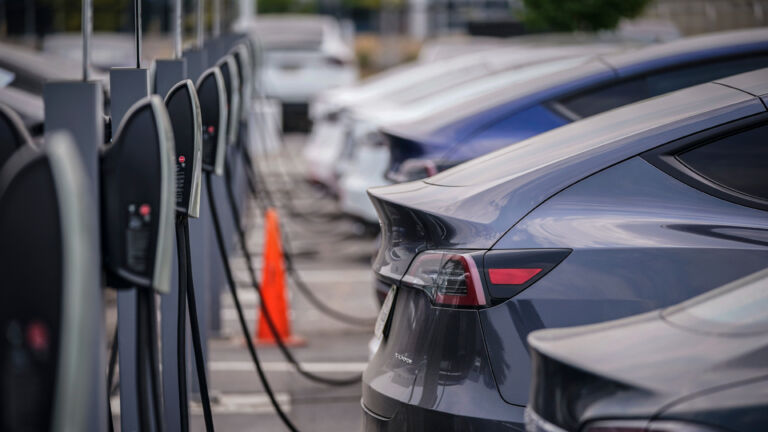
The new rule would phase out the sale of new gasoline-powered vehicles by 2035
The proposed EPA rule triggered a dispute between clean-energy advocates and car dealers in New Jersey with the latter lobbying for the state to adopt the federal standard instead of a California regulation, which mandates phasing out the sale of new gasoline-powered cars in the state in 2035.
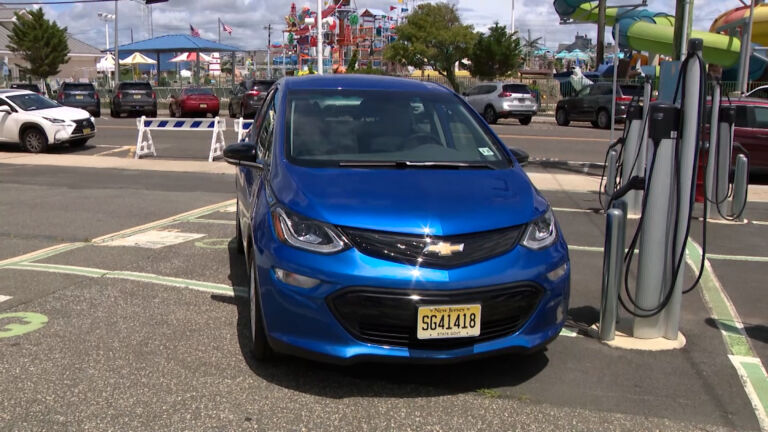
The New Jersey Department of Environmental Protection approved the latter rule late last year, provoking the strongest opposition yet to the Murphy administration’s clean-car agenda. The state now has about 140,000 electric vehicles registered, far less than the 330,000 mandated in 2025 by the California program.
Dealer’s choice
Car dealers argued the federal standard is more flexible than the California program, although both aim to reduce climate pollutants and other unhealthy air contaminants. New Jersey has never met the federal health quality standard for ground-level ozone, or smog, which can cause respiratory ailments, particularly in the young and elderly.
The move to delay implementation of the federal standard is likely to increase pressure on New Jersey to back off the 2035 phase-out of new gas-powered cars, a step pushed by the New Jersey Coalition of Automotive Retailers (NJ CAR).
“From a New Jersey perspective, the Biden announcement is a victory for the environment, consumers and common sense,’’ said Jim Appleton, CAR’s president. “Unfortunately, it is meaningless in New Jersey because we abrogated our rules to California. What the EPA rule recognizes, government mandates are not going to get this done.’’
But Pam Frank, CEO of ChargEV, said the EPA rule will put New Jersey in lockstep with the federal government in moving to electrify the transportation sector. “This is why we can’t take our foot off the accelerator,’’ Frank said.
Ray Cantor of the New Jersey Business & Industry Association, a trade group that represents the private sector, disagreed. “At the end of the day, even the Biden rule is unrealistic,’’ he said, given EV purchasing trends, costs and consumer acceptance. “There are other ways of achieving carbon reductions without imposing EV mandates.’’
EPA walks back earlier rule
The rule detailed Wednesday is a less stringent version of what the EPA floated in April 2023, when it proposed a target for electric vehicles to comprise 67% of all new vehicle sales by 2032.
Automakers and the United Auto Workers union balked at the proposal last year, and the administration weakened some portions of its rule, giving the industry more time to meet the emissions target.
“In addition to carbon pollution, the final standards also will reduce other serious air pollution that contributes to heart attacks, respiratory illnesses, aggravated asthma and decreased lung function,” Regan said.
Luke Tonachel, who analyzes the transportation sector and its environmental impacts for the Natural Resources Defense Council, an environmental and legal advocacy group, said in an interview the new standards will have broad benefits for consumers.
“They’ll have more choices of cleaner, better and actually cheaper-to-own cars,” Tonachel said. “One of the great things about what these standards do is they create a long-term certain for the industry, so the industry knows that they need to invest for the longer term to bring these cleaner vehicles to market.”
Elements of the event at the Armory, where shiny EVs were stationed around the cavernous hall, an American flag several stories tall hung on one end and Bruce Springsteen’s “Born in the USA” played, took on the air of a political rally, rather than a regulatory announcement.
In ‘uncharted waters’
Regan and Ali Zaidi, a climate adviser to Biden, several times thanked unions and talked about jobs and money flowing to swing states, like Georgia, Arizona and Michigan, thanks to investments to electrify the transportation sector.
“Automakers are committed to this transition,” Bozzella said, adding that some hurdles to widespread EV adoption linger.
Bozzella, whose group, the Alliance for Automotive Innovation, represents firms including Ford, Honda, Hyundai, KIA, Nissan, Subaru, Toyota, Volkswagen and Volvo, said “choppy sales” of EVs as well as questions of demand from drivers and the build-out of electric chargers remain.
“We’re in uncharted waters, right?” Bozzella said.
Industry advocates had bristled at the EPA’s initial goal, arguing it was too fast for industry to meet, in part given that EVs make up a small portion of the broader vehicle market.
U.S. EV sales grew 47% last year to reach about 1.19 million, a record. But they have since slowed somewhat, rising just 34% in December.
In his remarks, Zaidi touted climate policy like the EPA’s new rule as elements of a broader administration effort to reinvest in the U.S.
Some of that wave of investment won’t be unwound by a new administration, Zaidi said.
“There is a leadership and vision difference. Us, House Republicans, don’t see eye to eye on that,” Zaidi told reporters. “We’re continuing to deliver for the American people, and a lot of that is irreversible. It’s steel in the ground. It’s a change that is not going to get rolled back.”