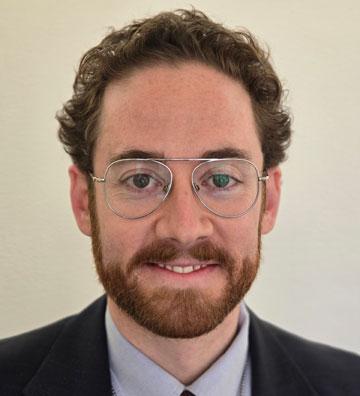
WASHINGTON – Bob Menendez may find solace in the story of inmate number 72121-083.
William J. Jefferson, a former Democratic congressman from New Orleans, got the digits in 2009 when he was sentenced to prison for 13 years for running a bribery scheme to make money via a web of investments in Africa. Federal officials said they found $90,000 in cash, in his freezer, intended for Nigeria’s then-vice president.
But in 2017, before Jefferson had served his full sentence, a federal judge, citing a 2016 ruling from the U.S. Supreme Court, vacated most of the charges against him, and the former lawmaker was a free man before year’s end.
That case, United States v. McDonnell, made executing public corruption cases more difficult for prosecutors, freed former government officials from prison and could be an asset for Menendez, the senior U.S. senator for New Jersey, who stands accused of taking hundreds of thousands of dollars in bribes in exchange for actions to help the Egyptian and Qatari governments.
The 2016 precedent has become a legal toehold for people convicted on corruption charges to try to get their time reduced or their charges dismissed entirely.
Menendez has pleaded not guilty and faces years in prison if convicted. Lawyers for Menendez last week urged the judge on the case, which is scheduled for trial in May, to throw out evidence seized during FBI searches they said were based on flawed warrants.
The McDonnell case
At the core of the McDonnell case — against a former governor of Virginia — were questions about what acts a public official had to carry out to be considered as engaging in bribery.
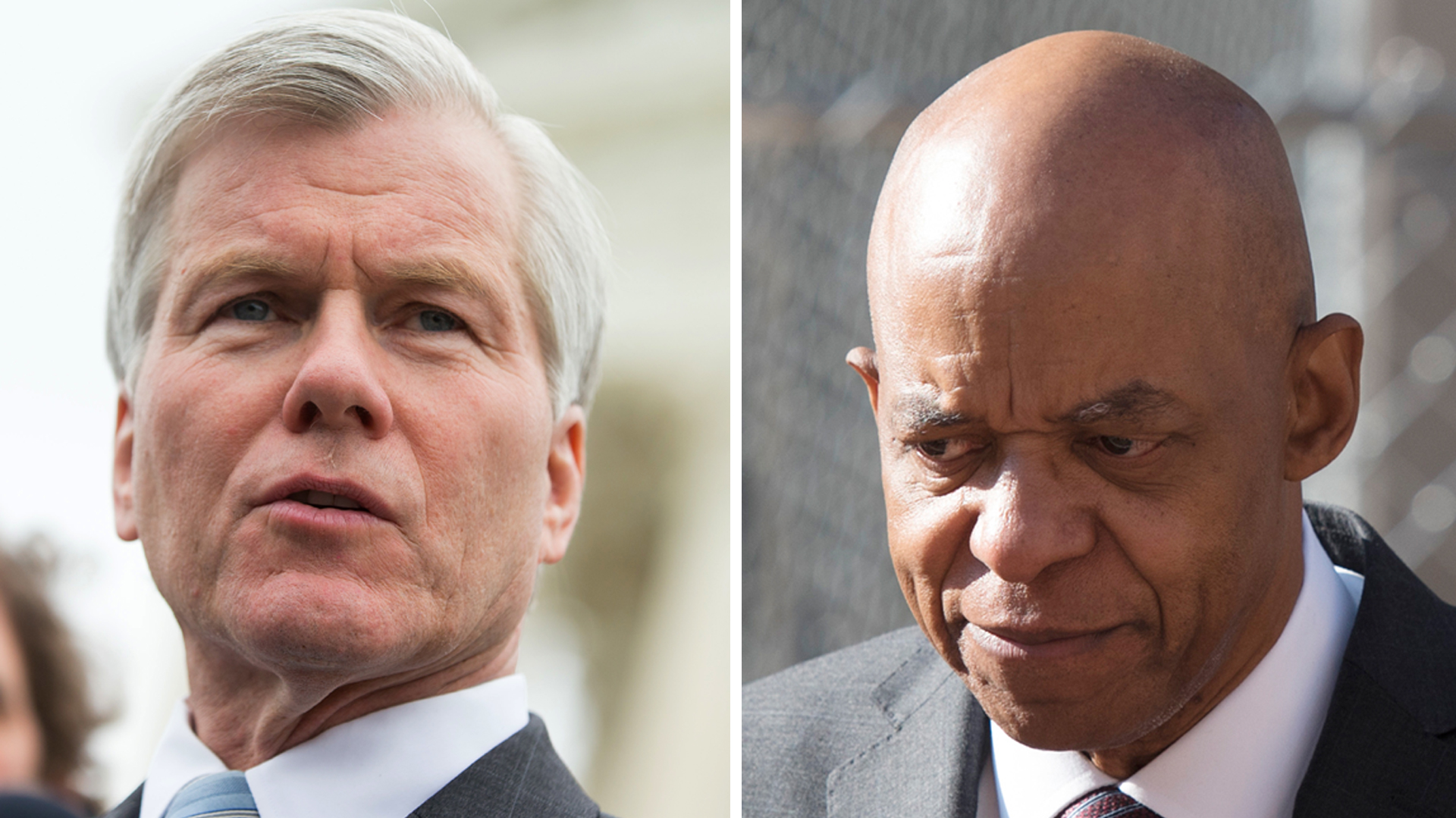 Credit: (AP Photo/Andrew Harnik; AP Photo/Sait Serkan Gurbuz)
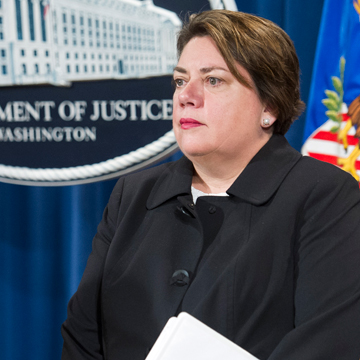
“In the wake of McDonnell, it’s much harder to put together a case,” Leslie Caldwell, assistant attorney general for the criminal division at the Justice Department from 2014 until 2017, said of the “naive” ruling. “It has made public corruption prosecution more challenging across the board,” Caldwell said in a phone interview. “It suggests that corruption needs to be more of a ‘I give you this, you give me that’ scenario.”
That’s not how modern corruption works, said Caldwell, who worked for the U.S. government on the McDonnell case. Public corruption today is more insidious and subtle, she said.
 Credit: (AP Photo/Cliff Owen)
“It’s usually not blatant,” she said. “It’s not the brown paper bag full of money in return for a vote.”
When he was elected governor of Virginia in 2009, Bob McDonnell and his wife had financial problems. They had credit card balances, together, of $90,000. Approached by a pharmaceutical executive who wanted to get federal approval for a new drug, McDonnell used his public position to help the executive with that goal, including by hosting an event at the governor’s mansion to boost the drug’s prospects and arranging meetings with university officials in the state.
While lower courts found McDonnell guilty, the Supreme Court ruled his actions — such as brokering a meeting or hosting an event — were not “official acts” under federal bribery law, vacating the former governor’s conviction and narrowing the definition of bribery.
Other challenges to convictions
After the ruling came down, a series of former public officials challenged their convictions.
That October, Judge T.S. Ellis III shortened the sentence of Jefferson, the former Louisiana congressman, based on the new McDonnell standard.
The conviction in a separate case of Dean Skelos, a former Republican leader in the New York state Senate, was also vacated on appeal in 2017, though he was later retried, convicted and sent to prison. That same year, a federal appeals court in New York overturned the 2015 conviction of Sheldon Silver, who had been speaker of that state’s legislature.
 Credit: (AP Photo/Julio Cortez)
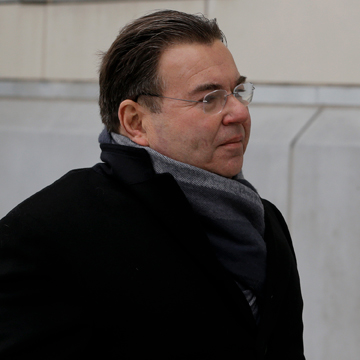
Joseph Ferriero, former chairman of the Bergen County Democratic Organization, was convicted in 2009 of taking bribes and using his role to pressure municipalities to use software of a company called C3 Holdings. Ferriero had a stake in that company.
Armed with the McDonnell case, Ferriero argued his conviction was based on thin evidence, though a federal appeals court upheld his conviction.
“Nothing in McDonnell changes the outcome for Ferriero in this case,” the court ruling read.
But the outcome in the corruption case against Bridget Kelly and Bill Baroni, two staffers to former New Jersey Gov. Chris Christie who had been convicted of orchestrating the so-called Bridgegate scandal in 2013, was different.
In a unanimous decision, the Supreme Court threw out their convictions in May 2020, finding that the act of closing traffic lanes on the George Washington Bridge as political payback was an abuse of power.
Baroni, Kelly and Bridgegate
“But not every corrupt act by state or local officials is a federal crime,” Justice Elena Kagan wrote in the opinion. “Because the scheme here did not aim to obtain money or property, Baroni and Kelly could not have violated the federal-program fraud or wire fraud laws.”
Menendez hired Yaakov Roth, an attorney who represented McDonnell and Kelly, to argue his case.
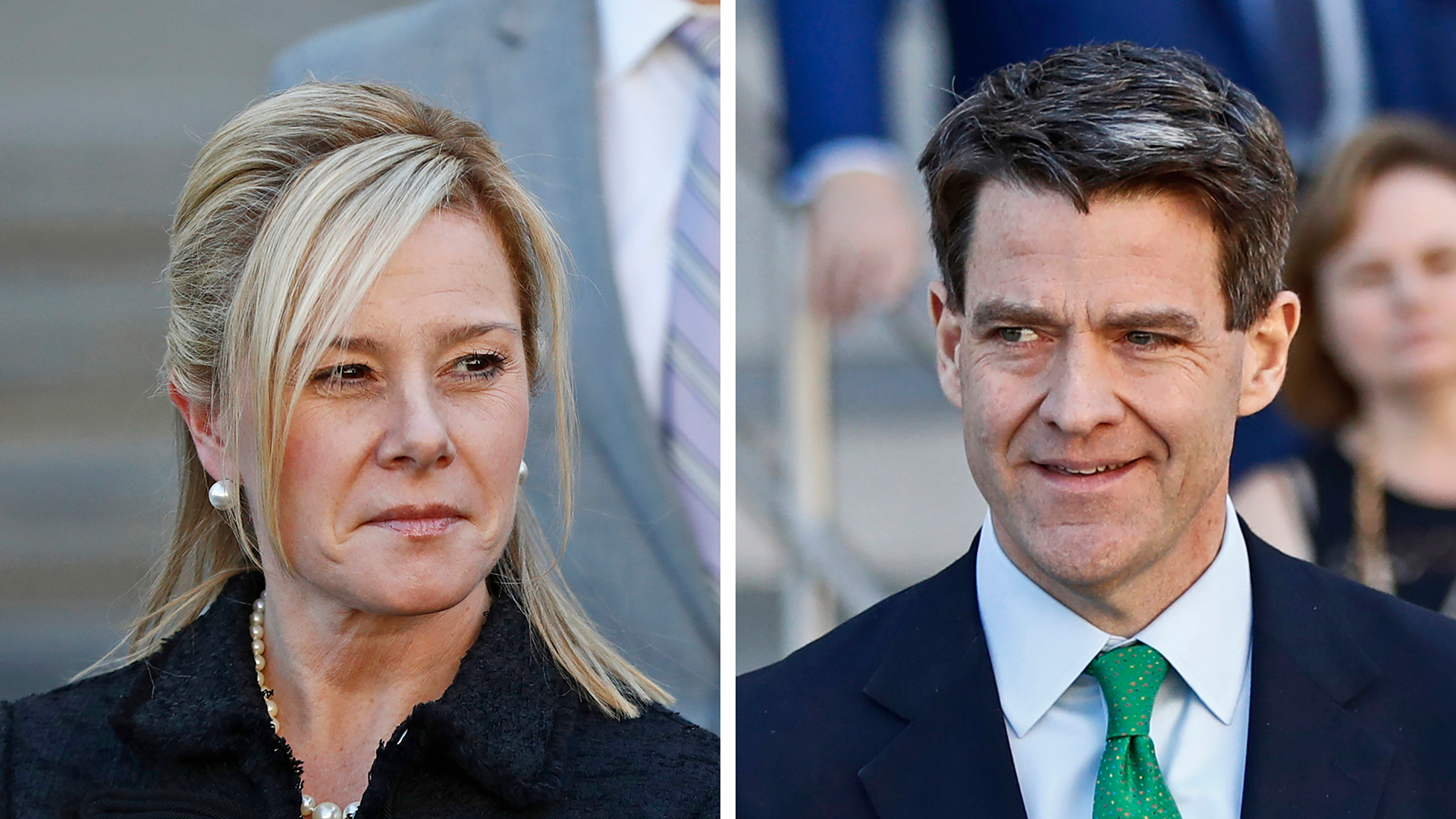 Credit: (AP Photo/Julio Cortez, File)
Roth’s law firm biography notes his work on the “unanimous Supreme Court victories in the high-profile ‘Bridgegate’ matter” and “vindicating former Virginia Governor Bob McDonnell from corruption charges.”
The 2016 landmark case made securing corruption convictions significantly harder, said Jay Albanese, a professor and criminologist at Virginia Commonwealth University.
Raising the bar
“It raises the evidentiary bar much higher,” Albanese said. In a case like Menendez’s, prosecutors must tightly bind what the senator did to what he received, he said.
“They will have to show that he carried out an official act,” said Albanese, the lead author of a study the Justice Department commissioned of roughly 57,000 federal corruption cases from 1985 through 2015. “People in these cases know what they’re doing is improper, so they take measures to conceal it.”
The Supreme Court’s ruling in the McDonnell case ‘raises the evidentiary bar much higher.’ — Jay Albanese, Virginia Commonwealth University
A vote on a bill or organizing an official government meeting could suffice, he said. “It would have to be more than a speech.”
Transparency International, a global anti-corruption watchdog group, ranks nations on corruption every year, giving scores between 0 (“highly corrupt”) and 100 (“very clean.”)
The group considers bribery, nepotism, abuses by public officials, access to government, financial disclosure laws and diversion of public money, among other factors, in its index.
What’s bribery?
In the last decade, the U.S. score has declined, hitting historic lows in 2020 and 2021. For 2022, the U.S. received a 69, the latest score available and well behind world leaders Denmark, Finland, New Zealand, Norway and Singapore.
Scott Greytak, director of advocacy for Transparency International’s U.S. branch, said corruption in foreign countries is often marked with cash payments and under-the-table arrangements.
“That’s how corruption still operates in literally most of the world,” Greytak said in an interview. In the U.S., corruption thrives, he said; it’s just not as direct as elsewhere.
Instead of backroom deals, it runs in America on billions of dollars in political donations, including anonymous, or “dark money” donations, to influence U.S. policy, Greytak said.
“It’s just got a much more sophisticated and evolved operation,” he said of domestic corruption.
Caldwell, the former Justice Department official, said the indictment against Menendez appears to be “designed to withstand a McDonnell-type challenge.” Still, sending elected officials to prison is difficult, she said, since they’re typically well-spoken people who “have done some good” in their life.
“That makes it hard for prosecutors right off the bat,” Caldwell said. “They’re hard cases.”