 Credit: (AP Photo/Craig Mitchelldyer)
State lawmakers are considering another extension of special accommodations put in place during the worst of the COVID-19 pandemic that let companies remain eligible for economic-development tax incentives even when employees are working from home.
However, this time around, the requirements for employees to work in the office would be lifted for only a few more months, according to legislation that could soon get a final signoff in Trenton.
The latest proposed tweak to the state’s tax-incentive policies marks another attempt by New Jersey policymakers to adapt to broader economic trends that continue to be shaped by the lingering pandemic.
Those changes include the prevalence of work-from-home and hybrid employment arrangements that became a necessity at the onset of the health crisis and remain popular among workers today. Many state tax-break programs enacted prior to the pandemic rewarded companies for locating in New Jersey, where their workers would likely buy lunches and help generate additional economic activity, often in urban downtowns located in communities targeted for growth.
Concerns about downtown effects
However, due to the pandemic, specific requirements related to the time workers are expected to be in the office to help accomplish the broader economic-development goals were relaxed for companies receiving state tax breaks. The latest extension approved by Gov. Phil Murphy lasted through Dec. 31, 2023.
While COVID-19 cases remain a concern in New Jersey, many lawmakers have begun to openly call for workers to generally return to the workplace, including in the locations where the state sought to incentivize more economic development in the first place by offering the tax breaks.
An analysis prepared by the nonpartisan Office of Legislative Services suggests the proposed extension could cost the state revenue if businesses continue to take advantage of the waiver.
The latest proposed extension of the special accommodations for tax-break recipients — which would last through March 31, according to the legislation — went before a key Senate committee in late December, when lawmakers outlined the thinking behind a brief extension this time around.
“People need to get back in their offices to help our downtown urban centers,” said Senate Budget and Appropriations Committee Chair Paul Sarlo (D-Bergen).
“People should be back to work,” added Senate Majority Leader Teresa Ruiz (D-Essex).
“Flexibility, priority always for families and folks who need it, but there are unintended consequences when we just evacuate office buildings and keep them empty,” she said.
The details
Under the bill, which the Senate committee unanimously approved, the waiver of rules requiring full-time employees of a company receiving a state-funded tax break to spend at least 60% of their work hours in the office would be extended once again, but only until the end of March.
An analysis prepared by the nonpartisan Office of Legislative Services suggests the proposed extension could cost the state revenue if businesses continue to take advantage of the waiver.
But the bill also requires businesses electing to waive on-site work requirements to make payments equal to 5% of tax credits received, through March 31, meaning it could also lead to increased revenue in some cases, according to the OLS analysis.
Moreover, those revenues would be directed to the state Economic Development Authority to “support certain economic development activities,” according to the analysis.
The bill has already been approved by the full Assembly and is up for consideration in the full Senate on Monday, which is the last full day of the current lame-duck legislative session.
Other tax-policy changes
In addition to providing waivers for the tax-incentive recipient work-from-home requirements, lawmakers have worked with Murphy to make other policy changes in response to the pandemic, including changing other tax policies to adapt to the latest employment trends.
These efforts included the establishment of an altogether new tax-incentive program aimed at luring companies based in neighboring states to establish a footprint in New Jersey; this was to combat states like New York that contend income earned by remote workers based in other states is subject to taxation in the state in which their company is located.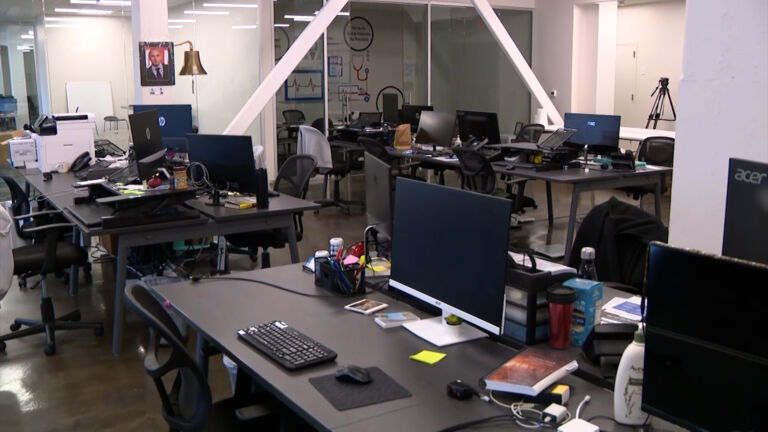
New Jersey is among the states that rely heavily on income-tax revenue, including to fund public education, with potentially billions of dollars in annual tax collections at stake.
To that end, Murphy and lawmakers also established new state income-tax credits for residents who successfully mount a legal challenge of the taxing of their income by another state when the income is earned while they are located physically in New Jersey.
Tax credits are also now being offered to residents who seek and accept from their employers a reassignment from an out-of-state location to an in-state location, all under a law enacted last year.