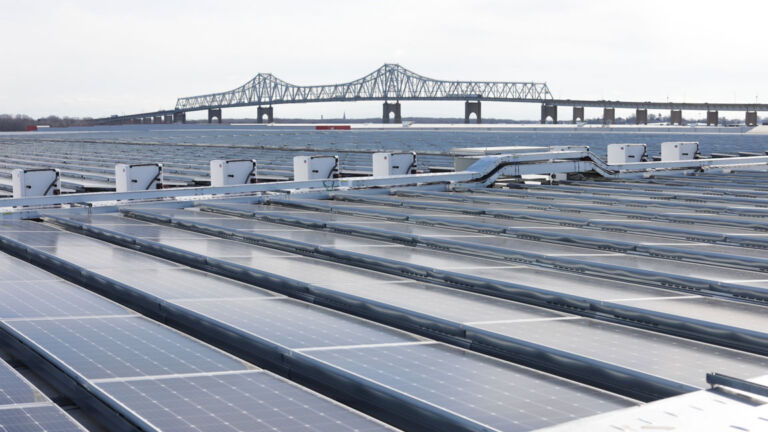
Credit: (AP Photo/J Pat Carter)
New Jersey’s popular community solar program, an initiative that allows low- and moderate-income households to use green energy with the added benefit of lowering their electric bills, will be expanded under a law signed Thursday.
The new law simplifies the application process, provides subscribers with a more seamless energy bill, and makes more capacity available to develop community solar across the state. Gov. Phil Murphy signed the measure Thursday.
In a two-year pilot program, more than 6,000 households participated, proving an attractive offering to residents in disadvantaged and urban communities otherwise largely shut out of the clean-energy revolution occurring in New Jersey over the past decade.
“All New Jersey families deserve access to affordable and clean energy regardless of their zip code,’’ Murphy said in a press statement. “This is another step forward in our pursuit of a stronger, fairer and greener future.’’
The legislation, given final approval by the Legislature four days before Christmas, could provide a significant boost to the state’s reliance on solar energy, which is projected to provide up to one-third of New Jersey’s electricity by mid-century.
Existing hurdles
Yet even solar advocates worry how well the program will grow if existing hurdles posed by interconnecting new solar arrays with an aging power grid continue to persist and multiply.
“The state seems to be shutting down rapidly its ability to connect to the grid,’’ said Lyle Rawlings, founder of Advanced Solar Products of Flemington and a longtime solar developer. “The rate of denials (by electric utilities to interconnect) is accelerating rapidly.’’
Bill Hoey, CEO of NJ Sola Power, is even more pessimistic, predicting the advent of new community solar projects will devastate the market, already tightly constrained by interconnection delays. “They are going to shut down the market,’’ he said. “There’s going to be thousands of jobs lost.’’
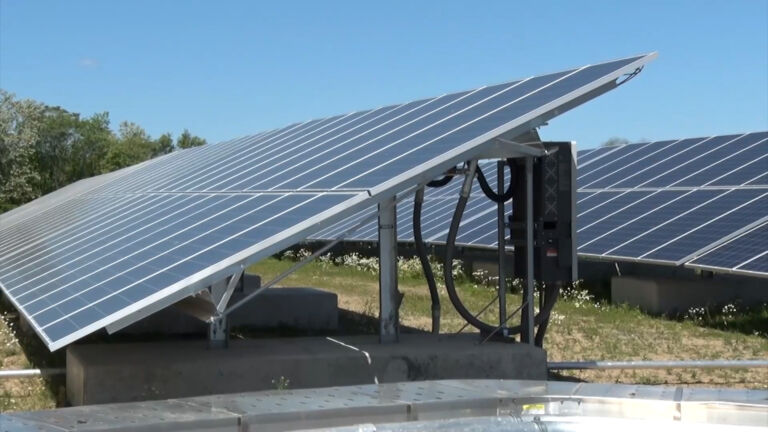
In the community solar program, solar systems of up to 5 megawatts are installed on rooftops, unused contaminated properties and carports that provide power to multiple customers.
The expanded program for the state’s electric utilities is often criticized for the slow pace in approving new solar interconnections. “Is it going to be a tremendous amount of work for utilities? No question,’’ said Fred DeSanti, executive director of the New Jersey Solar Energy Coalition.
Others, however, welcome the expansion of the program. “It is the most significant way to make solar energy more accessible,’’ said Elowyn Corby, Mid-Atlantic director of Vote Solar. “We have to be vigilant to make sure people have access to solar. We need to move full steam ahead on solar.’’
Efforts to improve participation
In the past, extending solar to less affluent communities was hindered by lacking the finances to install it on private homes, poor roofing and other structural problems, as well as the difficulty in delivering solar power to multi-dwelling units.
In the community solar program, solar systems of up to 5 megawatts are installed on rooftops, unused contaminated properties and carports that provide power to multiple customers. The new law aims to rectify a past problem requiring multiple proofs documenting customers are eligible to participate in the program. Under the new system, a customer merely needs to self-attest they are eligible.
Under the program, all community solar projects serve a minimum of 51% low- and moderate-income customers. Community solar subscribers are guaranteed a discount of at least 15% on their utility bill.
“When we commit to people-centered solutions like community solar, we can rise to the challenge of climate change while simultaneously building a more just and equitable society — now and for generations to come,’’ Colby said.