Credit: (AP Photo/David Zalubowski, File)
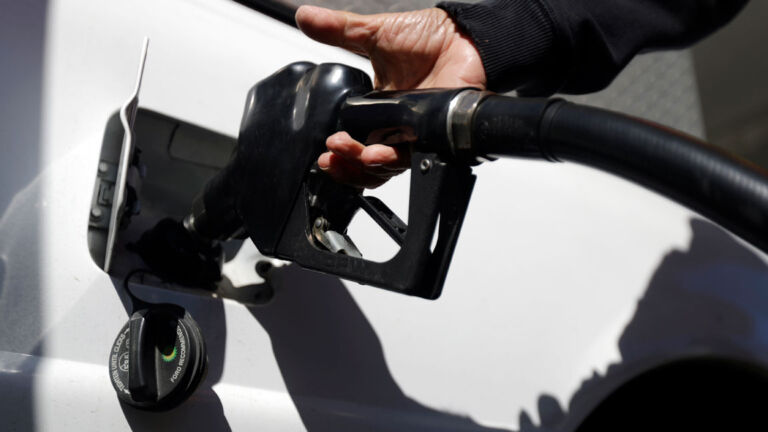
Gov. Phil Murphy’s administration wants to phase out the sale of gasoline-powered cars in response to concerns about emissions and climate change, while New Jersey still relies heavily on taxes on motor fuels to fund major transportation-infrastructure investments.
How the state government balances these two important transportation policies is among the key questions for Murphy and lawmakers as work is expected to begin in earnest on a reauthorization of New Jersey’s multibillion-dollar Transportation Trust Fund in the new year.
The trust fund, or TTF, must be renewed by June 30, or transportation-infrastructure spending could eventually stall, as it did nearly a decade ago when then-Gov. Chris Christie could not reach agreement with state lawmakers. That deadlock was broken months later, but only with an agreement to hike the gas tax.
In more recent years, New Jersey’s per-gallon gas tax — now set at 42.3 cents — has been steadily generating enough revenue to sustain a roughly $2 billion annual share of funding for the off-budget capital program, which finances ongoing investments in road, bridge and rail infrastructure throughout the state.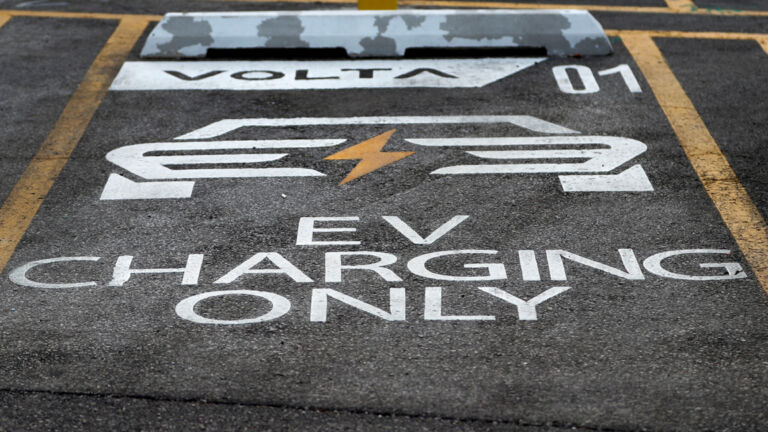
But the Murphy administration’s latest figures also indicate the use of all-electric vehicles and plug-in hybrid-powered vehicles has increased dramatically in New Jersey since Christie and lawmakers settled on an 8-year, $16 billion TTF reauthorization that is now due to expire by mid-2024.
Meanwhile, the administration recently signed off on a new rule banning the sale of new gasoline-powered cars in New Jersey beginning in 2035. While that aligns with the long-term goal of electrifying the transportation sector, it could also have significant implications for the trust fund’s long-range financial sustainability.
Impact on property taxes?
So far, little has been said publicly by administration officials about what the next TTF reauthorization will look like. But others have begun to raise concerns, including about the way any interruption in transportation funding could impact New Jersey’s notoriously high property-tax bills.
That’s because a big share of the state’s annual capital program supports projects at the county and local levels, where property taxes remain a primary source of revenue.
“If we don’t have that [state] funding there, this will directly impact property taxes,” said John Donnadio, executive director of the New Jersey Association of Counties, during a recent interview.
‘Our primary concern, at the county level, is making sure we have safe roads and bridges — and that there is funding to mitigate costs for property taxpayers.’ — John Donnadio, New Jersey Association of Counties
County governments are responsible for the maintenance of nearly 6,800 miles of roadway in New Jersey, as well as 7,140 bridges, according to Donnadio’s organization, which last month held a lengthy online workshop to go over the trust fund and the need for its reauthorization.
“Our primary concern, at the county level, is making sure we have safe roads and bridges — and that there is funding to mitigate costs for property taxpayers,” Donnadio said during the interview.
Questions about the fate of the trust fund — which also relies on state borrowing to help sustain ongoing infrastructure investments — were raised during a recent meeting of the state Commission on Capital Budgeting and Planning.
During the meeting, Sen. Doug Steinhardt (R-Warren) called the pending reauthorization of the TTF the “most critical capital-funding issue facing the state.” He also called on the Murphy administration to provide the panel with more information about what is coming next.
“We have nothing at all about how we’re going to renew a $2 billion annual capital program that’s going to expire in six months,” Steinhardt said during the meeting. “To me, it begs a myriad of questions.”
Big question about EV fees
Among the big questions on the minds of many transportation policy experts in New Jersey is whether a fee on electric vehicles will be incorporated into the next TTF reauthorization. That’s something that was discussed, but ultimately shelved, in the run-up to the 2016 deal.
Back then, there were about 10,000 registered electric vehicles and plug-in hybrids in New Jersey, accounting for a small share of the state’s nearly 3 million registered automobiles, according to data from the state Department of Environmental Protection and federal Highway Administration.
As of earlier this year, the number of electric vehicles and plug-in hybrids registered in New Jersey had jumped to 123,551, according to the DEP data.
According to the National Conference of State Legislatures, at least 32 states were levying a special registration fee for electric vehicles in 2023, and 19 states assess a fee on plug-in hybrids.
That suggests the state’s roads and bridges are being used by an ever-growing number of motorists who are contributing little, or nothing at all, toward their upkeep, even though electric vehicles are generally heavier, producing more wear and tear on the infrastructure itself. And the number will likely only rise in the run-up to Murphy’s 2035 sales deadline.
“There will have to be some kind of participation of EVs into highway funding,” said Greg Lalevee, business manager of the International Union of Operating Engineers Local 825.
According to the National Conference of State Legislatures, at least 32 states were levying a special registration fee for electric vehicles in 2023, and 19 states assess a fee on plug-in hybrids.
Also in place in some states or up for consideration are “road-user” or “mileage-based” fees that attempt to link funding for infrastructure spending directly to the actual roadway use of motorists, according to the NCSL.
Last year, the New Jersey Department of Transportation launched a voluntary pilot program to explore the use of a mileage-based fee as an alternative to the gas tax.
Amid the transition from gas to electric vehicles, some policy experts in New Jersey have suggested the best course may be to establish a new fee for electric vehicles but set at a level that would be less than the estimated amount spent annually on gas taxes by the average person driving a gasoline-powered car in New Jersey.
Gas tax
As for the gas tax itself, New Jersey’s per-gallon levy ticked up automatically by nearly a penny on Oct. 1 because the state’s current transportation-finance law calls for annual adjustments to offset flagging consumption. The same law is meant to ensure there is consistently enough revenue on hand to cover the state’s annual infrastructure spending, which totals more than $4.5 billion counting federal matching dollars.
In addition to the electric-vehicle fee question, other key issues to be settled over the coming months are the size and duration of the next TTF reauthorization, as inflation has driven up costs in recent years, including for steel.
Sen. Doug Steinhardt (R-Warren) called the pending reauthorization of the Transportation Trust Fund the ‘most critical capital-funding issue facing the state.’
Murphy, a term-limited Democrat, is due to leave office in early 2026. While there may be a temptation to do something only short-term, Lalevee, who also serves as vice chair of the Transportation Trust Fund Authority, said a longer-term reauthorization “is always better,” including for the purposes of securing federal contributions.
For its part, the Murphy administration has drawn praise for emphasizing “pay-as-you-go” financing, and for judiciously handling the $12 billion in new borrowing that was authorized as part of the 2016 TTF deal. The administration also saved nearly $100 million for the trust fund earlier this year by refinancing two prior debt issues.
Last week, administration officials confirmed the TTF still has more than $5 billion in unused bonding capacity, but declined additional comment when asked about the pending reauthorization of the trust fund.