
 Credit: (Photo Courtesy of Tiffany Miller, R&J Strategic Communications, and Rebecca Coakley)
 Rebecca Coakley grew up in a house “filled with turmoil” that included verbal abuse and constant fighting between her parents. By the time she was in second grade, child protective services had removed her father, who had alcohol use disorder and a diagnosis of narcissistic personality disorder, from her childhood home in New Milford.
In her father’s absence, Coakley — then eight years old — continued living with her mother and older sister in the house but witnessed her sister’s own mental health deteriorate through self-harming practices and cycles in and out of psychiatric hospitals.
In 2011, while her mother was trying to get her older sister into another psychiatric ward, Coakley was left at the house of relatives, where she said she was sexually assaulted by one of them. She was nine years old.
“What had become a safe haven for me there, away from all the chaos, was now ripped away from me once again,” said Coakley in a recent interview with NJ Spotlight News.
By the beginning of sixth grade, she was put on medication for anxiety and depression. By the beginning of seventh grade, she was hospitalized for having suicidal ideations. She was not attending school and was trying to find services that would work, but nothing felt right.
“It all felt kind of pointless to me. None of the therapists really stuck with me. It felt like there was no way out,” said Coakley.
The turning point
Finally, in ninth grade, she said she decided to try CarePlus New Jersey because her older sister was already receiving services from the nonprofit organization and because it was within budget, as her family was on government insurance.
“And it’s safe to say I’ve been there ever since. I found a therapist that I really clicked with right away. And I started seeing immediate improvements,” she said.
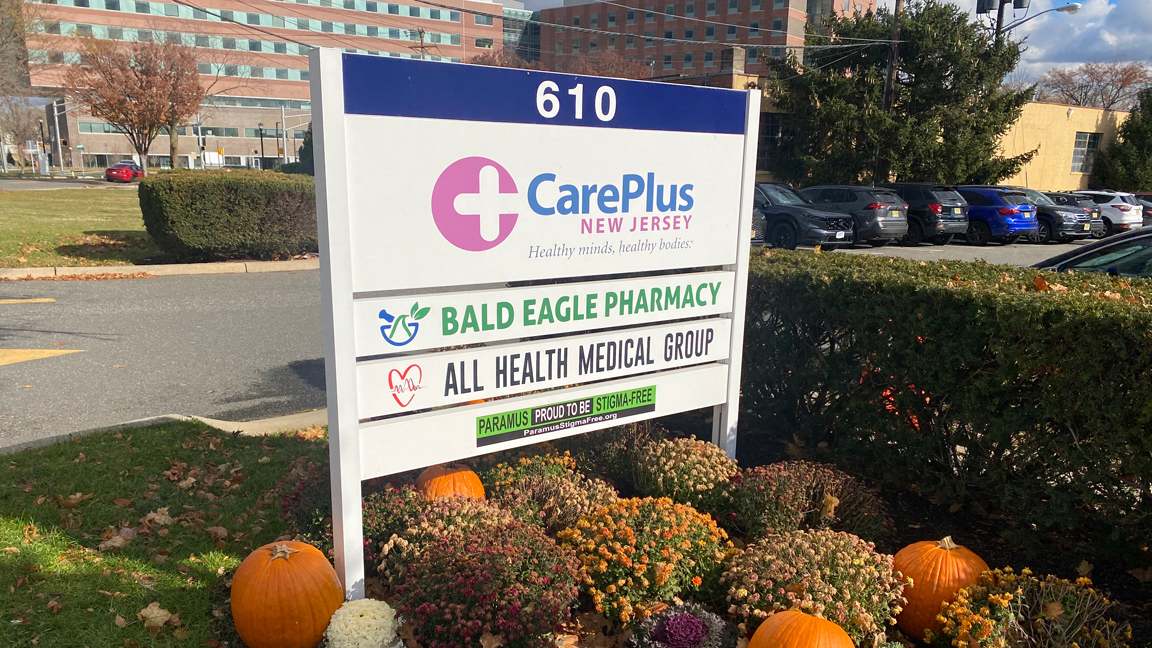
Coakley, now a 21-year-old senior at Ramapo College of New Jersey in Mahwah, is one of over 14,000 people annually who receive services from CarePlus NJ, Inc. a Paramus-based nonprofit that provides behavioral health services, medical care and social services through dozens of facilities in northern New Jersey. Now, the organization is slated to enhance services similar to those Coakley receives with an influx of money from two federal grants from the Substance Abuse and Mental Health Services Administration that total $8 million and are each set to last for four years, according to the organization. This funding will be used to enhance its certified community behavioral health clinic services in Bergen County as well as create a certified community behavioral health clinic at its site in Bloomfield in Essex County.
Certified community behavioral health clinics provide access to substance use disorder and mental health services in the same location, including 24-hours-a-day, seven-days-a-week crisis response and medication-assisted treatment, according to the National Council for Mental Wellbeing, a Washington, D.C.-based nonprofit. Additionally, these clinics aim to serve anyone who walks through their door, regardless of their diagnosis and insurance status, according to the council.
 Credit: (Bobby Brier/NJ Spotlight News)
The push by the state and federal governments and nonprofit leaders to make a wide range of health care services more accessible through these community-based clinics comes as over 2,400 people in New Jersey have died from suspected drug deaths this year, according to the Office of the Chief State Medical Examiner. In 2022, that number was 2,892, down from the 3,124 suspected drug deaths in 2021, according to the office.
‘Game changer’
On top of these suspected drug-related deaths, the nation continues to grapple with a mental health crisis that is taking a toll on people, regardless of age, race or sex.
The provisional number of suicides in 2022 nationally was 3% higher than in 2021, according to a November report from the Centers for Disease Control and Prevention. Suicide rates increased for nearly all race and Hispanic-origin groups compared with final 2021 data, although only the 3% increase for white non-Hispanic females was statistically significant, according to the report.
Meanwhile, advocates of certified community behavioral health clinics have hailed them as a “game changer” both in New Jersey and across the country.
“It brings together the mental health treatment and substance use treatment in the same place at the same time. When people are assessed, they’re assessed for both. They’re treated for both. And it really makes recovery much more possible,” said Carolyn Beauchamp, the president and chief executive officer at the Mental Health Association in New Jersey, a statewide nonprofit.
Among adults nationally ages 18 or older in 2021, 2.5% — or 6.4 million people — had both a serious mental illness and a substance use disorder, according to a December 2022 report from the Substance Abuse and Mental Health Services Administration.
Nationwide trend
Today, certified community behavioral health clinics are in 46 states nationwide, as well as in Washington, D.C. and Puerto Rico, according to Rebecca David, a senior adviser at the National Council for Mental Wellbeing.
“The CCBHC model originated from a recognition that in our country, we do not have sufficient access to comprehensive, high-quality and timely mental health and substance use treatment services,” said David. “And, as you look at the availability of services in any given community or state, it can really vary widely from place to place,” she said.
Created by the Protecting Access to Medicare Act of 2014, this model began as a nationwide “demonstration program” in 2017, with eight states selected for the initial demonstration, according to David. New Jersey was one of the original states chosen, according to Brigitte D. Johnson, the president and chief executive officer of CarePlus NJ.
‘Community behavioral health centers provide services to people who can’t get it anywhere else. It makes it super accessible, super simple and the environments are so much more welcoming than the private practices I’ve been to.’ — Rebecca Coakley
The “demonstration clinics” are receiving a Medicaid reimbursement rate that supports adding services and “engaging new populations in care,” according to David. They differ from other certified community behavioral health clinics that receive their funding through SAMHSA grants in that they are certified and monitored by their states and can receive enhanced payment through Medicaid, according to David. But certain clinics, such as CarePlus, receive both Medicaid funding and federal grants, according to Johnson.
An estimated 2.1 million people were served nationwide by 450 certified community behavioral health clinics and organizations that received these grants that were active as of August 2022, according to a 2022 CCBHC Impact Report from the National Council for Mental Wellbeing.
NJ service expansion
CarePlus New Jersey is one of seven organizations in the state that have certified community behavioral clinics and that were awarded funding from the federal government for an “Improvement and Advancement” grant to enhance and expand the services they currently provide in their existing clinics, according to Johnson. However, CarePlus was the only agency in the state under the current round of SAMHSA funding that received both an “Improvement and Advancement” grant and a “Planning, Development, and Implementation” grant to develop a new certified community behavioral health clinic, according to Johnson. The new clinic will be in Bloomfield.
The other organizations that run certified community behavioral health clinics throughout the state include Northwest Essex Community Healthcare Network, Oaks Integrated Care, Catholic Charities Diocese of Trenton, Rutgers University Behavioral Health Care, CPC Behavioral Health Care and Atlanticare Behavioral Health, according to the state Department of Human Services.
While CarePlus already provides outpatient mental health care services at a site in Bloomfield, the addition of a new certified community behavioral health clinic there is aimed at providing a range of outreach, screening, assessment, treatment, care coordination and “recovery supports” for adults and children with mental illness and substance use disorders, according to Johnson. The federal grant to establish the clinic in Bloomfield is for $4 million over the course of four years, Johnson said. Additionally, the organization is required to fully implement the new clinic by September 2024.
The additional grant the organization received from the federal government — another $4 million to be used over the course of four years — for its current community behavioral health clinics in Bergen County will be used to hire full-time masters-level licensed therapists, a full-time family nurse practitioner and clinical supervisors, among other positions, according to Johnson. This money will also be used to help adults and children with behavioral health needs who are either not connected to primary care or who need specialty care services to address high blood pressure, diabetes and obesity and are “most underserved,” including LGBTQ+, Black, Hispanic and low-income populations, Johnson said.
“I would like to see us continue [to] enhance the great care that we already give. … Being able to maybe step up a little bit more, giving appointments that are more immediate to our clients, especially if we’re talking about some individuals who are using opiates and may want to undergo outpatient withdrawal management,” said Dr. Jerry Joseph, the medical director at CarePlus New Jersey.
 Credit: (Photo Courtesy of Tiffany Miller, R&J Strategic Communications, and Rebecca Coakley)
 While Coakley said that her experience at CarePlus has been mostly positive, she was frustrated at times last year when she was placed on a waiting list for about five months to get a new psychiatrist after the one she was seeing retired.
“I was getting a little bit nervous … but that was the main struggle for me,” she said.
Still, Coakley has noticed going to therapy made it easier to attend school, socializing with people became “so much less intimidating” and her fear of men started to decrease, which has now allowed her to date people. After graduating from college, Coakley plans to get a master’s degree in social work.
“CarePlus saves lives,” Coakley said. “Community behavioral health centers provide services to people who can’t get it anywhere else. It makes it super accessible, super simple and the environments are so much more welcoming than the private practices I’ve been to. And I can’t imagine where I would be without it,” she said.
