
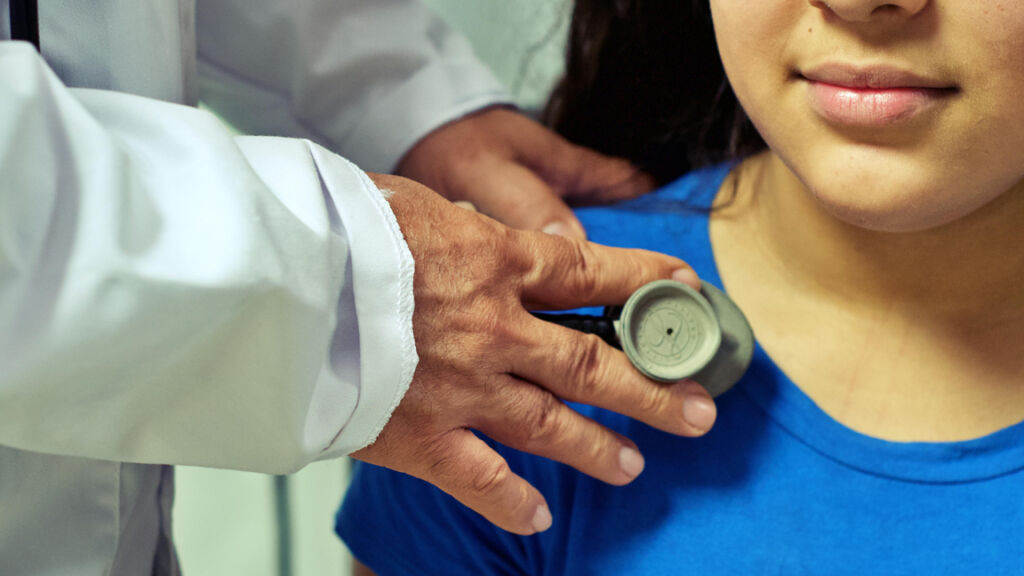
Zufall Health, which provides primary care and support services to low-income residents in central and western New Jersey, plans to expand access to proven addiction treatment thanks to a $300,000 two-year grant from the philanthropic arm of a Princeton-based pharmaceutical giant.
Zufall is one of 11 New Jersey nonprofits to get a share of the $3.3 million that the Bristol Myers Squibb Foundation, an independent charity of the prescription drugmaker, made available to safety-net organizations to improve health equity. The foundation selected the Camden Coalition, a nonprofit that works on complex care issues nationwide, to help design the grant program and provide technical support to grant recipients, the two organizations announced earlier this week.
The grant will enable the Osborn Family Health Center, a low-cost primary care practice in Camden, to add an OB/GYN care coordinator, according to a press release from the funders. St. Joseph’s University Medical Center, in Paterson, will hire four additional birthing doulas, tripling the size of this team. The Henry J. Austin primary care clinic in New Brunswick will create a remote blood-pressure monitoring program to benefit some 500 patients.
More addiction treatment
Zufall Health CEO Frances Palm said the organization will use the money to build on its ongoing work to train doctors and nurses in current addiction treatment protocol, how to avoid stigmatizing patients and other skills. She said the goal is to increase the number of providers who can prescribe medically assisted treatment, or MAT — considered the most effective protocol for opioid addiction — and boost their confidence with this work. So far, 12 of Zufall’s 40 medical providers have been trained and MAT is now available at all the system’s medical offices, Palm said.
“The stigma is really deep,” Palm said, but the work is already paying off. Zufall now provides this treatment to an existing primary-care patient who was driving over an hour to be treated and paying out of pocket, she said. The hope is that other patients who visit Zufall for a checkup or cancer screening will also feel comfortable talking to the doctor about their addiction.
“Substance-use treatment has been siloed for so long and we’re trying to move away from that,” said Sarah Aleman, Zufall’s senior vice president of behavioral health services. “We see this as part of primary care.”
Bristol Myers Squibb Foundation has focused spending on health equity for nearly a quarter century in various states and countries — including $17 million in New Jersey over the past decade. It has historically invested in larger systems, foundation president John Damonti explained. “This is very different,” he said of the new grants, which offer more flexibility and went directly to “these frontline organizations that are providing care day in and day out.”
Tech support, a critical component
While the funding is critical, Damonti said the technical support available from the Camden Coalition is also important for each project’s success. Coalition staff helped design the grant initiative — known as the NJ Safety Net Innovation Program — and are available to provide one-on-one assistance to the funding recipients to help them implement the project, identify other funding streams, build partnerships and more.
“The Camden Coalition has the opportunity to provide technical assistance to healthcare organizations across the country through various initiatives, but safety-net institutions, particularly smaller ones, often don’t have the funding to access this sort of support and resources on their own,” said Sheryl Mathis, who oversees the grant program for the coalition.
Mathis agreed that funding these frontline organizations directly made sense, given their local knowledge and expertise, and the “less prescriptive” nature of the grant will allow recipients to use it as they need to hire staff, expand training or take other steps to build capacity. “Many organizations are doing great work. And they know their communities best,” she said.
The foundation has worked closely with the Camden Coalition in the past and in 2011 it provided them nearly $3.5 million over five years to advance efforts to help patients control chronic diseases like diabetes. In 2019, the foundation gave $1 million to Cooper University Hospital’s Urban Health Institute to reduce the impact of cardiovascular disease on Camden area patients. Damonti said while investing in systems like these will continue, the foundation is eager to see if the safety-net grant program can be replicated elsewhere in New Jersey, the United States or abroad.
Putting a safety net in place
Working together, the foundation and the Camden Coalition launched the safety-net grant program last January and announced that shares of the $3.3 million would be available to 10 organizations. Federally funded community health centers, low-cost clinics, safety-net hospitals and regional health hubs, which seek to knit together services in low-income communities, were all eligible, according to the fact sheet. The deadline for applications was Aug. 1 and interest was significant, according to those involved.
Adrienne Gonzalez, who oversees the grant program for the foundation, said the final choices were made by an outside panel of experts that included providers, policy experts and a patient who provided a critical consumer point of view. The panel strove for geographic and programmatic diversity with the funding, she said, while focusing on locally driven solutions. Instead of the funders telling nonprofits where to spend the money, she said, “they told us, ‘This is where there is the greatest value added’.”
While the foundation had planned on funding 10 projects, 11 actually made the cut. “It was a very competitive pool,” Mathis said. “There were many great ideas, which made it difficult to winnow it down.”
Grants will also go to:
- Care Plus Bergen/Bergen New Bridge Medical Center to improve care for LGBTQ+ patients
- Greater Newark Health Care Coalition to address pediatric asthma
- Health Coalition of Passaic County for diabetes prevention and care
- Ocean Health Initiative to expand prenatal and maternal care
- South Ward Promise to create and staff a wellness center in Newark
- Cooper University Health’s Urban Health Institute to better assess social determinants of health in Camden
- Visiting Nurse Association of Central Jersey Community Health Center for certified leadership and safety training
