 Credit: (Edwin J. Torres/Governor's Office)
The Murphy administration is aiming to complete an overhaul of the Energy Master Plan next year, a roadmap expected to detail how the state plans to transition to 100% clean energy in a just over a decade.
In a brief meeting Wednesday, the state Board of Utilities asked the state Treasurer’s office to hire a consultant to oversee revision of the 2019 EMP, an assortment of policies that aim to combat climate change and phase out the use of fossil fuels contributing to global warming.
Since the plan was adopted, Gov. Phil Murphy has accelerated its goals, converting to a 100% clean-energy economy by 2035, instead of midcentury as was originally proposed. In the past year, however, there have been rising questions about the feasibility of the goal and its cost to consumers.
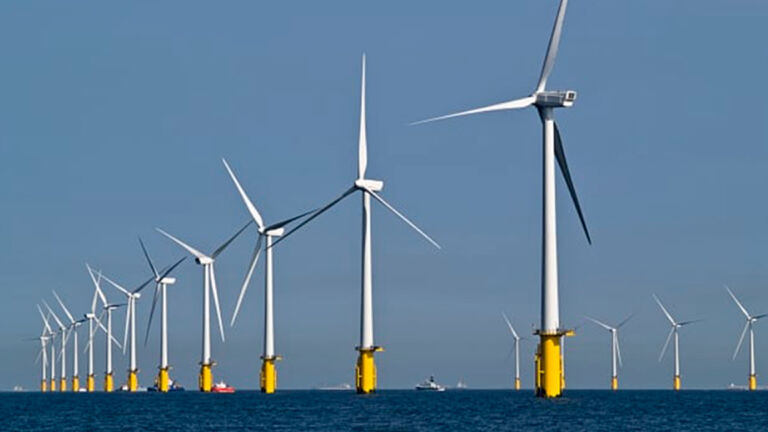
Key components of the plan have met opposition from parts of the state, including a move to phase out the sale of new gasoline-powered light-duty cars by 2035, initial steps to electrify the building sector and to build massive offshore wind farms along the Jersey coast.
Cost-benefit analysis
The Murphy administration and the BPU remain steadfast in their commitment to clean energy, however. Murphy abruptly canceled public hearings on the EMP 11 months ago, saying he wanted the new plan to better assess the economic costs and benefits of the transition, as well as impact on ratepayers’ gas and electric bills.
There was virtually no discussion about the scope and potential revisions in proposed policies in the new plan. Only BPU President Christine Guhl-Sadovs spoke during the public portion of Wednesday’s meeting, suggesting the agency wants to look at progress in achieving the goals and ensure it is on the right track to meet them. “This is not just a refresh of the 2019 plan,’’ she said.
A BPU spokesman declined to make the president available for an interview.
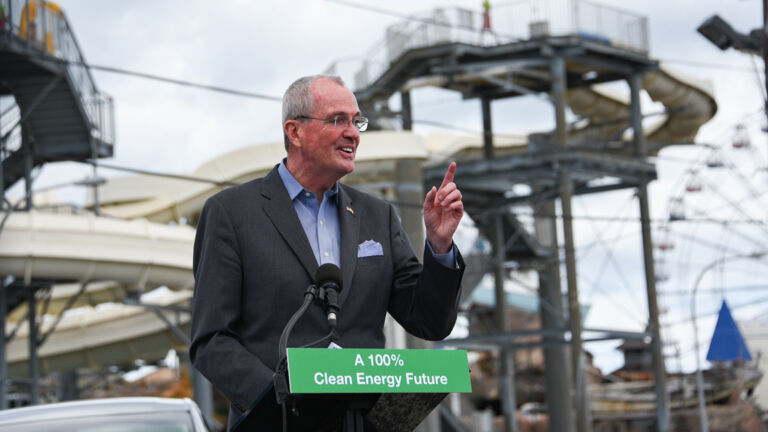
The action to update the plan won backing from clean-energy advocates.
“A lot has changed in the last five years,’’ said Doug O’Malley, director of Environment New Jersey and a longtime proponent of the plan. “The EMP needs to reflect those changes. The biggest item that everyone is talking about is grid modernization.’’
The biggest change, added Ed Potosnak, executive director of the League of Conservation Voters of New Jersey, is the governor ramping up the transition to be done in 2035, instead of 15 years later.
“We can only address climate action with a plan that puts us on a path to 100% clean energy by 2035,’’ he said.
What skeptics are saying
Others were more skeptical. The entire 2019 master plan needs to be reevaluated and modified, according to Raymond Cantor, deputy government affairs manager for the New Jersey Business & Industry Association.
“There are thousands of solar projects waiting to get completed because they can’t be hooked up (to the grid),’’ Cantor said. “When you set a lot of artificial deadlines, you end up with policies that do not work or squeeze out more cost-effective options.’’
Mike Makarski, a spokesman for Affordable Energy for New Jersey, called the existing energy plan a failure. “The board over the last few years has chosen hiding, obfuscation and a complete lack of transparency over what should have been an open and deliberative process,’’ he said.