 Credit: (GraphicArtistry via Pixabay)
In New Jersey, boards, authorities and commissions whose members are political appointees have wide-ranging responsibilities and power within state government — for example, the New Jersey Turnpike Authority, the Pinelands Commission, the State Parole Board and so on. They control millions of dollars of public funding and also advise elected officials.
Although these appointees can have a huge impact on the lives of residents, the demographic makeup of these boards is vastly different than the state’s. White men account for about 45% of appointed officials but they are only 27% of the state’s population, according to a new report from the Center for American Women and Politics at Rutgers University. No other group comes close to that kind of representation for its relative population.
Researchers sent a survey to all appointees about their positions and their ethnicity, race and gender and, as detailed in the CAWP report were able to collect information on 57 of the state’s boards, commissions and authorities.
The report also says that Asian American/Pacific Islanders and Latino residents face the greatest disparities between their representation in government and representation in the population. Asian American/Pacific Islanders hold under 3% of the state’s appointed offices despite comprising over 11% of the population. Latino men and women comprise 22% of the population but are only 6% of appointees.
‘The state of New Jersey falls woefully short’
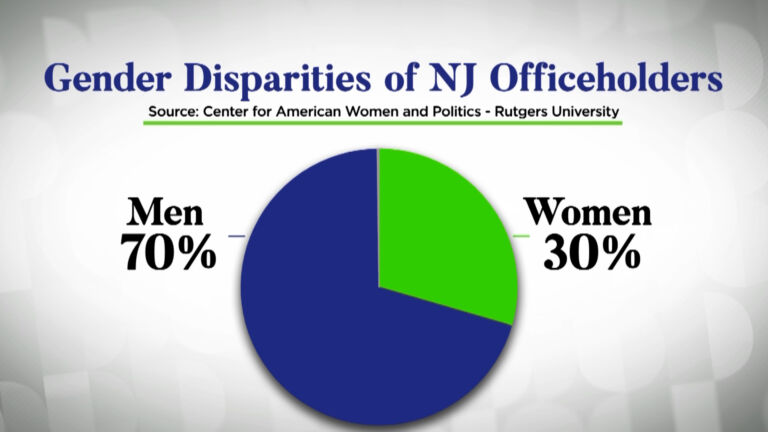
Overall, women only make up 33% of appointed officials.
“The state of New Jersey falls woefully short in terms of gender and racial diversity among its appointed public officials,” the report reads. “Given that appointed boards and commissions have significant policymaking and regulatory authority and given that this state is among the most diverse in the country, it is alarming to consider the tremendous number of voices, perspectives, and life experiences missing from these governing bodies.”
In January 2022, the state passed legislation that directed the Center for American Women and Politics and the Eagleton Center for Public Interest Polling at Rutgers University to create a survey that would collect demographic background information of state-appointed officials and politicians, excluding judges and school board officials to better understand the demographic makeup of state leadership and offer recommendations for improvements. The report says the original version of the legislation required the governor or other appointing authority to sign the request to complete the survey, giving the survey an endorsement that could have encouraged more participation. Gov. Phil Murphy struck that requirement in a conditional veto. So appointees were not legally required to participate in the survey and responses were voluntary. The report notes the rate of response to the survey was just 20.7%, and that figure only accounts for the over 2,500 appointees that researchers were able to contact.
”Citizen engagement and participation are crucial components of democratic government. Intentional efforts by state government leaders to foster participation and ensure diversity on state appointed boards can make a difference,” according to the report. It recommends requiring the state to collect demographic information, making the data public, providing better contact information of appointees and publicizing vacancies to enhance diversity on boards and commissions.