 Credit: (Edwin J. Torres/Governor’s Office)
New Jersey may be first state in the country in to require climate change be broadly taught in schools, but there remains plenty of debate about how to put that responsibility into practice.
In what is typically a routine vote, the state Board of Education on Wednesday only narrowly passed the state’s new learning standards in math and language arts, with the inclusion of climate change education being the main sticking point.
In a 6-4 vote approving the standards, dissenting members said the board should leave recommendations for teaching climate change out of standards for math and language arts. Board members on both sides of the vote lamented that politics is becoming a typical part of board debate.
More than mere words
“These standards are really meaningful because it gives a way to teach,” board member Elaine Bobrove said. “You need to have some kind of an example so students can feel like ‘I’m learning something. I’m doing something,” that there is a meaning, that it’s not just numbers, it’s not just sounds of words.
Held in the department’s Trenton offices, this was the first meeting since the board listened to public testimony about the state’s requirements for schools. In August, the board clashed over definitions and requirements about how LGBTQ+ students are served. This month, it was climate change.
In 2020, New Jersey became the first state to require climate change be taught across content areas, not just in science classes. The state Board already has approved the addition of climate-change learning standards in 21st Century Life and Careers, Comprehensive Health and Physical Education, Science, Technology, Visual and Performing Arts and World Languages.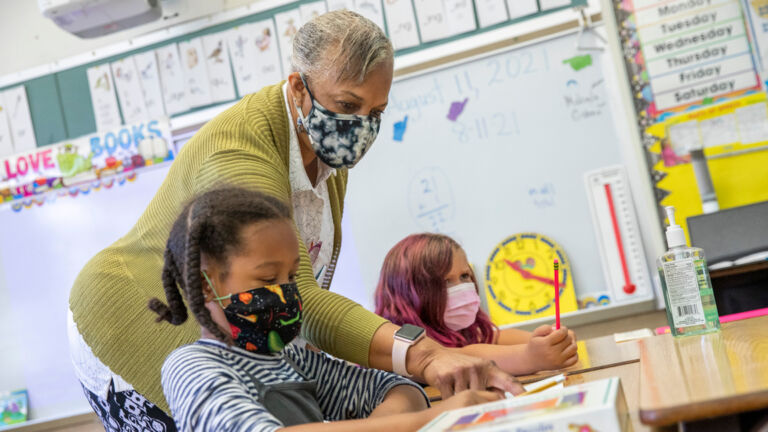
Language arts and math were next up in the cycle.
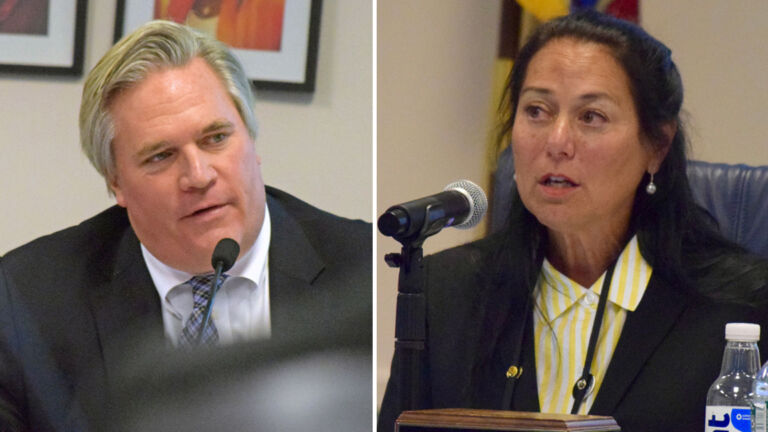
“Here we sit again with politics finding its way into the state board’s business,” said vice president Andrew Mulvihill, who has led much of the opposition. “I don’t think that whoever’s in charge should pick something they think is important to them and put it in every grade level, in every subject matter.
Climate was only one page of each of the 70-plus-page proposals, but it ended up the only real discussion. The other aspects of the math and English standards appeared to have widespread support.
Not qualified for climate change
Most of the public comments submitted to the board also focused on including climate change, with an overwhelming majority supporting its inclusion in math and language arts standards. Still, some educators said they believe it should be limited to science classes, since math and English teachers are not trained or qualified to teach the content.
The department made the case for including it across subject areas. Lisa Haberl, director of teaching and learning, said research on climate change education is still emerging, but studies have shown how interdisciplinary instruction overall helps students learn better when the content is placed in context.
And state officials stressed the new standards do not require climate to be taught in all classes. There will just be more resources available if educators choose to do so.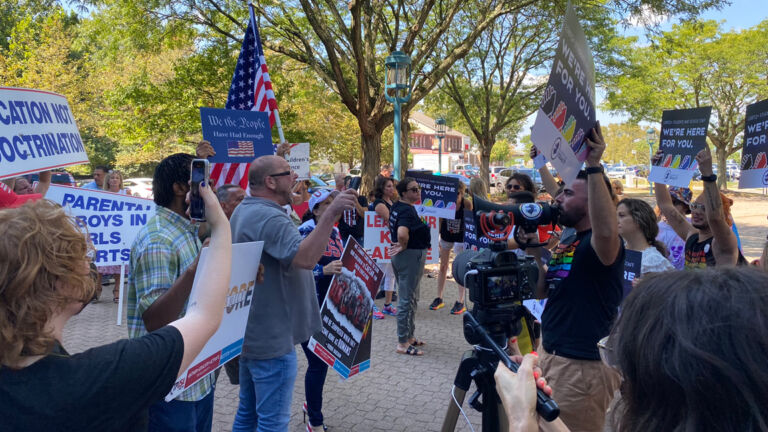
“It’s important to allow teachers the opportunity to incorporate this where needed,” said board president Kathy Goldenberg. “This is not a mandate. This is showing potential professional development tools to teachers.”
Board member Arcelio Aponte said the inclusion of real-world applications in math and English could help students get excited about the curriculum, which may improve student outcomes.
“It is an opportunity to identify an area of expanding career opportunities for our students, to apply real world life experiences to the classroom and to allow our students and teachers to decide what they’re interested in in the classroom,” Aponte said.
All opposed
In addition to Mulvihill, board members Mary Beth Berry, Mary Elizabeth Gazi and Joseph Ricca voted against the revised standards. Ricca, a school superintendent in New York state and the board’s only working educator, warned against the standards becoming too prescriptive.
“Once you do it, you can’t say no,” he said .
The board last updated the math and language arts standards in 2016 and follows a seven-year cycle for revising the standards that are the basis for curriculum statewide. The latest began in July 2022, with input from education experts and others.
The updated English Language Arts standards also include a greater focus on phonics as students develop reading skills in grades K-5, including decoding and encoding words and analyzing word parts.
The revisions include new so-called “Foundational Writing Skills,” such as emphasizing sound-letter basics and developing encoding and spelling skills. In Mathematics, changes include enhancing data literacy instruction for younger students and introducing word problems with money in earlier grades.
Mulvihill said he was disappointed but not surprised by the eventual vote.
“I don’t think we should be teaching subjects that have nothing to do with math and English in math and English,” he said. “This idea of teaching climate change in every class, in every subject matter, it kind of smells of indoctrination.”