Credit: (BASF)
New Jersey finalized a settlement with the chemical company BASF to compensate the state for damage to natural resources as a result of chemical leaks at Toms River by the company’s predecessor, Ciba-Geigy.
BASF will pay more money, designate more land and spend more time restoring formerly polluted lands at Toms River than was first proposed by the state, the Department of Environmental Protection said in announcing the agreement Wednesday.
The DEP modified its original plan, proposed late last year, in response to public comments made as part of the settlement process. As a result, BASF will pay $500,000 for damage to natural resources and project oversight costs, up from an original $100,000.
The deal also adds 50 acres to about 1,000 acres of land that is designated for conservation, environmental compliance and public access, and doubles the time that the company will pay for restoration projects to 20 years from 10 years. BASF will remain legally responsible for all the restoration projects until DEP approves their transfer, the agency said.
The agreement is unrelated to earlier actions to clean up the town’s public water supply that earned Toms River national notoriety as the location of a “cancer cluster” during the 1990s when the water was blamed for around 130 cases of childhood cancer, some of them fatal.
Incorporating public input
The Toms River deal requires BASF to permanently protect groundwater, and to design and implement nine natural restoration projects on 375 acres of the preserved land. The company is also expected to incorporate public demands in its design of environmental education centers, walkways and natural resource interpretations, the DEP said.
“We took to heart the number of public comments we received, took seriously the many stories and the many points of perspective that were raised by the public in the engagement sessions that we held in the spring,” DEP Commissioner Shawn LaTourette said in a conference call with reporters. “I believe that we have landed in a place that will not only ensure that the natural resources that were injured are compensated for, but that we are also providing a place where — years from now — successful natural resource restoration projects will be able to offer their benefits to the public.”
LaTourette predicted that the people of Toms River will need to see evidence of environmental cleanup before they accept that the site is safe for public use. “We are not going to convince them. We have to show them,” he said.
‘It’s great that 1,000 acres will be permanently preserved but what’s the point if the land is still polluted and it’s still unsafe for recreational use?’ — Taylor McFarland, NJ Sierra Club
Germany-based BASF, which has more than 110,000 employees worldwide, welcomed the settlement, which it said will allow it to begin restoring the site.
“BASF remains fully committed to the terms of the NRD Settlement and appreciates the diligence and professionalism demonstrated by NJ DEP throughout this process,” the company said in a statement. “We look forward to preserving the land, implementing the planned environmental projects and opening new possibilities to encourage recreation, learning and community engagement at the site for decades to come.”
Any development of 200 acres of the site that is not covered by the settlement will not be residential and will comply with the town’s industrial zoning for that area, said Lisa Brown, a spokeswoman for the company.
 Credit: (NJDEP)
The 1,255-acre property was the site of the former Ciba-Geigy Corporation, which made chemicals including industrial dyes, pigments, epoxy resins and plastics from 1952 to 1990. The contaminated site was placed on the National Priorities List in 1983 as an Environmental Protection Agency Superfund site.
Criticism of the agreement
The New Jersey Sierra Club criticized the agreement, saying it does not go far enough to hold corporate polluters accountable, or to fully clean up the site for future recreational use.
The environmental group said it is still concerned about when a plume of toxic volatile organic compounds (VOCs) will be cleaned up; whether contaminated groundwater will be removed and whether an aquifer will be restored to drinking water standards. There are also unanswered questions about the possible presence of PFAS “forever chemicals,” it said.
Those concerns led the Sierra Club to call unsuccessfully for the settlement to be delayed until the site could be fully evaluated.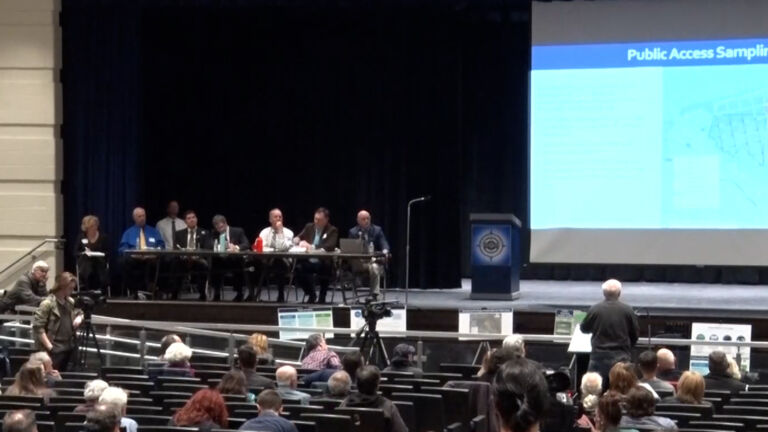
“It’s great that 1,000 acres will be permanently preserved but what’s the point if the land is still polluted and it’s still unsafe for recreational use?” said the Sierra Club’s Conservation Program Manager, Taylor McFarland, in a statement. “The people of Toms River have been suffering from exposure to the Ciba Geigy site for too long, they deserve better.”
Janet Tauro, New Jersey board chair for the nonprofit Clean Water Action, said the agreement should not have planned for public access to the site, which she said had too many bad memories of chemical contamination for the people of Toms River.
“This site might make a truly fantastic park and education center in about 100 years, but not now,” she said. “No one is ready psychologically to go on that property. It had such a horrible history, it was a crime scene, it was beyond tragic.”
Gov. Phil Murphy’s administration has so far filed at least 18 of these damage lawsuits. Two, including the Toms River case, have been settled, said LaTourette.
Under pressure from the public for more land to be included for cleanup under the settlement, the DEP added 50 acres that is covered by the agreement but was unable to include the entire property, LaTourette said.
Responsible parties that have discharged hazardous substances, contaminants, or other pollutants to the environment are required to investigate and remediate discharges, the DEP said. However, remedial actions may not fully restore injured natural resources or compensate the public for natural resource injuries. In those cases, responsible parties are liable to the people for natural resource restoration, the agency said.