
 Credit: (AP Photo/Julio Cortez)
Warehouses are still going up in New Jersey at a rapid pace, fueling bitter debates in communities across the state, but there are some new signs of cooling.
A closely watched report on the state of the warehouse industry reported that vacancies in the second quarter of 2023 were rising, and distribution companies were subleasing unused space at the highest rate in years, in large part in response to gathering economic uncertainty.
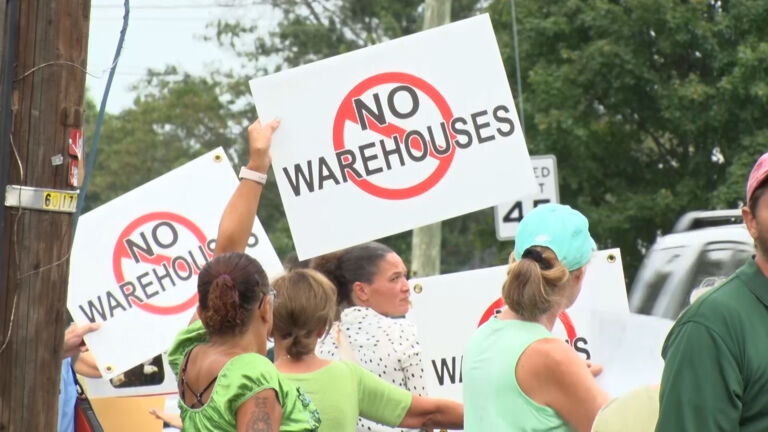
Officials ask developer to consider selling the land, a move eyed in other towns fighting warehouse sprawl
Despite increasing resistance from municipalities and several bills in the Legislature that would curb the current warehouse boom, the report described the construction pipeline as remaining “robust.”
The biggest industrial lease made during the second quarter was by Christian Dior Perfumes, which agreed to lease 886,000 square feet near Exit 8A on the New Jersey Turnpike.
Rising vacancy rates
But the steady addition to the state’s warehouse inventory has also begun to lead to an increase in vacancies, the report said. And that’s expected to continue in the next few quarters as the entry of new warehouses outpaces “net absorption,” or the rate at which the new supply is taken up by tenants.
For the latest period, the industrial vacancy rate in the north and central Jersey market rose to 3.1% from 2.8% in the fourth quarter of 2022, the data showed.
Jon Hurdle discusses the latest trends in warehouse development in NJ
“The market is recalibrating, with vacancy expected to slightly rise over the next few quarters as construction deliveries begin to outpace net absorption, reversing the trend of the last two years,” according to the report, published in mid-July.
Millions of square feet of warehousing have been built, often on previously undeveloped sites, to meet surging demand for logistics space, which has also been fueled by consumers’ switch to online shopping. Opponents of the boom have been looking for any signs that the market may now be oversupplied with warehouse space, but there has been little indication that supply is slowing.
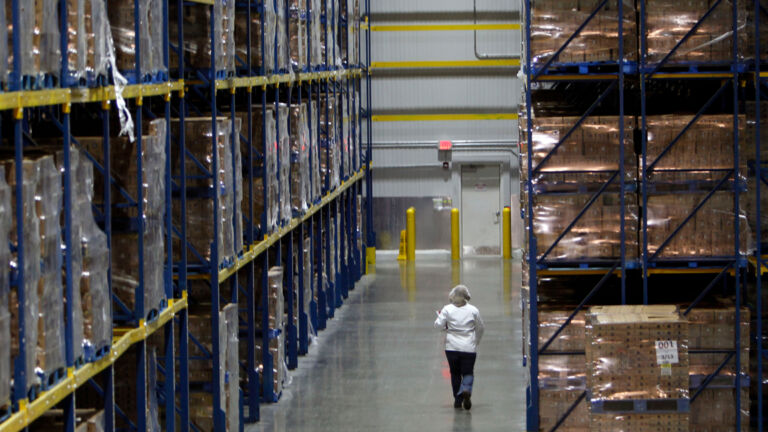
Bills would give more power to state rather than local governments
Despite the increasing vacancy rate, the average asking rent still rose 9.5% so far this year, compared with the same period of 2022, and rents are expected to rise further because of continued strong demand for top-grade warehouse space, the company said.
“We’ve continued to see a flight to quality, with much of the new supply being Class A properties,” said Lukas Berasi, research manager for Newmark, based in Rutherford. “We believe rents will continue to increase as these properties will garner higher rents.”
Other trends to track
Newmark reports added to the mixed picture. Industrial leasing dropped to 5.7 million square feet during the second quarter, its lowest since the end of 2021, the report said, and the market saw the highest level of subleasing since 2015 as more tenants tried to control costs in an uncertain economic environment.
“Rising interest rates, an inflationary environment, and declining consumer demand are driving some firms to control costs through supply-chain optimization and consolidation, which includes putting excess and underutilized space up for sublease,” the report said.
In South Jersey, construction outpaced the rate at which new buildings were occupied by a much greater margin than in the state’s north and central regions, Newmark said in a separate report for the Greater Philadelphia market.
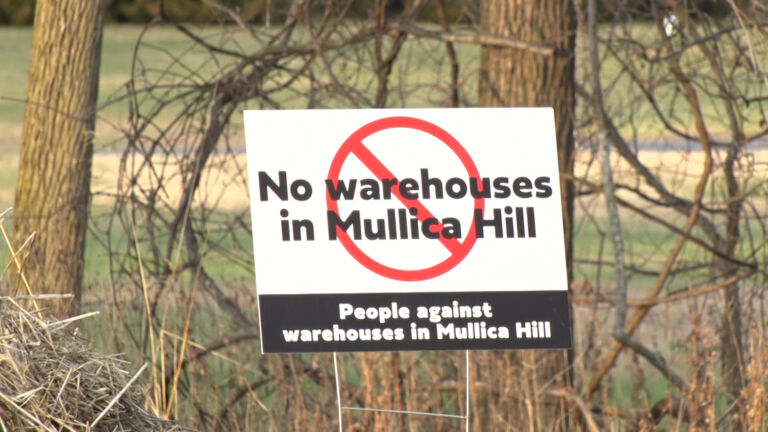
Lawmakers stepped up efforts to curb surging industry, but growth remains strong
Despite the new supply, rents continued to rise in the south. The average asking rent for industrial property in the Philadelphia region jumped by almost 20% so far this year, the biggest increase since 2017.
Because of the sharp increase in industrial rents in recent years, the South Jersey report warned that tenants in line for a lease renewal soon could face rents that are twice as high as they agreed to when they started renting industrial space five or 10 years ago.
Still, construction starts in the region slowed sharply in the second quarter to their lowest level since 2019. Since most of the new industrial space now under construction is expected to be delivered in the second half of this year or in 2024, that could result in a supply crunch by 2025, resulting in resumed upward pressure on rents, said Trae Hoffner, a research analyst for Newmark.
“There is not much incentive for owners to drop rates when there is a good chance the market swings back in their favor,” he said.
Major leases signed in the second quarter included a cold-storage facility in Burlington County covering 255,000 square feet, the report said.
