
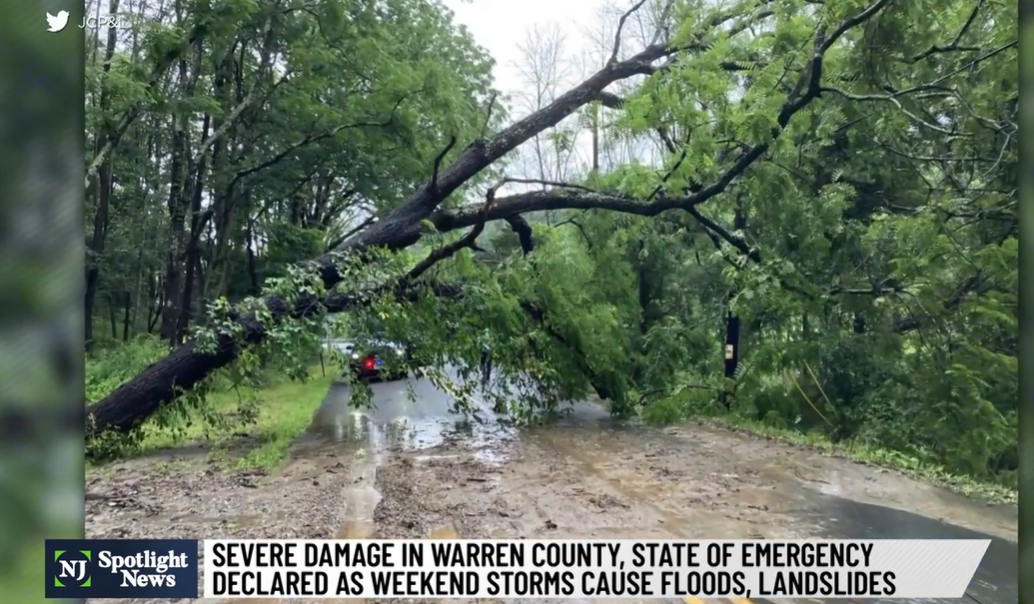
 After intense weekend rainstorms triggered flooding, power outages and a landslide in parts of New Jersey, Gov. Phil Murphy issued a state of emergency order and that means strong anti-price gouging protections are now in effect across the state.
Those protections will remain in place for 30 days after the state of emergency declared by Murphy on Sunday afternoon is lifted, according to state law.
On Monday, Murphy and other state and local officials toured storm damage in Warren County, including areas struck by a landslide that occurred during the heavy rainstorms, which also triggered fatal flash flooding in Pennsylvania.
It’s the latest example of extreme weather here in New Jersey that Murphy and others have linked to man-made global climate change.
In the state of emergency declaration, Murphy said the storm damage posed “an imminent hazard that threatens and presently endangers the health, safety, and resources of the residents of the State.”
According to a tipsheet prepared by the state Division of Consumer Affairs, the formal declaration of a state of emergency in New Jersey automatically activates a general ban against “excessive” price increases — those exceeding 10% of the cost of the same product immediately prior to the state of emergency.
Repair scams
The victims of such disasters should also be wary of other scams that target those recovering from a catastrophic event, including home-repair and fake-charity scams, according to the tipsheet.
To protect against home-repair scams, residents are encouraged to verify whether a contractor is registered to do damage repair by calling the Division of Consumer Affairs at 800-242-5846 or 973-504-6200.
Other tips include asking for a copy of a contractor’s liability insurance policy and calling the insurer to make sure the policy is still valid; and demanding a contract in writing with a full understanding of all terms and conditions, as well as materials that will be used.
To protect against home-repair scams, residents are encouraged to verify whether a contractor is registered to do damage repair by calling the Division of Consumer Affairs at 800-242-5846 or 973-504-6200.
Residents are also urged not to pay the full price of a project up front and to never give a credit-card number to a stranger over the phone or online. They should also demand identification from anyone claiming to be the representative of a utility company seeking to do a home inspection, according to the tipsheet.
To protect against fake-charity scams, residents are urged to check with the Division of Consumer Affairs to determine whether a charity seeking donations is registered to solicit in New Jersey.
Those considering making a donation are also encouraged to learn exactly how the charity plans to use the money it is raising and how much will be spent on programs, fundraising and management costs.
A disaster recovery guide published several years ago by the New Jersey Society of Certified Public Accountants provides other useful information for storm victims, including detailed instructions to help report losses to insurance companies.
A rundown of exactly where to turn to begin replacing things like passports, birth certificates, marriage licenses, car titles and Social Security cards lost during a disaster is also included in the guide, as well as instructions on what to do if credit cards and ATM cards are lost or damaged.
Also included in the guide are instructions for property owners who may want to contest any settlement they are offered by an insurance company, including how to file an appeal with the state Department of Banking and Insurance.
