
 Credit: (Bobby Brier; NJ Spotlight News)
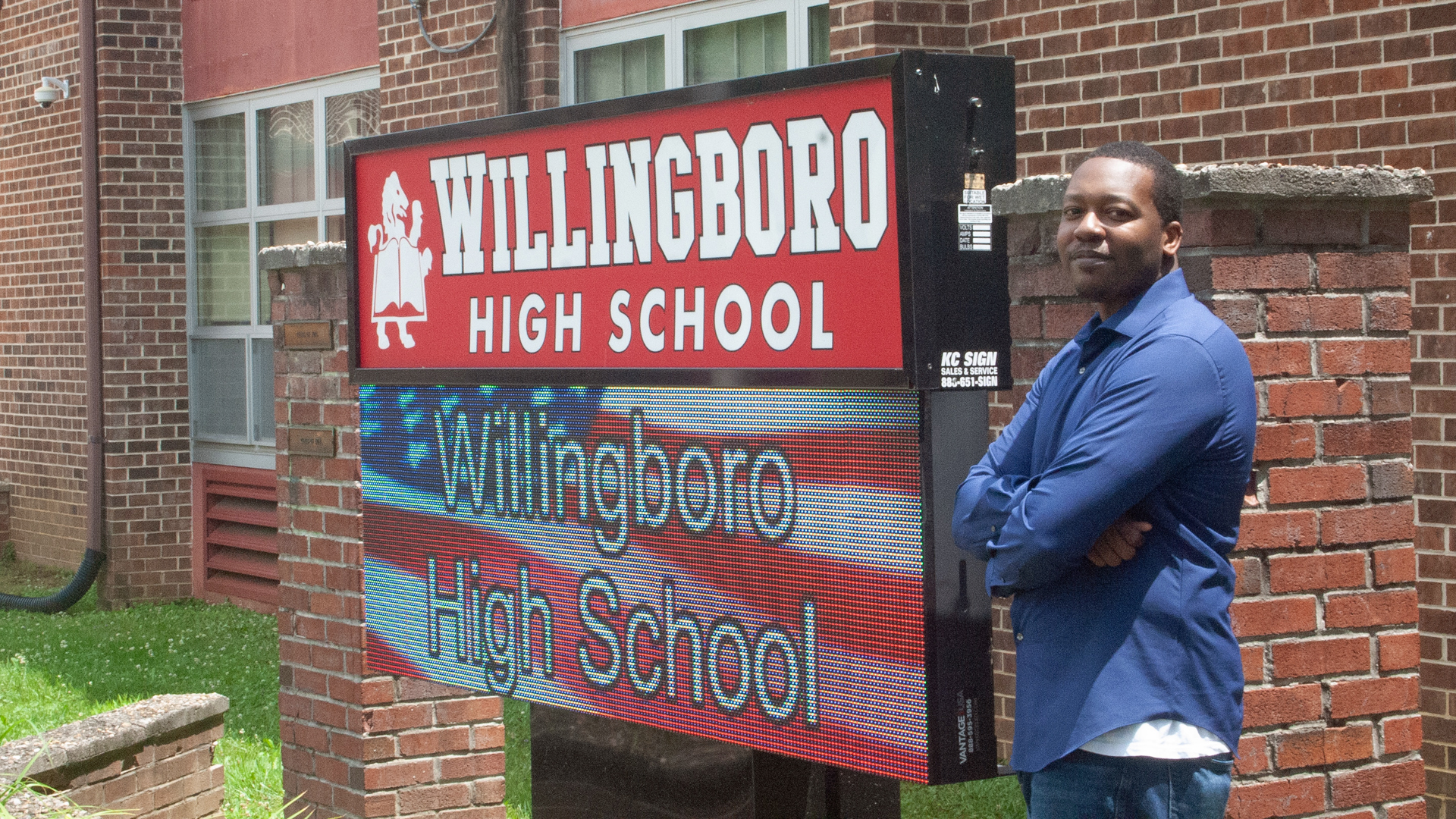
When Gary Nelson arrived at Willingboro High School in 2016 to direct the school-based youth services program, he took a few months to listen to students and find out what they were interested in.
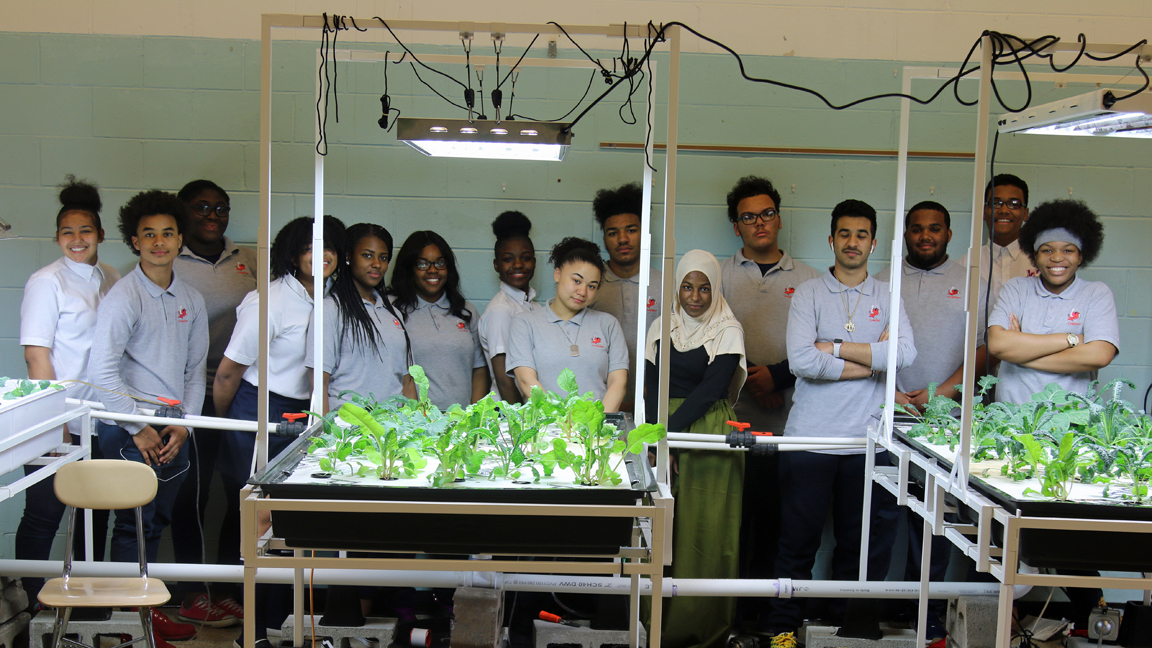
Interestingly, one topic was gardening. So he set out to build an aquaponics program from scratch to teach students about sustainable farming.
Eventually students were talking with him not only about the plants they were harvesting, but also about some of the worries and anxieties they were going through outside of school.
Nelson is a strong proponent of school-based youth services programs, believing them to be welcoming spaces for students. Meanwhile, the state continues to build out a regional “hub-and-spoke” model that aims to offer more mental health services to more students statewide. But opponents of that model, like Nelson, say the state’s plan, officially known as the New Jersey Statewide Student Support Service (NJ4S) Network, will not work for Black and Hispanic students in New Jersey because it is “detached” and “impersonal.”
“The state is not going to cure our communities, these behavioral health organizations are not going to heal our communities, it really truly is up to us,” Nelson said. “And we have the ability to do that. We just need people that have that mind.”
Different approaches
Last October, the Murphy administration announced its plan for a regional “hub-and-spoke” model. The program will create 15 hubs, or centers in the state. The centers will be staffed with prevention specialists and mental health counselors who will deliver services to schools, libraries, homes, community centers, social service agencies and faith-based organizations. In April, the state announced the 12 health care organizations that will run the regional centers. The new program is scheduled to be in place before the first day of the new school year in September.
 Credit: (Courtesy of Gary Nelson)
The state’s original proposal for the hub-and-spoke model was designed to replace the current school-based youth services programs by June 30, but after pushback from school superintendents, state lawmakers and advocates, state officials announced in November that they would continue to fund the existing school-based youth services programs while building out the regional model.
Now, Nelson has left Willingboro High School and is setting out to build more school-based programs and bolster them through a small business, Nelson Counseling, LLC and his nonprofit organization, The Center for Family and Community Empowerment. Through these new ventures, Nelson said he aims to tailor the new school-based youth services programs to the needs of each school community.
Gary Nelson explains the aquaponics program at Willingboro High School
First inspiration
After graduating from William Paterson University in 2007, Nelson was employed at Mercer County College as a youth development worker in a program called Educational Talent Search. His job was to help students get into college and learn about financial aid, but while working one on one with students, he heard about the trauma many had been through and the deep depression they were dealing with.
“Some of the stories were so incredibly painful to hear,” he said. “And it made me feel for them so much. I noticed that kids would continue to want to talk to me because I listened,” he said.
So, he decided to go back to graduate school at Cairn University in Pennsylvania; he graduated with a master’s degree in counseling in 2015 and became a licensed professional counselor.
“From there, I really just dedicated my life to mental health for young people and to help them get out of some of their thinking, to help them get out of their situations, because we (Black males) are underrepresented inside of our communities,” Nelson said.
Nelson, 39, a Willingboro resident and father of four, said he has deep ties to the community, with all his children attending schools in the district. He comes across as caring and empathetic when describing a holistic and interactive approach to childhood mental health and youth development.
He brings that approach to school-based services. For instance, the aquaponics program, on one hand, allows students to raise and breed fish while also planting seeds to grow crops. Additionally, the program is set in a room that is designed to be a calming space for students and is where Nelson also ran student groups focused on mindfulness.
Forming bonds
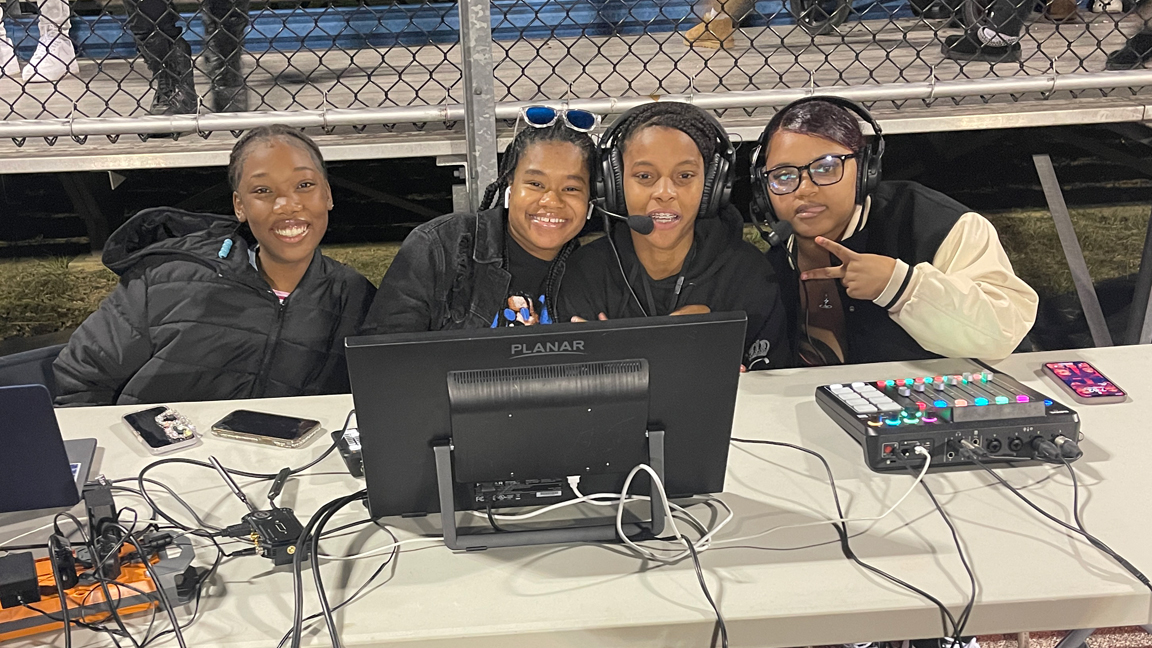
Nelson also created a film and television program at Willingboro High School that sought to combine youth development and mental health for students who wanted to learn a trade and did not want to go to college. The students learned cinematography and created a podcast about mental health, among other lessons.
The experiences allowed students to form a bond with the teachers outside of school as they worked on weekends to shoot different projects for local business owners and interview residents.
 Credit: (Courtesy of Gary Nelson)
“It’s with spending that time with them out of school and in school that, again, students start to really share what’s going on in their life,” Nelson said.
“And once they start doing that and they see that they have people that hold onto their confidentiality (and) people that really care about what’s going on in their life, a lot of times that creates the change — where we don’t need to go to psychiatry, we don’t need to be focused on pharmacology and really just try to put Band-Aids on issues. In order for us to help students in their lives, we have to get into their lives,” he said.
As part of his vision of providing holistic mental health services, he published two children’s books that discuss anxiety and depression in elementary school students. One, titled “All Eyes on Me,” teaches elementary school students about identifying symptoms of anxiety in themselves and tells the story from the perspective of a schoolkid who feels that everybody is watching him, Nelson said.
The second book, “Jasmine Crushes Depression,” walks through what depression looks like, how it shows up in the main character and the clinical interventions she works through with her therapist, according to Nelson.
 Credit: (Courtesy of Gary Nelson)
The books normalize the therapist-student relationship and work to destigmatize mental health, Nelson said. And each book includes different interventions that a student can employ to deal with symptoms of anxiety or depression.
“Once they come from elementary school to middle school and they already have that foundation (coping skills and direct interventions), now we can go to the next level of mental health and teaching them new things,” Nelson said. And then by the time they get to high school, they know all the coping skills, they know how to pick themselves up when they’re down,” he added. “And the focus can be on developing the whole person then.”
Testimonials
Bryanna Martinez-Jimenez said Nelson was a “huge help” to her in her early teens when she participated in the school-based youth service program at Trenton’s Grace A. Dunn Middle School, where Nelson was the youth development specialist in 2011.
By the time Martinez-Jimenez got to Trenton Central High School in 2013, she continued to seek mental health support from Nelson, who by then had become the mental health clinician for the high school.
“I truly think he saved my life,” Martinez-Jimenez, now 22, said of Nelson. “And because especially during middle school, I was going through a lot of family problems and trauma and I didn’t know how to cope,” she said.

“Trenton is so small and a lot of us feel like that’s all that there is and that the violence and poverty we grow up with is all we’ll ever know,” Martinez-Jimenez said. “But Gary and (the) school-based (youth services program) showed me that that’s not the only path we can take, that there is a way out,” she said.
Nelson’s impact on students was also noticed by caregivers like Patricia Coleman, who took in her grandchildren Rodney and Dominique after their father, her son, died suddenly in 2012.
Rodney was supposed to go to counseling because of the impact of his father’s death, Coleman said. But Coleman ended up canceling the appointment after her grandson said he would not speak to the counselor.
“To see him (Rodney) actually talking and interacting with Mr. Nelson and joking and laughing and all of that, it was, ‘Oh my gosh, this is absolutely, absolutely beautiful,’” Coleman said. Rodney and Dominique both participated in the school-based youth services program at Willingboro High School called Making Visions Possible (MVP).
“If you could only see him now to see how he talks and laughs,” Coleman said of Rodney, who graduated from Willingboro High School in 2019. “It’s just amazing how he gets along with people right now.”
