
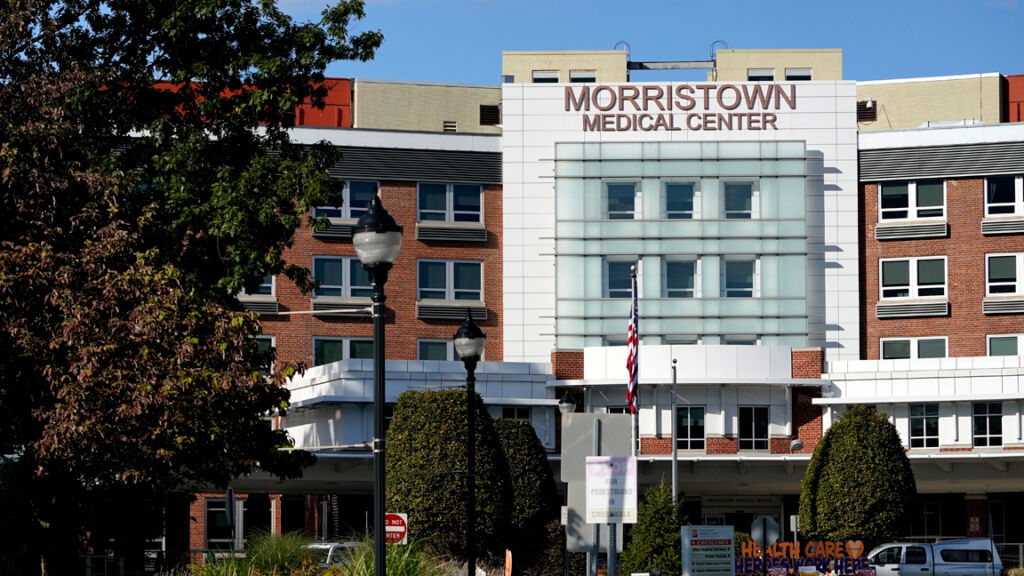
New Jersey’s hospitals received the highest marks nationwide for patient safety, according to a new survey that awarded a top grade to more than half of the state’s acute care facilities.
Spring 2023 hospital safety grades from the Leapfrog Group, a national nonprofit group that advocates for quality care, gave A grades to nearly three dozen New Jersey hospitals, the highest percentage of top scores in any state. Pennsylvania’s system ranked fourth by Leapfrog’s metrics, Connecticut came in fifth and New York placed 40th.
Story continues after the table.
New Jersey has historically scored well on Leapfrog’s patient safety analysis, which considers federal data on more than 30 performance measures regarding things like medical errors, staff responsiveness and hospital operations. Last fall, it placed sixth nationwide for the percentage of A-grade hospitals, Leapfrog reported.
In addition, Leapfrog said New Jersey is the only state in which 100% of the acute care hospitals submitted information for this spring’s patient-safety review. But two facilities — Bergen New Bridge Medical Center in Paramus and Inspira’s Salem Medical Center — lacked enough data for the full analysis, according to the Washington, D.C.-based nonprofit, which has been collecting and sharing hospital data for two decades.
New Jersey mirrored a nationwide spike in hospital-based infections, which have been on the rise for several years during the COVID-19 pandemic.
“New Jersey hospitals deserve our praise for their commitment to participating in Leapfrog’s voluntary safety survey, and also for their high scores,” Linda Schwimmer, president and CEO of the New Jersey Health Care Quality Institute, said in a statement. The institute has long encouraged hospitals to participate in the Leapfrog survey.
However, Leapfrog found that New Jersey mirrored a nationwide spike in hospital-based infections, which have been on the rise during the COVID-19 pandemic. New Jersey was among the 32 states that saw a significant increase in infections related to intravenous lines, Leapfrog said. But New Jersey hospitals saw little increase in infections related to catheters or antibiotic-resistant bacteria, based on calculations to determine the average risk of a patient getting one of these three relatively common hospital-associated infections.
Story continues after the map.
Leapfrog Group President and CEO Leah Binder warned that these infections can be fatal. “We recognize the tremendous strain the pandemic put on hospitals and their workforce, but alarming findings like these indicate hospitals must recommit to patient safety and build more resilience,” she said in a statement.
Schwimmer said the rise in these infections “shows us that the work of advancing patient safety requires a continued, unrelenting effort,” and urged New Jersey’s hospitals to “double down on their focused efforts to reduce hospital-acquired infections.”
In all, 35 acute care facilities in New Jersey got an A grade, two more than in the fall, Leapfrog reported. B grades were awarded to 18 hospitals, two fewer than in November. Fifteen hospitals got Cs, one less than last fall. Zero received a D grade – versus 3 last fall — and nobody got an F, the same as last fall.
Leapfrog uses more than 30 metrics to create the twice-annual hospital safety report, which was first published a decade ago. Researchers then group the results into five areas of patient experience that directly impact clinical outcomes: nurse communication, doctor communication, staff responsiveness, communication about medicine and discharge information. Letter grades of A through F are then assigned to nearly 3,000 hospitals nationwide.
— Graphics by Genesis Obando
