Credit: (NJ Spotlight News)
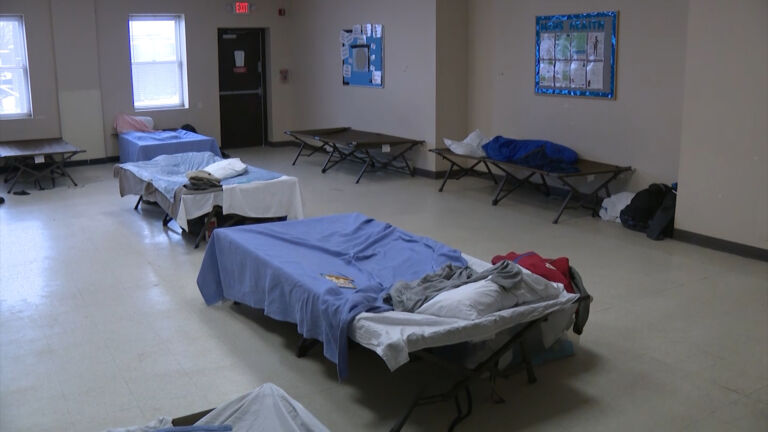
Mental health professionals will now be able to provide services to people in emergency homeless shelters throughout the state after a bill seeking to allow the practice was signed into law last week.
“It’s a great first step,” said Connie Mercer, the chief executive officer of the New Jersey Coalition to End Homelessness.
The law allows psychiatrists, psychologists, clinical social workers and marriage and family therapists to help people in emergency shelters on a part-time or a full-time basis, in addition to providing treatment during emergency situations. The behavioral health care services will not be mandatory for people and they must take place in a part of the shelter that offers privacy.
But as advocates welcomed the new law, they remained concerned about how it will be put into practice.
Critical elements
“We all know that there is a great shortage in the world of behavioral health workforce, which puts pressure on all of these systems,” said Mary Gay Abbott-Young, the president of the Rescue Mission of Trenton. “In this particular case, the question is not only how do we find the workforce to provide those services, but how do we fund that within the shelters,” she said.
It is also going to be critical to have good care management as the law is put into practice, said Dr. Dawn Apgar, an associate professor of social work at Seton Hall University and former deputy commissioner of the Department of Human Services during the administration of Gov. Chris Christie. Care management refers to a collection of services that help patients with chronic or complex conditions manage their health.
“What I would hate is for someone to have to switch (mental health) providers after they’ve developed a level of trust with someone in the shelter and then have to go to someone different when they leave the shelter to continue with that treatment,” Apgar said.
The effort to further address behavioral health challenges in emergency shelters comes as thousands of people continue to face homelessness in New Jersey and as the state and nation face a shortage of affordable homes for some of the most cost-burdened renters. Over 8,700 people were experiencing homelessness in New Jersey on a single day in January 2022, according to an annual point-in-time count conducted by Monarch Housing Associates. Additionally, there is a shortage of 7.3 million affordable and available rental homes for extremely low-income renters across the country, according to a March report from the National Low Income Housing Coalition.
“In working with the New Jersey Shelter Consortium, I heard first hand the need for mental health services in our shelter system and the barriers that existed towards providing those services,” said Assemblywoman Yvonne Lopez (D-Middlesex), a primary sponsor of the bill. “Thanks to this bill, our shelters will be able to provide critical care and mental health supports to those looking for assistance,” Lopez said.
Long-term issues
And as the state is focusing more on the intersection between health, mental health and housing, it needs to examine innovative ways in which the Medicaid program may be able to support people in long-term housing, Apgar said.
“Because, as we all know, New Jersey is an expensive place to live and even when someone’s mental health is stable, these individuals may struggle to be able to pay fair market rent in a state like ours,” she said.
In March, the state received federal approval to reform its Medicaid, or Family Care, program to better connect clinical health services with behavioral health and social service programs that provide housing, nutrition and other supports.

As the new law is put into practice across the state, some organizations that provide emergency shelters already have mental health services in place for people who may need them. At Eva’s Village in Paterson, people in need of services can go to an outpatient mental health program offered at the nonprofit, according to Laura Van Bloem, the senior director of development and communications at the nonprofit organization.
“These services will more than likely be funded solely through Medicaid at rates that are essentially a quarter of what is paid through the commercial market,” Howard Haughton, the chief executive officer of Eva’s Village, said in a statement of the services available through the new law. “In addition, the homeless have to be Medicaid eligible or enrolled in order to receive the services. It’s not perfect, but it is another step closer to helping those who need help the most,” he said.