
 New Jersey may be the most densely populated state in the nation, but a new study suggests more than one in four of its residents are lonely, a situation that can affect a person’s health, job performance and personal relationships — while exacerbating community and societal divides.
A study on social isolation released in April by the state Department of Human Services determined that nearly 2.4 million residents are estimated to be lonely, more than 26% of New Jersey’s population. Many of those suffering have limited incomes, live alone and receive little help from family, the study said after reviewing research and interviewing people. They are also more likely to feel unhealthy — both physically and mentally – than those who are less lonely, the department found. Experts agree the COVID-19 pandemic has magnified this sense of isolation for many, including both elderly people and children.
“The pandemic has created a loneliness epidemic,” said Ev Liebman, state advocacy director for AARP New Jersey, which has long worked to highlight the problem.
Liebman said she is encouraged that social isolation has become more of a public and policy priority.
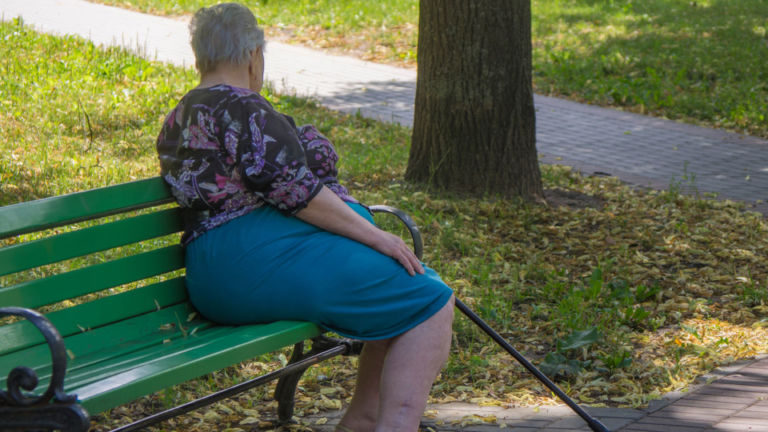
Social isolation among elderly adds about $6.7 billion to nation’s annual health care spending; those with disabilities, veterans are also at risk
“Prior to the pandemic, loneliness received relatively little attention and sustained focus, despite the fact that it undermines the health and wellbeing of millions of older adults,” she said. “It is important to spot signs of social isolation in ourselves and in others and to take steps to combat it early, because it can become a serious hazard not only to mental health but physical health, too.”
Combatting social isolation has become “a critical priority,” for the state, Human Services Commissioner Sarah Adelman told lawmakers last week during testimony on the agency’s $27 billion budget proposal for the coming fiscal year, which begins July 1. The department is committing more than $100 million to expand programs to support seniors and people who are disabled or have mental health challenges to remain at home or in their community, instead of a nursing home.
America’s loneliness problem
Loneliness became national news earlier this month when U.S. Surgeon General Dr. Vivek H. Murthy issued an advisory entitled “Our Epidemic of Loneliness and Isolation,” which outlined the problem and some solutions. Loneliness goes far beyond feeling badly, he said, noting the health impacts are the equivalent smoking 15 cigarettes a day.
“Given the profound consequences of loneliness and isolation, we have an opportunity, and an obligation, to make the same investments in addressing social connection that we have made in addressing tobacco use, obesity, and the addiction crisis,” Murthy wrote in an introductory letter.
“If we fail to do so, we will pay an ever-increasing price in the form of our individual and collective health and well-being. And we will continue to splinter and divide until we can no longer stand as a community or a country. Instead of coming together to take on the great challenges before us, we will further retreat to our corners — angry, sick, and alone,” he said.
Concerns about the impact of loneliness are not new or limited to this country. England launched its cross-government “Campaign to End Loneliness” in 2018, which was expanded to meet growing demand during the COVID-19 pandemic. In New Jersey, the pandemic prompted the state’s Long Term Care Ombudsman to launch a project in 2020 that dispatched staff to check on nursing home residents who had been particularly isolated during the lockdown. Nursing homes were hit hard during the pandemic, not only by increased numbers of deaths and infections, but also by social-distancing requirements that isolated residents from family and friends.
A friendly voice on the line
Early in the pandemic AARP introduced its Friendly Voice program that let people request a phone call (in English or Spanish) from a trained volunteer to chat or listen. “Sometimes, just hearing a friendly voice on the other end of the line can help,” Liebman said.
AARP also launched an online tool to help older Americans feel less isolated several years before the pandemic. Connect2Affect offers tools and tips to avoid social isolation and highlights key data points, like loneliness increasing the risk of death by 26%. It also features a national map that illustrates loneliness by county and, in New Jersey, people in Warren, Ocean, Atlantic, Cape May and Sussex seem to be suffering the most.
“The site also features a chat bot designed for friendly conversations and to guide people looking to rebuild their social connection,” Liebman said.
Loneliness is not limited to rural areas however. The Human Services study — prompted by a law adopted in 2019 that called for new attention to the problem — highlights research that found loneliness is more common among people with low incomes, limited education or homes in communities that are unsafe or lack resources, like good schools and access to transportation. The state study focused on four groups at higher risk for social isolation: elderly individuals, people with mental illness or disabilities and those who are veterans or currently serving in the armed forces.
While divorced or single people are more likely to be impacted by loneliness, being with others doesn’t necessarily cure social isolation, researchers have found. “A person might have little to no social interaction but might not feel lonely. On the other hand, a person could have a great deal of social interaction but still feel alone. The survey attempted to measure both subjective and objective social isolation,” the Human Services report notes.
Online portal to ease social isolation
To address the problem the department, through its Division of Aging, partnered with GetSetUp, an online education platform to provide free, virtual classes for state residents 60 and older. There are more than 500 classes available 24-hours a day on topics related to aging, budgeting, technology and more and courses are offered English, Spanish, Hindi and Mandarin, officials said.
“We know that having social connections can help older adults live healthier lives. The GetSetUp portal offers virtual learning and social interaction that can help reduce the risk for social isolation,” said Deputy Commissioner for Aging and Disability Services Kaylee McGuire when the program was announced in November.
There’s plenty of evidence that many New Jerseyans are socially isolated. A newly mandated study should provide a more complete picture
The report is based on online surveys completed last fall by more than 1,300 people who belong to one of the four groups considered at high-risk for loneliness. Participants — mostly white people over age 65 — were asked to respond to three questions that were used to compile a loneliness score. The authors then used population data and demographic profiles to project the impact on all 9 million state residents, although some of those impacted may be double counted, the study notes.
Loneliness profile
The surveys revealed people who are lonely are more likely to be unemployed and tend to feel worse about their health, when compared to those who are not suffering from isolation. Lonely individuals also expected their health to decline in greater numbers than those whose lives felt fuller. Racial differences did not impact results significantly, the researchers found.
The state report also cites academic research that found loneliness clearly increases a person’s risk for other diseases, like depression, and can have cumulative health impacts over time. Problematic isolation can increase the risk of heart disease by 29% and raises the risk of stroke by nearly one-third, the report notes. Nearly six in 10 Americans say loneliness has impacted their health; half say it has soured personal relationships and one-third said it has limited them at work.
