
 Credit: (AP Photo/Paul Sancya, File)
The U.S. Supreme Court last week narrowed the scope of a vital clean-water law, stripping protections for up to half of the nation’s wetlands, which serve to filter out pollutants in waterways and provide critical habitat for many species.
How much it impacts New Jersey’s wetlands is up for discussion, advocates say, with state protections remaining in place. But they also say this could be just the beginning of sweeping changes in federal rules around water quality that could affect New Jersey greatly.
In the Sackett v. EPA ruling, the court tossed out a past interpretation of what waters and wetlands would be afforded protections of the federal Clean Water Act, a decision that bars the agency from regulating hundreds of millions of acres of wetlands, according to environmentalists.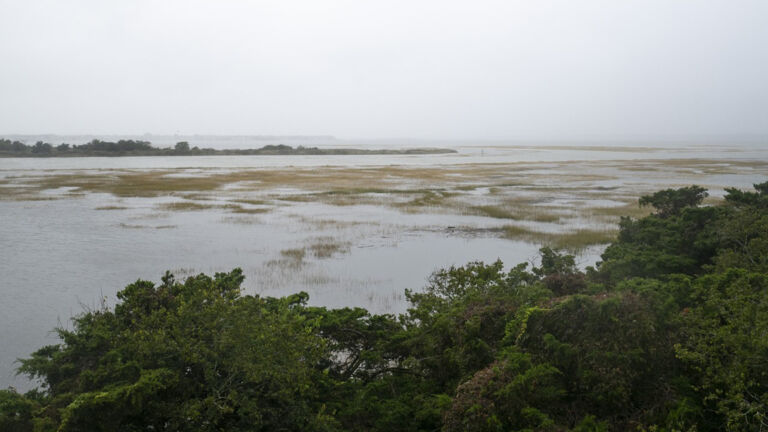
Justice Samuel Alito, with four other justices, wrote that the law could only protect “wetlands with a continuous surface connection to bodies that are waters of the United States in their own right.’’ All nine justices separately agreed the property, in question, owned by an Idaho couple near a lake, was not wetlands.
Advocates disagreed over how much of an impact it will have on the state’s waterways. New Jersey, unlike most states, has been delegated by the Environmental Protection Agency to oversee its wetlands and waterways and has its own law governing the protection of freshwater wetlands.
“It is not going to be a case where wetlands are not going to be regulated,’’ said Dennis Toft, an environmental attorney for Chiesa Shahinian & Giantomasi.
Assessing the impact in NJ
“Nationally, it’s a big deal, but not in New Jersey,” said Raymond Cantor, deputy chief government affairs officer of the NJBIA (New Jersey Business & Industry Association).
But others said the court’s decision could open up development in critical areas.
A case out of New Jersey that’s set to come before the court next term could have even more important repercussions for anti-pollution laws and other government rules.
“There are some developers out there who will want to weaponize this ruling,’’ said Doug O’Malley, director of Environment New Jersey. He said areas that could be impacted include the Delaware River watershed, where state regulations governing water emptying into the basin are not as protected in New York and Pennsylvania.
“It is imperative that New Jersey adopt stronger regulations to protect our waters,’’ O’Malley added. “We shouldn’t let an Idaho couple dictate water policy in New Jersey.’’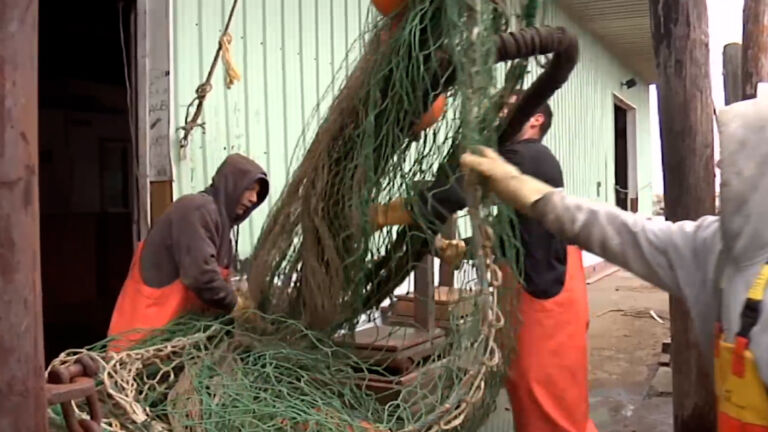
The decision, released Thursday, marks the second time within a year the court has undermined the EPA’s regulatory authority. But a case out of New Jersey that’s set to come before the court next term could have even more important repercussions for anti-pollution laws and other government rules.
In that case, the justices will decide whether the National Marine Fisheries Service overstepped its authority in ruling fishing companies must pay for third-party monitors on their fishing trips. The case, brought by eight Cape May-based fishing companies, could have far-reaching implications in determining if government agencies exceed their authority in establishing regulations.
Less deference?
In the past, based on a long-standing legal doctrine known as Chevron deference, courts have given wide latitude to government agencies, bowing to their expertise in establishing regulatory policies. It is a doctrine conservative activists and others have long regarded as unconstitutional and an example of regulatory overreach.
With the court’s ruling restricting what wetlands are governed by the Clean Water Act, some say it might predict how justices will act in the Cape May case, known as Loper Bright Enterprises v. Raimondo, potentially as early as next spring.
The latest Supreme Court ruling is a pretty good indication of how the court may rule, said Toft, the environmental attorney. “If that happens, it could have a sweeping effect on regulations,’’ he said.
But Cantor, of the NJBIA, argued regulatory agencies, like the EPA, have routinely pushed the boundaries on what can be done under their authority.
“They can do that because they have done so based under their expertise to interpret the statute,’’ said Cantor, who held a high-level post at the state Department of Environmental Protection. “Once you take that away, you have a harder time justifying a lot of the regulatory programs out there.’’
Biden weighs in
Now that the court has reined in EPA’s ability to regulate wetlands, the question remains what happens next.
President Biden, in a statement on Twitter, vowed to work to restore these protections. “The disappointing decision in Sackett v. EPA will take our country backwards—placing our nation’s wetlands, and the rivers, lakes and ponds connected to them, at risk of pollution and destruction,’’ the White House said in a statement.
Fifty-one years after the Clean Water Act was enacted, most of the state’s waterways fail to meet the law’s goal of making them swimmable, fishable and drinkable. Michael Pisauro, policy director of The Watershed Institute, lamented that the court ignored the prevailing science of the connectivity of the waters of the U.S.
“If we can’t protect it, we can’t restore it,’’ he said.
