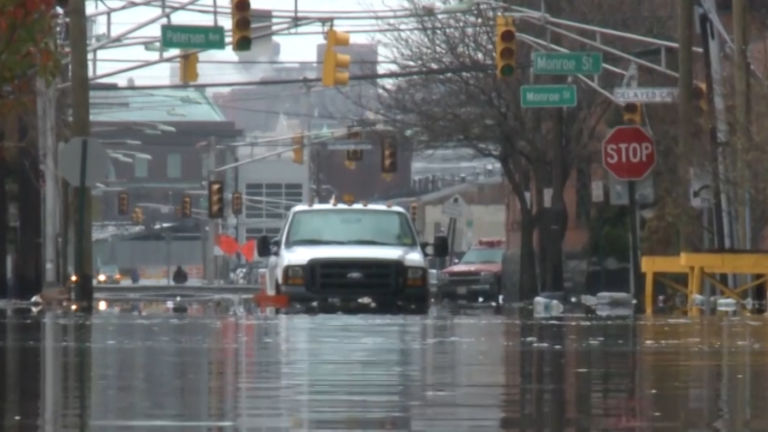
Credit: (AP Photo/Noah Berger, File)
For years, local and state authorities around the nation have been filing lawsuits seeking to hold the fossil fuel industry accountable for damages caused by climate change.
So far, those cases — which include two from New Jersey — have largely been mired in arguments over where they should be heard. The local authorities have filed their lawsuits in state courts, and the fossil fuel companies have consistently fought to move the cases into the federal courts. Both sides see advantages in their preferred venues.
Now, the U.S. Supreme Court has ruled on the issue. The justices on Monday rejected oil industry petitions in five similar but separate cases where lower courts had consistently decided that state courts were the appropriate venues. The Supreme Court’s decision not to hear any further appeal of those decisions means those five cases — brought by the states of Hawaii and Rhode Island, Boulder County in Colorado, San Mateo County in California and the city of Baltimore — will play out at the state level, and indicates that similar cases will take a similar route.
According to the order, Justice Brett Kavanaugh is the only justice who would have had the Supreme Court hear the case. Justice Samuel Alito, the New Jersey native, recused himself from two of the cases because he owns shares in ConocoPhillips and other oil companies.

The Supreme Court’s order did not include any explanation of the majority’s reasoning. Still, the outcome is likely good news for the state of New Jersey and the city of Hoboken. Lawsuits by both the state and Hoboken claim fossil fuel companies defrauded consumers by deceiving the public about the harmful effects of burning fossil fuels.
In general, the procedural rules in the federal courts are perceived to favor large corporations and industry groups. Beyond that, in these cases, the oil companies sought a venue change because they argued the cases should focus on the impact of federal energy policy.
The NJ connection
In Hoboken’s lawsuit, the oil companies are asking the Supreme Court to hear an appeal of a unanimous decision by the Third Circuit Court of Appeals last fall that ordered the case to remain in state court. The U.S. Supreme Court is scheduled to have a conference on that petition in May.
“Hoboken filed its case in NJ State Court and, despite failed attempts by the oil companies to move the case to federal court, the City’s case is pending where it belongs — in State Court in Hudson County,” Marilyn Baer, a spokeswoman for Hoboken, said in a statement. “We look forward to the day when these companies are held accountable for their deception and the damage they have caused municipalities like Hoboken.”
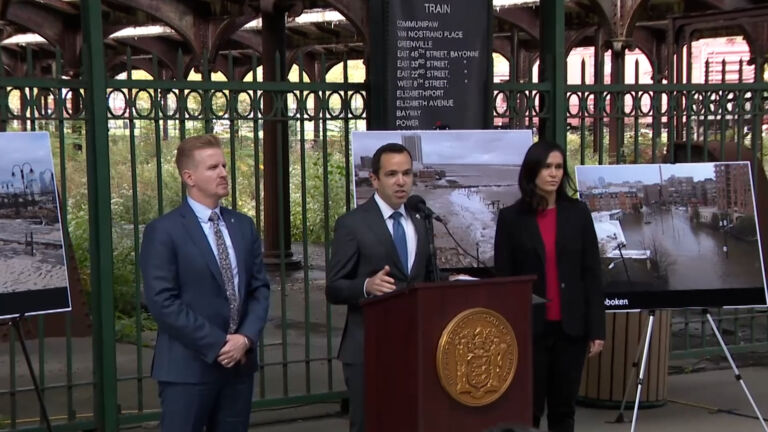
New Jersey’s lawsuit against the oil companies, which was filed more than two years after Hoboken’s, has not progressed as far as the Supreme Court. A federal district court judge is currently weighing whether to bring that case into his jurisdiction, or to kick it back to the state court system.
Despite the setback of Monday’s ruling, the lawyer representing at least one oil company is optimistic that the lawsuits will be defeated in state courts.
“We are confident the pending climate lawsuits in the U.S. will ultimately be dismissed,” Theodore Boutrous, who represents Chevron, said in a statement Monday. “Climate change is an issue of national and global magnitude that requires a coordinated federal policy response, not a disjointed patchwork of lawsuits in state courts across multiple states. These wasteful lawsuits in state courts will do nothing to advance global climate solutions, nothing to reduce emissions, and nothing to address climate-related impacts.”