
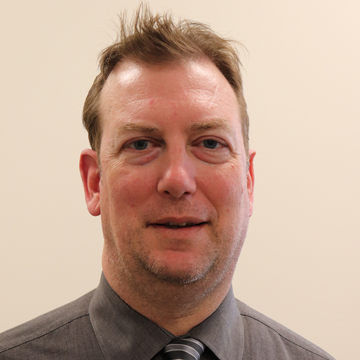
The day the world stopped, my world — and that of New Jersey’s local health officials — kicked into high gear. That was on March 21, 2020, when Gov. Phil Murphy issued the now-infamous COVID-19 stay-at-home order to all state residents.
While New Jersey stood still, 94 local health departments statewide worked frantically to control the spread of this new disease. As reported by The New York Times, local health officials pulled together teams of contact tracers who worked around the clock. We quelled fears, we suppressed the spread of misinformation, we listened to residents tell their story and we cried, alongside our community members, at the unimaginable loss we were witnessing.
You would be hard-pressed to find a New Jerseyan who did not have contact with a local health official at some point during the pandemic. From disease investigation to school and workplace policy, from safety protocols to interpretation of federal and state guidance, from isolation and quarantine protocols to the provision of supplies and personnel, local health departments worked 12- to 18-hour days, six or seven days a week, for months on end, to help minimize the effects of a once-in-a-century global pandemic. Despite the absence of funding, additional resources or supplemental pay, public health officials worked magic in our response.
During daily press briefings held by Murphy, local public health practitioners were told we were the “boots on the ground,” and that the services we provided were invaluable. We were, in fact, called heroes and were applauded for our efforts. In those early days of the pandemic, during spring 2020, we worked tirelessly to serve our communities, with no state or ancillary funding at our disposal. Though temporary COVID-19 funds were more recently made available to local health departments, these funds are set to expire in the next fiscal year — a Band-Aid that can’t possibly provide permanent solutions to the all-too-familiar cycle of public health crises.
If this seems familiar, it is because we, as public health officials, have seen it before. We have seen this type of funding cycle after 9/11, after SARS, after H1N1 and now after the biggest public health emergency of our time. Like a bucket brigade during a fire, public health officials run from one emergency to the next, and it often feels like we are running with scissors. Last year alone had us responding to record levels of RSV and influenza, monitoring travelers for Ebola and helping to control a massive monkeypox outbreak, all while actively fighting a pandemic. The public health workforce is exhausted, exasperated and completely disheartened that we, as a state, have still not addressed the issue of strengthening our local health infrastructure.
Invisible workers
Local public health officials labor invisibly behind the scenes to keep residents safe every day, working hard to help every New Jerseyan live the healthiest and longest life possible. If you have ever wondered how the food you eat at a restaurant remains safe, it is made possible by your local public health official. If you’ve wondered how those without insurance receive vaccinations, that is us, as well. How childhood lead poisoning rates have plummeted over time? Thank your local public health official. How there is virtually no canine rabies in New Jersey? That, too, is due to the work of your local public health official. And we do it without direct state funding. In fact, America’s Health Ranking shows New Jersey placing 31st out of 50 states for public health funding.
I am asking every member of the state Legislature to sign bipartisan bills S-2413 and A-4115, which would require a minimum annual state appropriation of $10 million for public health priority funding. New Jersey’s local health departments are almost entirely funded by municipal tax dollars and the elimination of public health priority funding in 2011 — which was then the state’s only form of direct funding to all local health departments — has severely restricted local public health operations and resources. To put things in perspective, this $10 million request equates to 0.188% of the total proposed state budget.
Our communities agree that local public health services are important. The Robert Wood Johnson Foundation, one of the most reputable and respected sources regarding public health research and support, reports that 71% of the public supports increased funding to public health.
Temporary grant funding is appreciated but it is not the answer. Federal grant dollars are often prescriptive and recently have been tied to specific COVID-19-related objectives. Meanwhile, children are still being poisoned by lead, zoonotic diseases still threaten human and animal populations, massive respiratory disease outbreaks continue to cause record levels of hospitalizations and local public health officials are left to work miracles that fit within our limited budgets.
It is widely recognized by experts that COVID-19 will not be the last pandemic we will see in our lifetime, but health officials remain hopeful that through a modest investment in public health, we can start today to create a real chance of improved and sustained health outcomes that will benefit New Jersey residents for decades to come.