
 Credit: (AP Photo/Julio Cortez)
New Jersey Transit — an agency Gov. Phil Murphy has called a “vital lifeline” for the state economy — is once again confronting financial challenges that have the potential to bring on fare increases and other big changes.
In a little over a year, NJ Transit’s budget will be in the red, according to agency documents, unless ridership returns to levels not seen since before the onset of the COVID-19 pandemic.
And within a matter of years, the annual deficits could balloon near $1 billion, a huge sum for an agency that currently has a $2.75 billion annual operating budget.
Significant federal aid provided in response to the health crisis helped NJ Transit to fill fiscal gaps in recent years as ridership has yet to fully recover.
The federal funding also helped ameliorate, at least temporarily, long-simmering concerns about NJ Transit’s fiscal trajectory given the agency historically has had to rely heavily on constantly fluctuating annual subsidies provided through the state budget and from outside agencies like the New Jersey Turnpike Authority.
Once the federal assistance is no longer available, NJ Transit will be faced with sustaining operations while ridership is expected to continue lagging pre-pandemic levels with many in New Jersey working from home permanently or in a hybrid setting.
Fare hikes back on the table?
The looming financial predicament means that fare hikes and service cutbacks are back on the table after years of stability during Murphy’s tenure, which began in early 2018.
In fact, according to administration officials who last week briefed reporters on NJ Transit’s brewing budget challenges, an agency “realignment” is now in the offing.
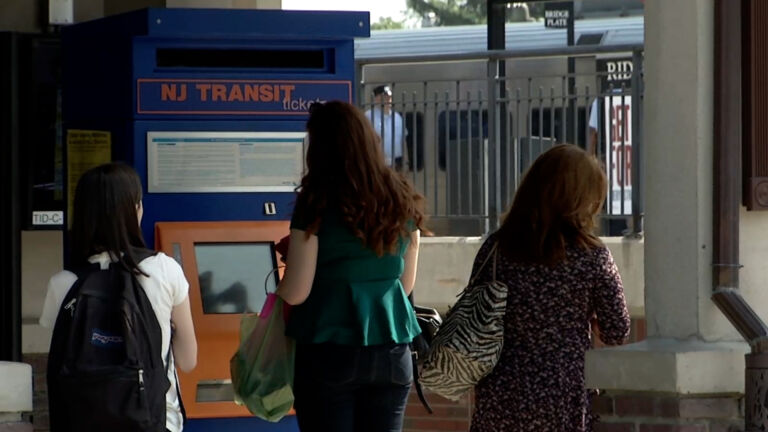
While no final decisions have been made about things like fare hikes, the realignment could result in major corporate and organizational changes at NJ Transit, the officials said.
“As the agency pivots to reflect evolving travel patterns and circumstances in our post-pandemic reality, the Murphy administration will identify and evaluate an array of potential solutions that will improve NJ Transit’s fiscal stability and efficiency,” Murphy spokesman Bailey Lawrence said in a statement issued after the briefing.
“Throughout this realignment process, the quality of service and accessibility of our world-class public transportation system will remain our top priority,” he said.
To be sure, state lawmakers also have a major role to play in determining the long-term financial health of NJ Transit.
That’s because it’s up to the Legislature each year to draft an annual state budget, including the individual line items that have traditionally been used to subsidize NJ Transit’s operating budget.
Boosting state subsidy
In recent years, the direct subsidy from the state, according to budget documents, has remained flat, at $100 million.
But this year, Murphy, a second-term Democrat, has proposed increasing the subsidy to NJ Transit by $40 million as part of his broader $53.1 billion spending plan for the fiscal year that begins July 1. Administration officials have indicated the requested increase would sustain current operations through the 2024 fiscal year, which ends June 30, 2024.
If lawmakers go along with the proposed increase, the size of the subsidy would still fall way short of the record-high $457.5 million subvention the transit agency received during the 2019 fiscal year.
However, agency documents indicate the ongoing pandemic is still influencing ridership — and the revenue it generates. During the new fiscal year that begins July 1, NJ Transit is expecting revenue from the farebox to remain nearly 25% below pre-pandemic levels, according to the documents.
To be sure, concerns about NJ Transit’s finances predate the pandemic. It was a 2018 audit commissioned by the Murphy administration that labeled its funding “inadequate, uncertain, and unsustainable.”
And even with an increased subsidy from the state budget, NJ Transit would continue to operate without the type of permanent and dedicated source of state funding that transportation advocates say is desperately needed to put it on a more secure financial footing for the long term.
What about the Sweeney plan?
During an NJ Transit board meeting in Newark last week, former state senator and current board member Robert Gordon suggested now may be a good time to revisit a plan first put forward just before the start of the pandemic by former Senate President Steve Sweeney that would have provided NJ Transit with $500 million in constitutionally dedicated annual revenue.
“I do believe we are facing a fiscal cliff,” Gordon said as he went over NJ Transit’s latest budget documents during the meeting.
“We don’t have that stable, permanent source of funding that we need,” said Gordon, a former chair of the Senate’s transportation committee.
Sweeney’s plan would have made permanent a state corporation business-tax surcharge levied on the income generated by New Jersey’s top-earning businesses for the last several years, though at a lesser rate. It also called for the revenues generated by the surcharge — which Sweeney estimated at the time would reach $300 million annually — to be constitutionally dedicated to funding NJ Transit operations.
Funds routinely transferred to NJ Transit from the Turnpike Authority and the state’s Clean Energy Fund would also be dedicated to funding mass transit, according to that plan.
However, under current state law, the business-tax surcharge that Sweeney eyed as a revenue source is due to expire in full at the end of the current calendar year.
Murphy’s proposed state budget also assumes the surcharge will expire as planned, resulting in an estimated $322.5 million revenue loss for the state during the 2024 fiscal year.
‘Balancing New Jersey Transit’s budget should not happen on the backs of riders.’ — Talia Crawford, Tri-State Transportation Campaign
In recent years, administration officials have stressed the importance of written agreements with the Turnpike Authority that ensure the annual subsidies to NJ Transit from that toll-supported agency will continue into the future.
They’ve also been highlighting efforts to reduce the size of widely criticized fund transfers to NJ Transit, including from the Clean Energy Fund and from the agency’s own capital resources, which have routinely been used to sustain its operating budget.
It will be during the 2026 fiscal year, which begins July 1, 2025, when NJ Transit will have to begin operating without any of the significant federal pandemic aid that has helped sustain its operations in recent years.
When it comes to rider fares — which have stayed flat for nearly a decade — many transportation advocates say hikes should remain off the table. They often cite the role mass transit plays in the lives of the state’s lowest-income residents, including those who do not own cars.
Talia Crawford, campaign organizer for the influential Tri-State Transportation Campaign, said mass transit is “not an optional service” and called mobility “the greatest determinant of quality of life,” during last week’s board meeting.
“Access to transportation means access to jobs, education, health care, essential services, seeing friends and family — access to life,” she said. “Balancing New Jersey Transit’s budget should not happen on the backs of riders.”
NJ Transit not alone
But Joseph Clift, former director of planning for the Long Island Rail Road, had a different take as he went over recent increases in both inflation and the size of NJ Transit’s own operating budget.
“You cannot hope to deal with the future financial problems if you don’t get the riders to participate (in) what’s going on,” Clift said. “The later you wait to make a fare increase, the worse it’s going to get.”
For his part, Murphy has made restoring the quality of NJ Transit’s service, and its overall reputation, a point of pride throughout his time in office.

During his first year in Trenton, Murphy signed an executive order that called for the comprehensive audit of NJ Transit, which he labeled “a vital lifeline for the State’s economy” in the order.
More recently, maintaining a vibrant NJ Transit has also fit into Murphy’s broader plans for combating climate change by helping reduce traffic and emissions produced by fossil-fuel burning cars.
During the NJ Transit board meeting, Doug O’Malley from Environment New Jersey said NJ Transit is not an outlier since many other states have mass-transit agencies that are grappling with looming fiscal cliffs as their respective federal aid runs out.
But he also said NJ Transit is “uniquely vulnerable” because it has operated for too many years without permanent and dedicated state funding.
“The (problem), ultimately, will not be solved here,” O’Malley told the board members. “It will be solved in Trenton by legislative leaders and the governor.”
“They need to come together now,” he said.
