
 Credit: (AP Photo/Seth Wenig)
New Jersey’s ever-rising property-tax bills are levied locally, leaving no direct role for the governor and lawmakers in the setting of rates that generate the cash used to fund everything from snow removal to teacher salaries.
Yet property taxes are looming large as a formal legislative review of Gov. Phil Murphy’s proposed $53.1 billion state budget is set to get underway in earnest later this month. The first of four hearings where testimony on the budget will be taken from the public is scheduled for March 21 at Ramapo College of New Jersey.
The latest figures released by the state Department of Community Affairs indicate another big year-over-year increase in the average New Jersey property-tax bill occurred last year, despite ongoing efforts at the State House to curb growth by increasing aid to public schools and encouraging more shared services at the local level.
Last year’s more than $200 increase pushed the size of the average property-tax bill in New Jersey to a record-high $9,490, according to the state’s new data.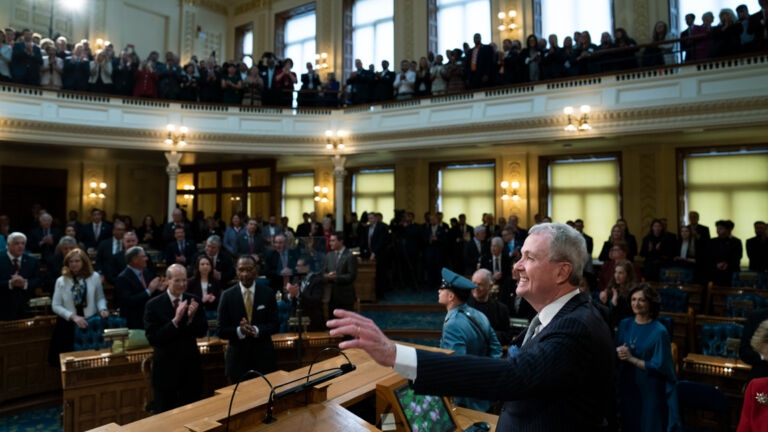
It was the latest in a long string of increases that have put New Jersey’s real-estate taxes at the top of many state-by-state comparisons, including a new study released last week by WalletHub.
Against that backdrop, New Jersey lawmakers will also be finalizing the state budget for the fiscal year that begins July 1 just months before all 120 seats in the Legislature will be up for grabs in the fall.
Not surprisingly, Murphy, a second-term Democrat, made property-tax relief a major theme of the budget message he delivered to a joint session of the Legislature in Trenton last month.
Indeed, Murphy said the phrase “property taxes” 18 different times as he detailed ways his budget for the 2024 fiscal year would attempt to offset the state’s rising local levies.
‘Historic’ relief
Everything from $2 billion in funding for direct “Anchor” relief benefits for homeowners and renters to a $100 million investment in Jersey Shore boardwalks was pitched by the governor as ways the new budget would help cushion the blow for the state’s beleaguered property owners.
“This budget leads with historic property-tax relief,” Murphy told lawmakers during the budget speech.
Moreover, budget documents released on the same day as Murphy’s budget message tout other relief initiatives, including some $200 million earmarked for property tax-reliant local governments to help offset rising employee health-benefit costs.
The annual cost of allowing state income tax deductions as high as $15,000 to help offset New Jersey property-tax bills is also increasing to nearly $790 million, according to budget documents.
John Reitmeyer discusses property-tax pressures
In all, the amount of funding that can be labeled “property-tax relief” in the budget is set to go up by more than $900 million year-over-year, to a grand total of $25.6 billion.
Among that total is more than $830 million in additional spending on so-called formula aid for K-12 schools, according to the budget proposal.
In touting that spending, Murphy has noted that, for many New Jersey homeowners, the largest single portion of their local property-tax levy goes to funding local schools.
‘Instead of providing real tax relief to New Jerseyans, the governor is building a massive $10 billion surplus that will get devalued by inflation.’ — Sen. Declan O’Scanlon (R-Monmouth)
Yet many Republican lawmakers have pointed out not every district in the state is set to receive more property-tax relief in Murphy’s budget proposal. Instead, they’ve been highlighting cuts that many districts are facing as the aid pool is parceled out according to New Jersey’s current school-funding laws.
In all, 157 districts are facing cuts under Murphy’s latest plan, according to an NJ Spotlight News analysis. The cuts will be under $100,000 for almost half of those districts, but 25 will see cuts over $1 million. And in Jersey City, the state funding will be cut by $50 million, according to the administration’s latest school-aid figures.
Lawmakers who represent Cape May County, where local schools are facing a combined $5.6 million in cuts, are among those who have challenged Murphy’s portrayal of increased formula aid as across-the-board property-tax relief.
“It’s not just our students and staff who lose, but our already overburdened taxpayers who have to somehow make up for the aid shortfall,” said Assemblyman Erik Simonsen (R-Cape May).
A second year for Anchor relief
Meanwhile, when it comes to direct property-tax relief, Murphy has been touting the Anchor program, and his budget sets aside $2 billion to maintain funding for benefits totaling as much as $1,500 for eligible homeowners and $450 for eligible renters.
When Anchor benefits funded under the current budget go out later this month, Murphy contends they will effectively reduce property taxes for those eligible — about 1.6 million homeowners and renters applied for the first round of benefits, according to figures released by the Department of Treasury — back to levels not seen in about a decade, before adjusting for inflation.
Moreover, Murphy also pitched in his budget address a significant change to the popular “Senior Freeze” program that provides reimbursement checks to thousands of senior and disabled homeowners annually to effectively “freeze” their property taxes.
With annual income qualifications currently set below $100,000, and a 10-year residency requirement also in place, Murphy is asking lawmakers to lift the annual income limit to $150,000 and shorten the residency requirement to three years. According to administration estimates, these proposed changes would allow more than 50,000 homeowners to become newly eligible for Senior Freeze benefits.
But a closer look at budget documents reveals funding for the Senior Freeze program would actually decrease slightly during the 2024 fiscal year, which ends June 30, 2024, unless lawmakers intervene. Under the relief program’s current schedule, payments to those who would become newly eligible for Senior Freeze benefits under Murphy’s proposal would not be distributed until July 2024, at the earliest.
Overall spending on direct property-tax relief programs, including Anchor and Senior Freeze and several others, would increase year-over-year by less than 1%, according to supporting documents for the proposed budget. However, budgeted funding for direct property-tax relief more than doubled when Anchor was established as a new, $2 billion line item in this year’s budget.
GOP criticism
For their part, Republicans, who are in the minority in both the Assembly and Senate, have also been criticizing Murphy over the ways his proposed budget would deliver direct property-tax relief.
For starters, Senate Republicans have noted the $450 benefit provided through Anchor to renters represents an effective cut for many tenants.
To back up that claim, they point to 2021, when many renters were able to qualify for an up to $500 “Middle Class Tax Rebate” that was distributed by Murphy and lawmakers.
As overall tax collections have surged to historic levels in recent years, the Senate GOP has also faulted Murphy for not using more of the state’s revenue surplus to further ease the tax burden.
“Instead of providing real tax relief to New Jerseyans, the governor is building a massive $10 billion surplus that will get devalued by inflation,” said Sen. Declan O’Scanlon (R-Monmouth).
