
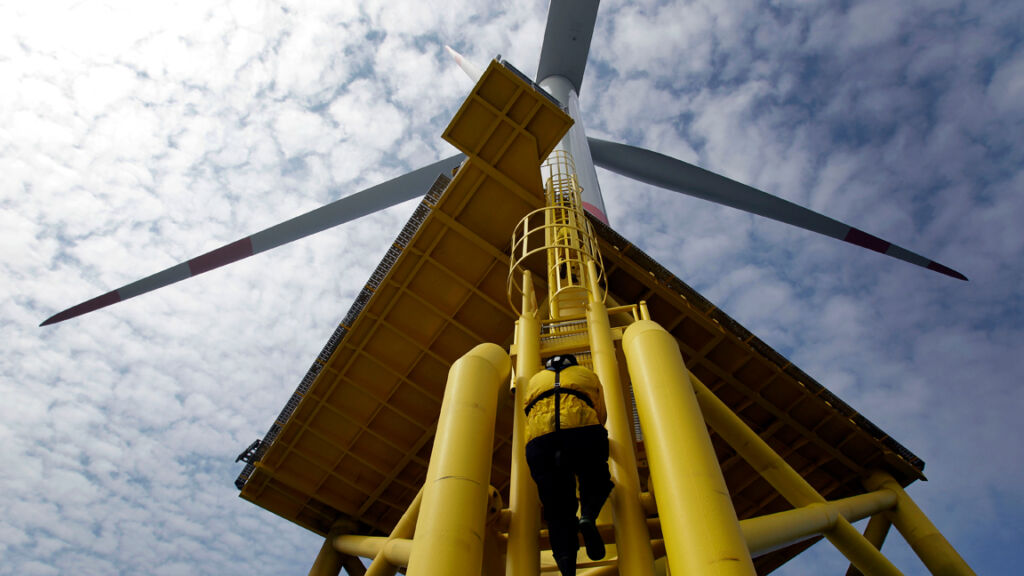
New Jersey agreed Monday to accept new applications to build more offshore wind farms along the coast, amid lingering controversies over what these projects will cost consumers and a growing clamor over dead whales washing ashore on metropolitan beaches in the past three months.
In a unanimous vote, the New Jersey Board of Public Utilities approved a window for accepting those applications, its third solicitation for offshore wind projects. So far, three projects have been approved by the BPU, but none have been built.
Nevertheless, opponents of the projects have urged the state to halt further offshore wind development until the Biden administration determines why 13 whales have washed ashore on beaches since early December. The cause of those deaths has not been determined, although scientists say there is no link to offshore wind development.
In moving forward with the solicitation, BPU commissioners said potential developers will be given guidance to ensure the state’s commitment to protect both ratepayers from steep increases in utility bills and prevent harm to marine life.
The state is looking to build anywhere from 1,200 megawatts of offshore wind capacity to 4,000 megawatts, which has the potential to be significantly larger than any previous solicitation to the BPU. To date, the state has approved building 3,700 megawatts in three offshore wind projects.
Ratepayers and ocean dwellers
Brian Lipman, director of the New Jersey Division of Rate Counsel, citing rising costs of offshore wind projects, urged the agency to scale back their size during a stakeholder meeting on the solicitation in December.
The decision to seek solicitation of up to 4,000 megawatts is just too much and too costly for ratepayers, according to Lipman. Ratepayers end up subsidizing the cost of offshore wind projects under state law.
BPU Commissioner Diane Solomon also raised concerns about the cost to ratepayers but voted to open the solicitation.
“It appears that with every solicitation, promises are made that somehow disappear, or we learn of increases in costs that we relied upon in making our initial award,’’ Solomon said, citing a recent $27 million increase in an offshore-wind transmission project as one recent example.
BPU President Joseph Fiordaliso acknowledged bills will be higher for ratepayers, but predicted prices will go down, just as occurred when the state began pushing solar energy projects nearly two decades ago.
“That’s what happened with renewable energy, in general,’’ he said. “The prices will come down — just like with solar.’’
Save the whales
Fiordaliso also disputed any link between whale deaths and the offshore wind sector, noting experts have yet to find any conclusive evidence tying the problem to the industry. “We take very seriously the effect, or lack thereof, on marine life.’’
But Cindy Zipf, executive director of Clean Ocean Action, called it reckless to be soliciting for more offshore wind development when current projects are moving faster than scientific data can be collected and scrutinized to ensure protection of marine life.
 Credit: (Chuck Staab)
“Project impacts from previous solicitations are still unknown, not to mention the concern about the grim recent record of whale and other mammal deaths,’’ she said. “It does not allow for any lessons to be learned.’’
Clean-energy advocates have argued the controversy over the whale deaths has been manufactured by grassroots groups financed by the fossil-fuel sector.
“The opposition to clean energy is incredibly transparent, led by bad-faith actors funded by the fossil fuel industry,’’ said Alex Ambrose, climate and transport policy analyst at New Jersey Policy Perspective.
“There are forces who don’t want us to do this,’’ Fiordaliso said. “We are going to do it.’’
The Murphy administration’s clean-energy plan calls for 11,000 megawatts of offshore wind capacity by 2040.
