
 Credit: (Jon Hurdle)
For about three years until the end of February, Vivian Morales of Morris Plans received $271 a month from an emergency payment by the federal Supplemental Nutrition Assistance Program (SNAP), a temporary measure to help the poor with food costs during the COVID-19 pandemic.
But that’s all about to change. The emergency allocation ended nationwide on Feb. 28, reducing federal SNAP payments to people like Morales to as little as $23 a month and prompting warnings of a national “hunger cliff,” as recipients struggle to make up for the loss of a critical income source.
Jon Hurdle discusses fears of an impending ‘hunger cliff’
The Murphy administration and legislative leaders helped offset the cut, increasing the minimum SNAP payment to at least $95 per household per month. But even with that, the average SNAP family in New Jersey will still be $190 a month worse off, according to calculations by anti-hunger advocates, who also predict a big increase in demand at food pantries.
Morales, 63, a retired flight attendant, expects the net effect on her wallet will be a big decline in her income and a consequent increase in her reliance on food assistance from a local food pantry.
Facing future with fear
“I really depend on the SNAP benefit, and now that it’s being cut back, it’s terrifying,” she said. “I don’t know what to do.”
Morales said she received a letter from the federal government saying the benefit was being stopped. It did not say what her new federal SNAP payment would be but she fully expects the total, including the new state help, to leave her with less money to buy food. The payment ended as a result of the Consolidated Appropriations Act, 2023, which was signed by President Joe Biden on Dec. 29.
She said she has become dependent on food from the Interfaith Food Pantry Network of Morris County over the past two years when she has been unable to work because of lupus and glaucoma. Those illnesses caused her to burn through all her savings, including her retirement, and left her unable to afford health insurance.
‘When you couple the number of people who are affected by inflation with the people who are going to be affected by this reduction in SNAP benefits, we expect that we are going to see a significant number of new families coming through.’ — Carolyn Lake, Interfaith Food Pantry Network of Morris County
“I used everything up, and that’s when I went on welfare and applied for SNAP benefits, and cash benefits. With help from my church and friends I have been able to survive, “ said Morales, who said she previously earned about $60,000 a year.
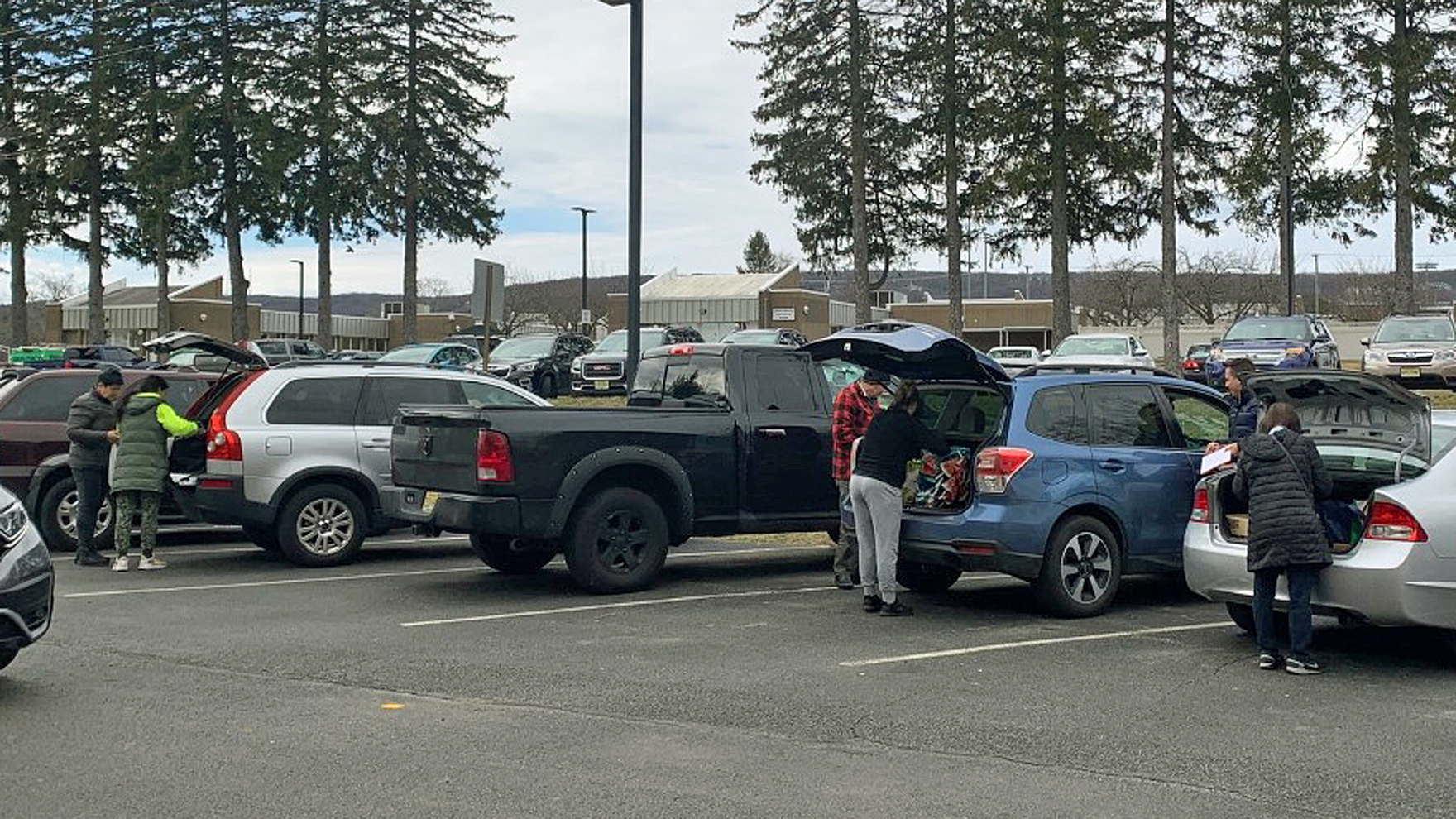
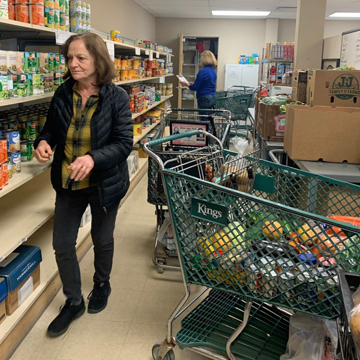
Carolyn Lake, executive director of the Morris County food pantry, said she expects to see a lot more people like Morales in coming weeks when SNAP recipients discover that their benefits no longer go so far in the supermarket and turn to pantries and other emergency-food organizations to put food on the table.
Even with the new state minimum, many SNAP recipients will be daunted by filling out another benefits application and try to get the food they need from pantries instead, Lake predicted.
More trouble than it’s worth
“Our fear is that a lot of people are going to be seeing a significant decrease with the $95 minimum. I think people are going to look at that and say, ’It’s just not worth it, I’m just going to head over to the food pantry,’“ she said.
 Credit: (Jon Hurdle)
The pantry organization is already serving 49% more families than it did a year ago, and demand is back to pandemic levels because of a jump in food prices and other factors including job loss and disability. With the drop in federal benefits, demand is likely to rise again, Lake said.
“When you couple the number of people who are affected by inflation with the people who are going to be affected by this reduction in SNAP benefits, we expect that we are going to see a significant number of new families coming through,“ she said.
Despite the warnings, advocates welcomed the new state law (S-3491) as an effective offset of the loss of federal funds, and a sign that the administration and legislators understand the problem, said Lisa Pitz, director of Hunger Free New Jersey, an advocacy group.
‘As people go to the grocery store and realize that they don’t have that boost to SNAP benefits, they are going to have to rely on the emergency food community that is already completely inundated and overwhelmed.’ — Lisa Pitz, Hunger Free New Jersey
“We have such compassionate leadership here in New Jersey. It is the only state in the nation that has such a high state SNAP supplement, “ she said. “It’s a wonderful thing that the state was able to make this happen so quickly in response to the end of the emergency allotment.“
“It is still a net loss in benefits, with the end of the SNAP emergency allotments, but it is a huge boost to those households that receive the federal minimum benefit,” Pitz said.
Unfinished business with hunger
After touting the measure, legislative sponsors acknowledged more is to be done.
The office of state Assembly Speaker Craig Coughlin, a leading anti-hunger voice in the Legislature, acknowledged that low-income New Jerseyans may still experience hardship, but added the new law raising the state SNAP minimum and proposed additional funding for food-aid groups show the issue remains a legislative priority.
“The speaker remains concerned about the ‘hunger cliff’ among New Jersey’s food insecure,” said Gina Wilder, Coughlin’s spokeswoman. “The current year’s budget and the governor’s proposed budget provide record funding for the state’s emergency food organizations, which is the most critical safety net in the continuum of support for food-insecure residents.”
The federal payments were a big help to SNAP recipients over the three years of their existence, advocates say, and stopped food-insecurity rates from rising.
Greater reliance on pantries
Without the federal benefits, pantries are likely in coming weeks to see much heavier demand on a system that is already seeing demand at pandemic highs, Pitz said.
“As people go to the grocery store and realize that they don’t have that boost to SNAP benefits, they are going to have to rely on the emergency food community that is already completely inundated and overwhelmed,“ she said.
According to the Community Food Bank of New Jersey, the state’s largest, supplying pantries and other distributors in 15 counties, 7.4% of New Jerseyans, or some 650,000 people, are food-insecure, meaning they do not have consistent access to enough healthy food. Of the total, about 175,000 are children.
The CFBNJ is already planning for the increased demand, said Carlos Rodriguez, president of the food bank.
 Credit: (Jon Hurdle)
“We are concerned that we will see an increase in the 800 pantries and other distribution centers that we serve across the state. We know now that it is going to be less because of the $95 minimum, but we are still going to see an increase, and we are bracing ourselves for that,” he said.
Anticipating the increase, coupled with existing inflation, the food bank boosted the amount of food it distributes by 1.9 million pounds to 9.9 million pounds in March, Rodriguez said.
In Newark, the Tree House Cares pantry is already serving about 700 people a week and is expecting an increase of as much as a 40%–50% in clients as a result of the federal benefits cut, said Tanya Veltz, its founder and program director.
In Netcong, Virginia Arango said she has been visiting four pantries since early 2022. She has been unemployed for about the past 10 years, and uses the pantries to supplement food that she buys with SNAP payments.
Arango, 53, said she was getting about $500 a month in federal emergency SNAP funds, using the money to pay for food for herself and her 19-year-old son. What she can’t afford to buy, she tries to obtain at the food pantries.
The federal government, in a recent letter, told her the emergency benefit would be cut, although it didn’t say by how much, she said. With an expected net reduction in her benefit, she’ll have to look elsewhere. “I will become more dependent on the local pantries,“ she said.
