
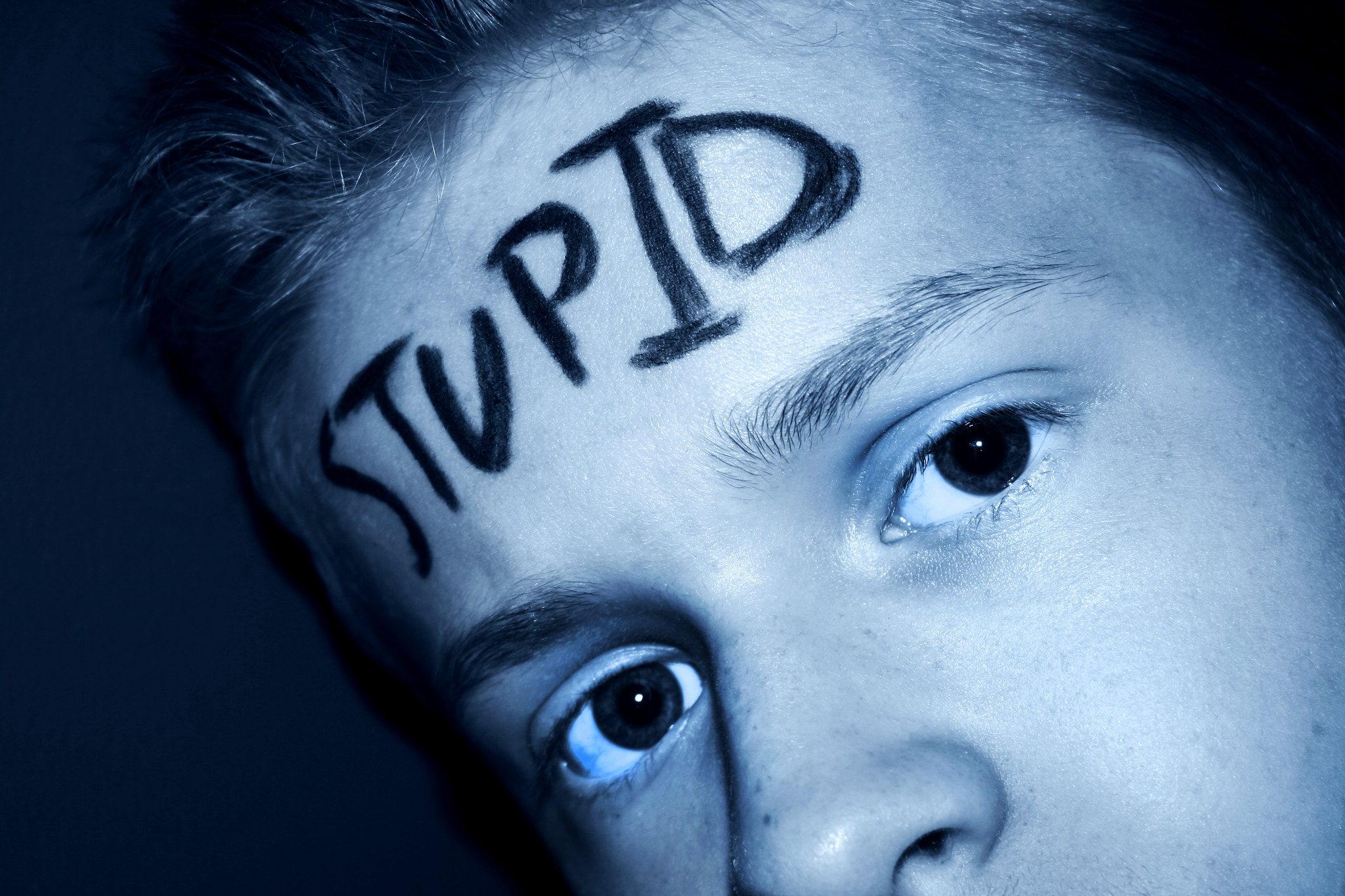
 Credit: (Laura Lewis via Flickr)
The suicide of a high school student who was physically attacked at school then harassed on social media has brought increased attention to bullying in schools.
But it is impossible to know how prevalent bullying is in New Jersey schools or what actions officials take due to lax reporting requirements, delays in reporting data and questions about whether school officials are reporting all known incidents.
For example, the numbers the state Department of Education reports do not match those posted by federal officials for the same time period — New Jersey’s were lower.
“New Jersey has a horrible history with collecting data about the most important issues in students’ lives, and that’s had a terrible impact,” said Stuart Green, founder and director of the New Jersey Coalition for Bullying Awareness and Prevention. “The data is ridiculously inadequate.”
COVID skews data
Further complicating questions about how common bullying is and how schools are dealing with it is the fact that data for the 2019-2020 and 2020-2021 years is unreliable because all school buildings were closed once COVID-19 hit and most remained at least partially closed throughout the 2020-2021 school year.
That means the most applicable data currently available dates back to the 2018-2019 school year, the last one when students were on site for the entire year. The state shows that in that year schools reported almost 7,200 confirmed incidents of harassment, intimidation or bullying, with another 9,900 allegations investigated but not confirmed. That means New Jersey school officials verified fewer than four of every 10 complaints of harassment or bullying, which represents one incident per 200 enrolled students.
But that rate of reported bullying would be significantly lower than the national average. The National Center for Education Statistics reported in 2019 that one of every five students nationwide report being bullied in the 2016-2017 school year.
There are discrepancies between data provided by state and by federal officials for New Jersey for 2017-2018, the most recent year available. In all cases, the numbers reported by the state are lower than those posted by the U.S. Department of Education’s Office of Civil Rights for the same categories. The largest difference is in bullying based on a person’s race. For that category, the state reported 1,191 confirmed incidents that year, with another 387 confirmed based on ancestry. Federal data, however, shows 2,378 incidents of bullying based on “race, color or national origin.” The number of students federal civil rights officials said were disciplined for bullying based on race — 1,999 — is more than the total 1,578 reported on the state’s performance report.
Students, especially girls, are experiencing an unprecedented level of violence
Jeffrey Moore, superintendent of the Hunterdon Central Regional High School District, said the district reports bullying data separately to state and federal officials and the two offices categorize incidents differently, but all the data comes from the same source and, if anything, reported incidents to the state tend to be higher than those reported to the federal government.
“I do often see differences between the two reports,” Moore said. “If an incident doesn’t involve specific distinguishing characteristics like race, religion, gender identity and others, then the (federal government) doesn’t necessarily count it. However, for New Jersey, we are also reporting incidents that fall outside of those categories, but still meet the state’s definition of an incident. That typically leads our state numbers to be higher than the (federal government’s), rather than the other way around.”
State DOE declines to comment
A spokeswoman for the state Department of Education did not return a request for comment on the discrepancies.
Nor did officials answer a question about why federal education officials report whether a bullying incident resulted in some form of discipline, while the state does not. The state performance reports only provide the number of incidents in which police were involved: School officials called law enforcement in fewer than 10% of bullying cases in 2018-2019, while police were called regarding more than 20% of some 12,400 instances of school violence reported that school year.
There are also questions about whether all bullying is being investigated. While some students likely don’t report being harassed, it is unclear whether incidents involving people who don’t fit the specific cases in the law wind up being reported.
State law defines harassment, intimidation and bullying as “any gesture, any written, verbal or physical act, or any electronic communication … motivated either by any actual or perceived characteristic, such as race, color, religion, ancestry, national origin, gender, sexual orientation, gender identity and expression, or a mental physical or sensory disability or by any other distinguishing characteristic” that creates a hostile educational environment, is insulting or demeaning or physically or emotionally harms a student.
It is the phrase “any other distinguishing characteristic” that Green points to as covering any student, whether a student who is overweight or for some other reason is picked on, though he said it is unclear whether all schools are reporting those.
“If a kid is hurt on the basis of weight, that’s still a bullying incident, and by law, the school has to look into it,” Green said. “They’ve got to look into it anyway, whether it’s got one of those covered, legally sanctioned characteristics in the (law against discrimination) or not.”
Gaps in reporting
But he also questions whether school officials are reporting all legitimate instances of bullying. For one thing, Green said, bullying is described in data as an incident, but it is rarely a single occurrence and more often “a pattern of negative acts, a pattern of violence.” And sometimes school officials characterize instances as “conflict” between two students rather than one bullying the other, but given that one student or group often has more power than another, conflict is often not the correct definition.
“All of the data in New Jersey gets is self-reported by administrators, it’s voluntary,” Green said.
But school officials pushed back, saying they need accurate data to tell what’s happening with their students.
“All of the school leaders I know recognize that an increase in incidents is a warning light on the dashboard,” Moore said. “The entire community should be paying attention to it, not just schools. If we don’t face and try to understand increases and decreases in incidents, then we aren’t working as a community — not just a school, but as a whole community — toward helping students care for themselves and each other.
[datatable id=”494508″]Yet the state data leads to questions of whether all those other cases — the child targeted for a unclear reason — are being investigated properly. According to the state performance report, the percentage of bullying allegations based on six categories drawn from the language of the law that was confirmed in 2018-2019 ranged between 60% and 72%. And 62% of allegations based on an “other” category were confirmed. But three of every 10 allegations investigated were listed as having “no identified nature” and none of those were confirmed.
“All confirmed incidents must have an identified nature,” the performance report states.

Over the past decade the state has enacted some of the most stringent anti-bullying laws in the country, but another student suicide raises calls for more protection
That means close to 5,400 allegations of bullying were considered unfounded in that school year, and in many instances the perpetrators likely faced no consequences.
Unchecked bullying creates lasting problems for many. As Rebecca Coniglio, a licensed clinical social worker and board of education member in New Providence said, “I wish there was a way for this to all get better. Bullying is a serious and awful issue that leaves scars on the victims and their families for years. The possibilities are endless to raise good, well-adjusted children who would include others and not go out of their way to hurt another fellow peer.”
