 Credit: (AP Photo/Michael Probst, File)
Planting trees on city streets, restoring coastal marshes and building defenses against rising seas are among the nature-based responses New Jersey is now investing in to fight the effects of climate change.
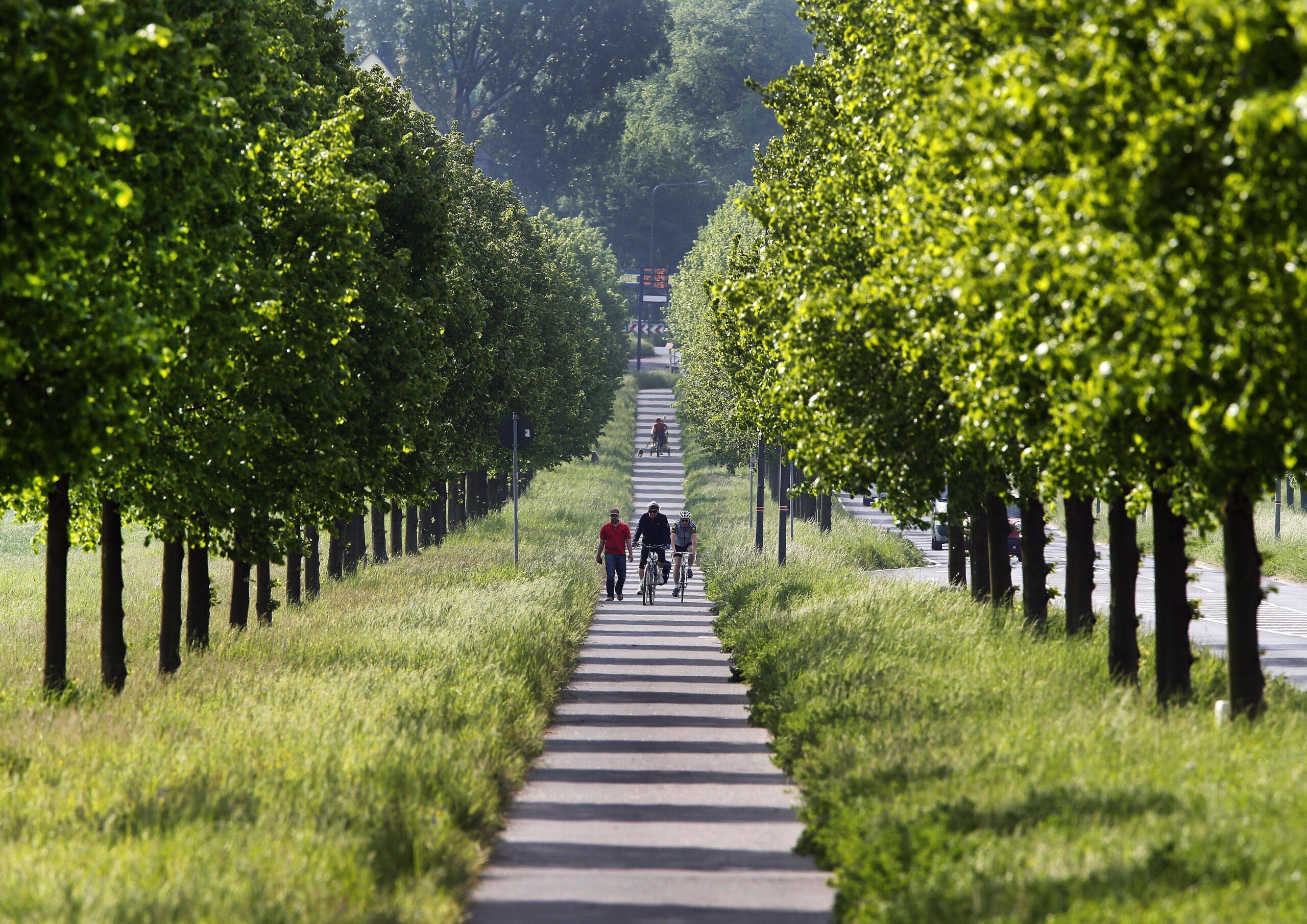
Grants totaling $24.3 million to help local governments and conservation groups in such efforts are the first under the new Natural Climate Solutions Grant Program. The program is designed to achieve carbon “sequestration,” a natural process for capturing carbon in trees, or in plant-derived masses in soil. It can be aided by methods such as planting trees in cities or previously forested areas, or by protecting coastal ecosystems, where marshes and seagrass meadows trap more carbon than forests on land.
New Jersey is one of the first states to set up such a grant program to mitigate climate change through the enhancement of natural features and resources such as parks, forests and marshlands, the DEP said.
“New Jersey will avoid the worst effects of our changing climate not only by reducing emissions of climate pollutants, but by investing in natural solutions that sequester carbon causing the extreme heat and flooding repeatedly striking our communities,” said Shawn LaTourette, commissioner of the Department of Environmental Protection, at a ceremony in Trenton last week.
Capturing tons of carbon
The agency estimates that the 14 projects ranging from Newark to Atlantic City and the Delaware Bay Shore will together sequester more than 32,000 tons of carbon dioxide equivalent by 2050, helping the state toward its goal of cutting greenhouse gases by 80% from 2006 levels by 2050.
One of the recipients is the New Jersey-based American Littoral Society, which was awarded almost $5 million to restore 19.5 acres of tidal salt marsh in Cumberland County where the Maurice River enters Delaware Bay. The Restoring Marsh at the Mouth of the Maurice River project will create up to 3,500 feet of natural breakwaters and oyster reefs that will protect some 4,300 feet of shoreline.
The society’s executive director, Tim Dillingham, said tidal marshes capture carbon as well as providing wildlife habitat and protecting the coastline against wave action, which is expected to become harsher as seas rise and storms intensify with the changing climate.
“New Jersey is ground zero for the impacts of climate change, and harnessing the power of nature is the most effective response available to us,” Dillingham said in a statement.
The sea level at the Jersey Shore is expected to rise by 0.5 to 1.1 feet between 2000 and 2030 and 0.9 to 2.1 feet by 2050, according to a 2019 projection from Rutgers University. The extent of future increases will depend on whether the global emission-reduction goals of the 2015 Paris Agreement are met, the Rutgers report said. With no significant cuts, seas at the Shore could rise as much as 6.3 feet by 2100.
Where the money is coming from
Inland, New Jersey is preparing for bigger, more frequent storms such as Tropical Storm Ida, which caused record flooding in many towns in September 2021. In the first quarter of this year, the DEP is expected to finalize a rule that would raise the minimum height of new buildings by 2 feet in flood-prone areas.
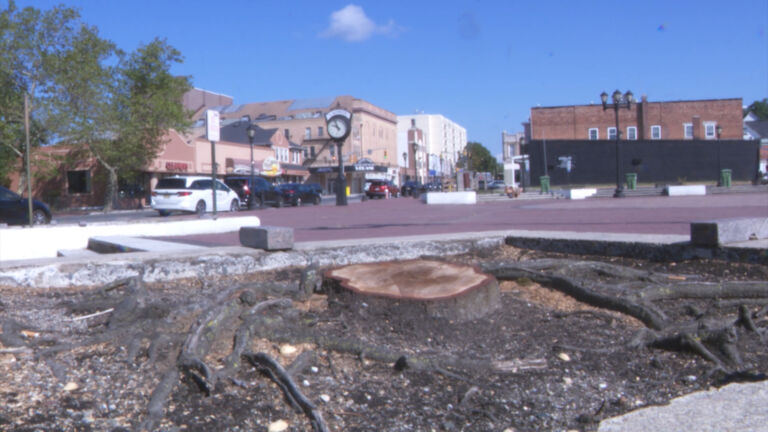
In Trenton, the city government will work with the New Jersey Conservation Foundation to plant 1,000 trees in neighborhoods that have few or no trees.
Money for the awards is coming from revenue from New Jersey’s membership of the Regional Greenhouse Gas Initiative, in which 12 eastern states charge fossil fuel power generators for permits to emit a declining quantity of carbon dioxide with the aim of incentivizing them to curb emissions. The DEP said the grants mark the first time any RGGI state has used revenue from the initiative to fund programs for sequestering so-called blue carbon — that captured by ocean and coastal ecosystems — and green carbon, that stored in plants.
The new grants include another of nearly $5 million for marsh restoration at the Edwin B. Forsythe National Wildlife Refuge in Brick Township, Ocean County, where tidal marsh will be elevated with 120,000 cubic yards of dredged sediment over 95 acres to prevent the marsh from drowning. Vegetation will be planted in previously unplanted areas to build up the marsh, the DEP said.
In Newark, the city was awarded almost $1.3 million for its Newark Canopy Initiative, which will remove dead trees and plant 331 new ones in five neighborhoods that have the greatest need for an improved tree canopy.
More trees
Another tree-planting project will take place in Atlantic City. It was awarded $759,000 to plant 180 trees along 13 blocks of Atlantic Avenue with the aim of increasing shade and reducing the need for air conditioning, improving air quality and reducing stormwater runoff in an overburdened community.
‘New Jersey is ground zero for the impacts of climate change, and harnessing the power of nature is the most effective response available to us.’ — Tim Dillingham
“These grants are providing real opportunities for our environmental justice communities to take meaningful steps toward climate resilience,” said Kandyce Perry, director of the DEP’s Office of Environmental Justice. “While each community has differing needs and ways of getting to their goals, they each share the strong desire to help improve the quality of life for their residents.”
In Trenton, the city government will work with the New Jersey Conservation Foundation to plant 1,000 trees in neighborhoods that have few or no trees. The project, called Throwin’ Shade – Greening the Capital City, won a grant of almost $1.4 million, and aims to trap carbon, reduce the urban heat-island effect and reduce stormwater runoff.
“We believe this project can be transformative in our capital city where residents are experiencing disproportionate impacts of climate change,” said Jay Watson, the foundation’s co-executive director. “Urban neighborhoods are dealing with the heat-island effect that causes higher ambient temperatures than in suburban and rural areas.”
And on 45 acres of woodland in Princeton, invasive species will be removed and “thousands” of native trees will be planted by contractors and volunteers in a project that was awarded $552,000 by the DEP.
“We are always looking for opportunities to decrease our collective carbon footprint,” said Princeton Council member Eve Niedergang. “Alongside our nonprofit partners at Friends of Princeton Open Space, we are thrilled to be granted the opportunity to restore the Community Park North forest.”