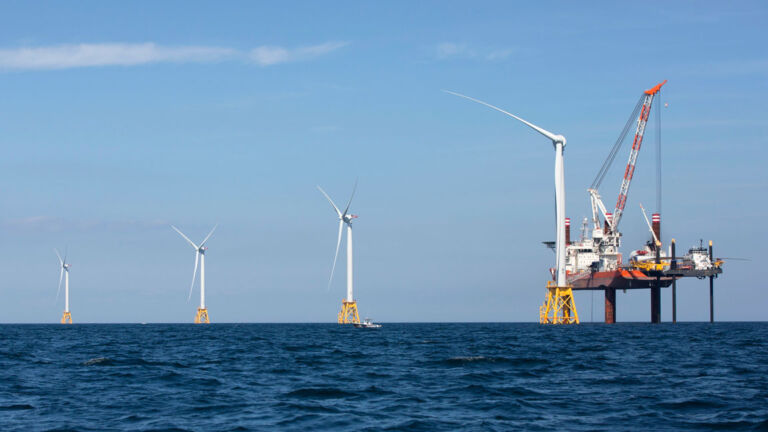
 Credit: Andrew S. Lewis
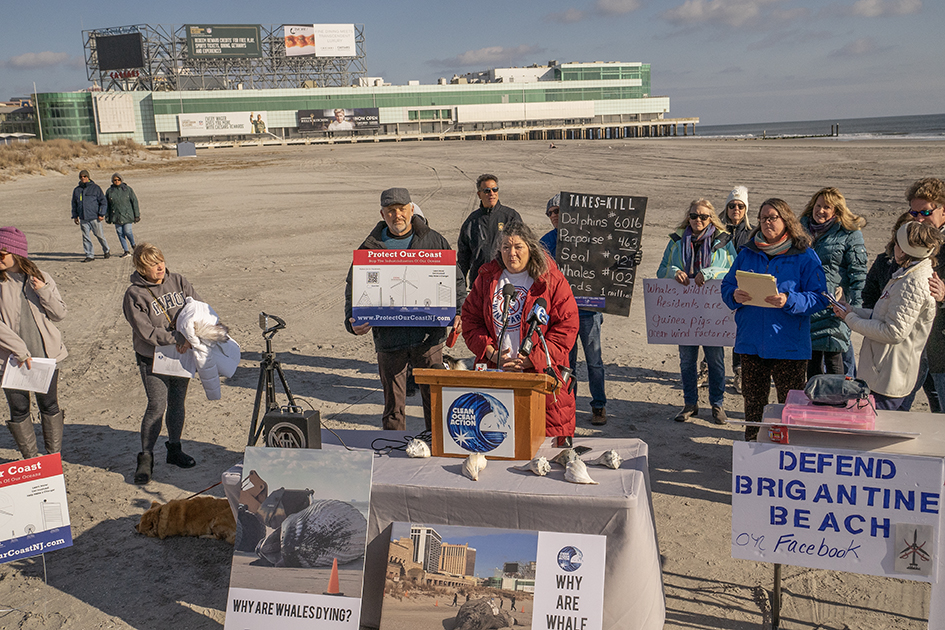
The Biden administration needs to halt development of offshore wind projects until it determines what is causing endangered whales and other mammals to wash ashore dead on beaches in New Jersey and New York, conservationists said Monday.
The call came after a 30-foot humpback whale washed ashore on a beach in Atlantic City early Saturday morning. It was the second in two weeks in the resort community, and the third in the last month in the same area, according to ocean advocates.
No cause has been identified as to why more than six whales have been found dead on beaches in the metropolitan area in the last 33 days, but the groups suspect offshore wind developers using vessels to conduct mapping of the ocean floor may be causing the deaths.
“The wave of dead whales is the ocean sounding the alarm,’’ said Cindy Zipf, the executive director of Clean Ocean Action, ‘’and we must heed the warning.’’
The boats use high-level focused pulses of sound through vast areas of the ocean floor to do the mapping, noise which advocates argue is causing harm, injury or even death to thousands of whales and other sea mammals, like dolphins, porpoises and seals.
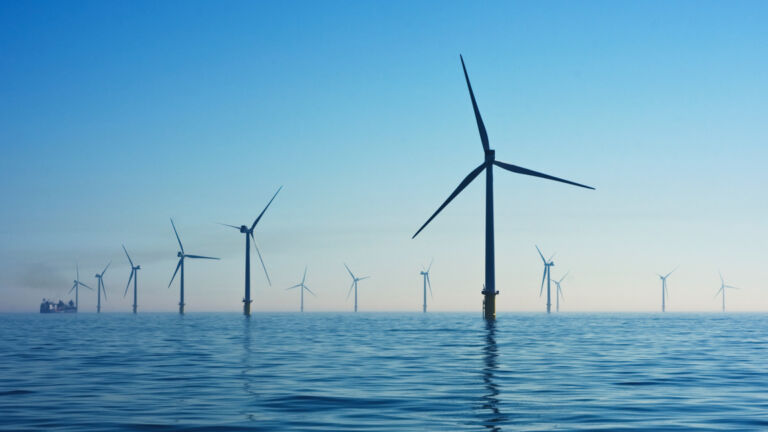
The ongoing survey work has preceded any real construction work on the offshore wind farms, which many clean energy advocates have lauded as a cleaner and safer way of providing electricity to homes than natural gas-fired power plants, a major source of greenhouse gas emissions.
Offshore wind is one of the key components of the Murphy administration’s clean energy strategy, which seeks to transition away from most fossil fuels by mid-century. By 2050, offshore wind farms are projected to provide 27% of New Jersey’s electricity. So far, three significant wind farms have been approved by the state. None are operational.
“The wave of dead whales is the ocean sounding the alarm, and we must heed the warning.” — Cindy Zipf, executive director of Clean Ocean Action
New York and other states up and down the eastern seaboard have also embraced offshore wind despite fears by Zipf and others who describe it as a massive industrialization of the ocean. The wind farms will involve thousands of turbines, some as tall as the Chrysler Building in Manhattan, she said.
Call for action
“The premature death of so many whales and other marine mammals is an untenable situation that we believe is most likely caused by the increase in vessel traffic and the ‘sounding’ or mapping of the ocean floor by several offshore wind developers,’’ said Suzanne Hornick from Protect Our Coast NJ.
The beached whales show no sign of being struck by vessels or fish gear entanglement, leaving natural causes or noise as potential causes, according to Bob Stern, president of Save Long Beach Island, a group opposed to the offshore wind farms. He echoed the call for an impartial and transparent investigation.
In a letter to President Biden, the groups called for an immediate investigation into the recent whale deaths and other marine mammals by qualified, independent scientists. While underway and peer reviewed, they demanded a stop on all offshore wind development activities, and a halt to permitting and future solicitations for new projects within the ocean realm between Cape May and Montauk, New York.
New Jersey is scheduled to hold a third solicitation for new offshore wind projects sometime in the first quarter of 2023. The first offshore wind project in New Jersey is located about 15 miles off of Atlantic City and is not scheduled to be operational until the middle of this decade.
The Biden administration has established a goal of deploying 30 gigawatts of offshore wind capacity off the nation’s coasts by 2030.