Credit: (Taylor Jung; NJ Spotlight News)
Jan. 30 is officially Fred Korematsu Day of Civil Liberties and the Constitution in New Jersey, and Japanese American advocates and Korematsu’s daughter say his story is as relevant today as it was in the 1940s.
“It’s just a really powerful moment,” said Danielle Iwata, board member of AAPI Montclair, whose family was incarcerated at the Tule Lake and Minnetonka detention camps. Fred Korematsu Day is about “making sure we’re leveraging our histories to make sure this doesn’t happen to other groups or to support other groups for whom it is happening,” Iwata told NJ Spotlight News.
Gov. Phil Murphy marked the occasion Monday with the ceremonial signing of a legislative resolution making New Jersey the sixth state to commemorate the birthday of Fred Korematsu, an Oakland, California-born Japanese American man who challenged incarceration camps.
Korematsu was 23 at the time President Franklin D. Roosevelt signed Executive Order 9066, incarcerating Japanese communities on the West Coast and pushing them into what were euphemistically called “relocation centers.”
Korematsu changed his name to Clyde Sarah and underwent plastic surgery to change his eye shape in hopes that he could pass as Spanish and Hawaiian. He was arrested for “failing” to report to a detention camp and eventually sent to one in Topaz, Utah, where he was shunned by Japanese Americans for fear that he was bad luck. His case made it all the way to the Supreme Court — Korematsu v. United States (1944) — which upheld the decision to “exclude” Japanese Americans from the West Coast to protect against espionage. No Japanese American was convicted of spying, and the court’s decision has become synonymous with anti-Asian hate.
Broad implications
To some, the legislative resolution and ceremony Murphy held Monday may seem like small gestures. But the waves of anti-Asian hate over the past three years — and the federal government’s continued surveillance and incarceration of Americans during wartime — are powerful reminders that Korematsu’s case is still relevant.
 Credit: (Edwin J. Torres/NJ Governorâs Office).
Karen Korematsu, Fred Korematsu’s daughter, is a known face in the Japanese American, Asian American and Pacific Islander (AAPI) advocacy communities who often appears at talks or events like the one in Trenton to keep her father’s memory alive. For her, her father’s story is as pertinent today as it was in the 1940s.
“This is the … automatic response to when something bad happens to our country, instead of treating it like ‘What can we do to make change? What can we do to make this right? … It’s always like, ‘How can we marginalize? How can we belittle, how can we put these people behind bars,” Karen Korematsu said.
Fred Korematsu was among other Japanese Americans who spoke out in 2001, during the rise of anti-Muslim hate after 9/11, his daughter said. Japanese American advocates warned against the USA Patriot Act of 2001, which allowed the government to surveil and detain people thought to be engaging in terrorist activities, which social justice advocates claimed could criminalize and discriminate against anyone from a Muslim-majority country.
No more ‘concentration’ camps
“My father was one of the first to speak out when the government was talking about rounding up Arab and Muslim Americans and put them in American concentration camps. And my father said, ‘No, you can’t do that. You did that before and it’s wrong,’” Karen Korematsu said.
It’s debated whether the Supreme Court decision for Korematsu’s case could be used again to justify similar discrimination against other groups. It was not overturned by the Supreme Court until 2018 in the Trump v. Hawaii travel ban case, when Trump’s decision to outlaw travel to and from certain Muslim-majority countries was upheld. Justice Sonia Sotomayor drew comparisons to the travel ban and Korematsu’s case in her dissent.
“As here, the exclusion order (by Roosevelt) was rooted in dangerous stereotypes about a particular group’s supposed inability to assimilate and desire to harm the United States,” Sotomayor said.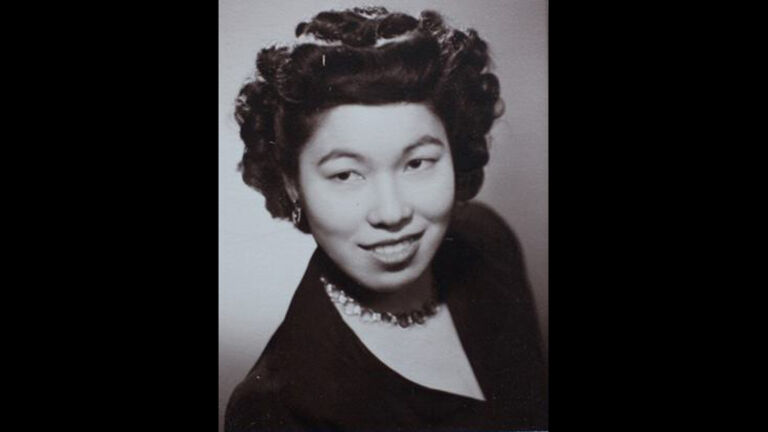
Chief Justice Roberts rebutted Sotomayor’s claim, writing in his decision that Korematsu v. United States was “overruled in the court of history.” It was a rare mention of Korematsu’s case in the Supreme Court, and law experts and advocates argue whether it’s enough to overturn the case.
“It was a throwaway (remark) from Chief Justice Roberts … (it) was just a retaliation kind of point, because Justice Sotomayor’s dissenting opinion was so scathing,” Karen Korematsu said.
She added, however, that her father’s conviction was overturned. He reopened his case during the Redress Movement, when Japanese Americans were fighting for reparations from the United States government during the 1970s and 1980s. People told her father not to move ahead with his case in fear that they’d lose support for reparations, but he pushed forward anyway, and his conviction was overturned in 1983 by a federal judge.
Lessons learned?
Karen Korematsu, who created an institute in her father’s name, said she works with social studies organizations to teach about her father’s and other Japanese Americans’ stories concerning incarceration camps, not only so students can learn how Asian Americans were treated as “enemy aliens” for the majority of their history in this country, but also so they can see how the government and society repeat her father’s story today.
She also works with the New Jersey Department of Education, she said, after the state passed a law in January 2022 mandating that Asian American and Pacific Islander history be taught in schools.
Fred Korematsu’s story is often one of the few parts of Japanese American incarceration during World War II that students learn about in their history classes. But his daughter and other Asian American advocates hope that Fred Korematsu Day in New Jersey will shed light on the history of anti-Asian sentiment in America, as well as Asian American resiliency.
“We’re doing this now to young people where we don’t welcome them, or we treat them like they’re not important. And that needs to stop by sharing our stories. By knowing your own story. It will empower you to take that challenge of trying to really do something better for our country,” Karen Korematsu said.