
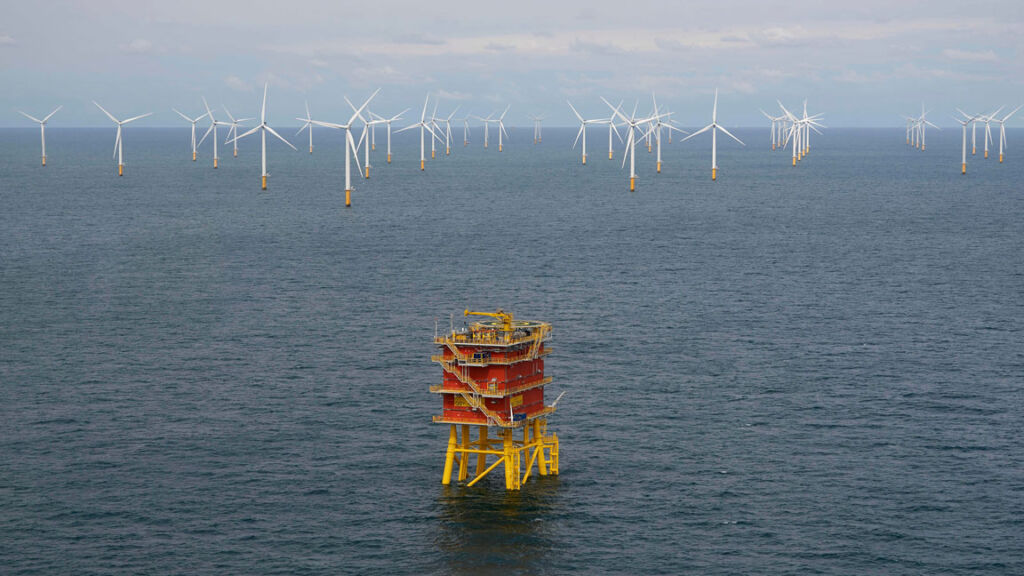
With dozens of offshore wind projects in the pipeline across the nation, federal agencies, states and power-grid operators need immediately to begin collaboratively planning on how to bring the electricity ashore, according to a new study.
The Brattle Group study found numerous benefits from proactively planning for the transmission of over 100 gigawatts of U.S. offshore wind power expected to come online over the next two to three decades. At least $20 billion in transmission costs could be saved, 60 to 70% fewer shore crossings and onshore transmission upgrades could be needed and the reliability of the power grid could be bolstered.
The findings reflect recommendations long advocated by many proponents of offshore wind, but mostly ignored as states have rushed headlong to develop projects and become the hub of a fast-growing green economy sector.
To an extent, New Jersey has followed the report’s suggestions, as the report noted. Last year, the state concluded a proactive planning effort with PJM, the nation’s largest grid operator, for connecting 6.4 gigawatts of offshore wind generation to its grid. The process resulted in cost savings of more than $900 million for ratepayers, in part, by reducing the number of transportation corridors from offshore wind projects from three to one.
In doing so, the state also reduced interconnection-related risks, created a more competitive environment for future offshore wind procurements and mitigated environmental and community impacts, the study said. If the scope of the planning effort had included more than only New Jersey, the benefits would have even been larger, according to the report.
Numerous challenges
But doing so presents huge challenges, said Johannes Pfeifenberger, the lead author of the report. It “will require unprecedented close coordination between states, federal agencies and regional grid operators, along with significant improvements to the generation interconnection and grid planning processes used today,’’ he said.
That cooperation and collaboration have not always been there. Indeed, disputes over cost allocation associated with past transmission projects benefiting customers in multiple regions often have erupted into disputes and litigation.
‘Offshore wind is not just good for the environment, it’s good for our economy, and the longer we delay planning for it, the more difficult it will become.’ — John Moore, Natural Resources Defense Council
Offshore wind is viewed as one of the best bets for transitioning to clean energy as a way to fight climate change. The Biden administration has set a goal of deploying 30 gigawatts of offshore wind by 2030 — enough to power over 22 million homes, and 110 gigawatts by 2050. Simultaneously, 11 coastal states have already set procurement targets that exceed 50 gigawatts through 2035 and over 75 gigawatts by 2045.
New Jersey hopes to develop 11 gigawatts of offshore wind capacity by 2040, the most aggressive target on the East Coast. In recent weeks, however, the goal has been repeatedly questioned over its projected costs, impact on the state’s $45 billion tourism economy and other concerns, such as cables from the wind farms being buried under beaches in Ocean City.
Nevertheless, the state is still expected to solicit proposals for its third offshore wind development later this year. The state has asked offshore wind developers to address recommendations included in the Brattle report.
The downside of delaying
“There is no time to lose if we want to achieve any of these benefits,’’ Pfeifenberger said. A five-year delay in planning may cut benefits of good planning in half, the report said. New transmission development takes about a decade or more to come online.
Robert Golden, a senior adviser for clean energy infrastructure in the White House, called the report “extremely helpful’’ in an online panel discussion set up by those who funded the report. “The need is here. The urgency is here,’’ he said.
Others suggested it is crucial the IRS clears up uncertainty over whether new federal tax investment credits for offshore wind generation also apply to cables and interconnections that deliver power from the wind turbines to the onshore grid.
“Offshore wind is not just good for the environment, it’s good for our economy, and the longer we delay planning for it, the more difficult it will become,’’ said John Moore of the Natural Resources Defense Council, one of the groups that commissioned the analysis.
