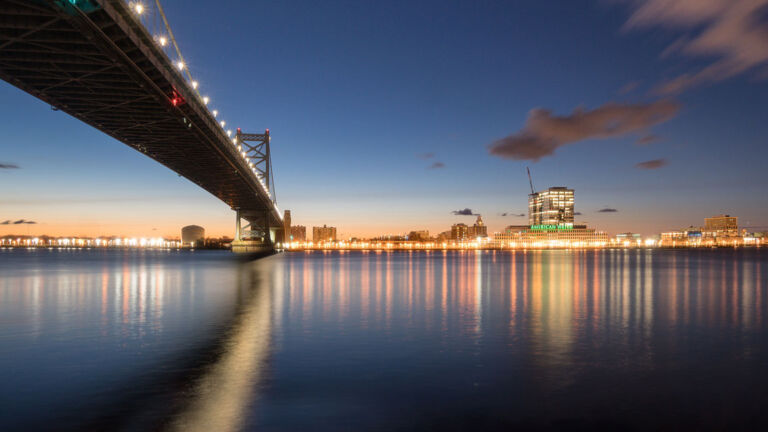
Credit: (AP Photo/Matt Rourke)
The Environmental Protection Agency announced Thursday it will raise a key water-quality standard for an urban stretch of the Delaware River Estuary between Trenton and Wilmington, DE, giving a big — and unexpected — victory to environmental groups that had long-sought the increase.
The EPA’s decision to grant the petition from five local groups came after they had been urging the Delaware River Basin Commission for years to upgrade its official designation for the estuary’s use. They also have accused the commission of moving too slowly to raise a standard for dissolved oxygen, a central measure of river health.
The EPA said Thursday that a current standard for dissolved oxygen is not high enough to sustain populations of all fish, particularly the endangered Atlantic sturgeon.
‘EPA’s agreement that the DRBC has demonstrated an unwillingness to do the job necessary is both a powerful repudiation of the failed DRBC strategy and an acknowledgement of the perilous status of our Atlantic sturgeon.’ — Maya van Rossum, Delaware Riverkeeper Network
It said the concentration of oxygen in the water must be increased to comply with the federal Clean Water Act, a landmark law that has underpinned the cleanup of rivers like the Delaware since it was passed in 1972.
“To be consistent with the CWA and EPA’s implementing regulation, the applicable aquatic life designated uses and corresponding dissolved oxygen criterion in the specified zones of the Delaware River Estuary must be revised to protect the propagation of resident and migratory fish species,” the EPA said.
Upgrading the standard for dissolved oxygen
Raising the oxygen standard would allow the DRBC to upgrade its designation of the river’s urban stretch to that of fish “propagation” from the current “maintenance.”
Although the estuary has been used for limited fish propagation for the last 20 years, some fish likely face “lethal or sub-lethal” effects because of the current dissolved-oxygen standard of 3.5 mg per liter, the EPA said.
‘Today’s decision by EPA to grant our petition is an extraordinary step to recognize the lack of action by DRBC on this issue for decades, and to finally ensure the lower Delaware River can be a healthy, vibrant river.’ — Doug O’Malley, Environment New Jersey
Increasing the oxygen content in the water could be achieved by installing new technology on wastewater treatment plants in cities including Camden, Philadelphia and Wilmington, the Agency said.
In September, the DRBC released the long-awaited results of its own five-year study of the issue, concluding that it would be possible to achieve both a higher oxygen content and an upgraded designated use by requiring more restrictions on the discharge of ammonia from water treatment plants along that 38-mile stretch of the river.
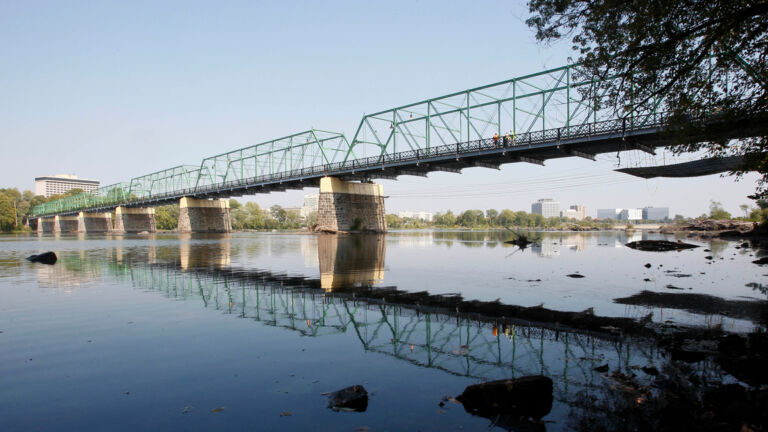
But the DRBC projected that it wouldn’t issue a final rule on the change until the spring of 2025, a timetable that the EPA now says was too slow. Instead, the federal agency said Thursday it would write its own regulations in the next 12 months, calling that a “reasonable timeframe.”
Environmental groups celebrate
The environmental groups hailed the EPA’s decision as a rare victory.
“It is extremely rare that EPA grants a petition of this kind,” said Maya van Rossum, leader of the nonprofit Delaware Riverkeeper Network, one of the petitioners. “EPA’s agreement that the DRBC has demonstrated an unwillingness to do the job necessary is both a powerful repudiation of the failed DRBC strategy and an acknowledgement of the perilous status of our Atlantic sturgeon.”
Riverkeeper and other groups rallied in Philadelphia in mid-November to call for more government action to protect the local population of the fish, whose number is estimated to have fallen to about 250, and which is listed as endangered by the federal government.
Doug O’Malley, director of Environment New Jersey, said the estuary’s ecosystem has long been living with an outdated oxygen standard since the DRBC installed it in 1967 and that the EPA’s action will now accelerate the process of upgrading it.

“Today’s decision by EPA to grant our petition is an extraordinary step to recognize the lack of action by DRBC on this issue for decades, and to finally ensure the lower Delaware River can be a healthy, vibrant river,” O’Malley said.
The DRBC said in a statement that the environmentalists’ petition was “unnecessary” because the agency was already working with the EPA and state agencies to upgrade water standards in the estuary.
According to the Trenton-based commission, the EPA’s decision has the “potential to create a duplicative regulatory process,” but it said it would continue to work with federal and state agencies to develop water-quality standards that meet the Clean Water Act.
The DRBC noted that the EPA had recognized the value of the DRBC’s “foundational science” showing that fish propagation throughout the estuary is attainable, and that the timeline for setting new standards will be accelerated by the work the DRBC has already done.
DRBC spokeswoman Kate Schmidt denied that the agency’s authority had been “superseded” by the EPA, as suggested by the environmental groups, and argued that its recently concluded five-year study had not been negated by the federal action.