
 Credit: (AP Photo/Charlie Riedel)
Anxiety, depression and post-traumatic stress disorder are the most notable mental-health issues for people with long COVID, as they continue to experience other symptoms of COVID-19, such as fatigue, dizziness when standing and difficulty concentrating — for months after initially contracting it.
The height of the pandemic may have passed, and while students return to schools and employees are encouraged to come back to the office, people who contracted the disease months ago are still struggling to fully recover. More than 40% of adults in the United States reported having COVID-19 in the past, and nearly one in five of them are currently still having symptoms of long COVID, according to a survey from the National Center for Health Statistics and the U.S. Census Bureau.
“I wouldn’t be human if I didn’t tell you I had my moments,” Carl Boyd, a family service support specialist at the Center for Family Services in Camden, said of his mental health when experiencing symptoms of long COVID.
“I had just moments where I didn’t feel as jovial,” he said. “But for the most part, I tried to keep a positive attitude. I’m going to say my mom and my brother and sisters, my nieces and nephews — my family — they were instrumental in helping me keep my mental strength up.”
 Credit: (Courtesy of Carl Boyd)
Boyd, a resident of Camden for over 28 years, was in Cooper University Hospital from March 31, 2021 to May 17, 2021 with COVID pneumonia — heavily medicated and on dialysis. He says he was also on a ventilator before eventually getting a tracheotomy tube. He went into diabetic ketoacidosis, which develops when a person’s body does not have enough insulin to allow blood sugar into their cells to use as energy, and also developed gangrene, resulting in the amputation of all five toes on his left foot.
Boyd was transferred to Kindred Hospital in Philadelphia in the middle of May 2021 and during his month there developed pancreatitis. He was transferred to a nursing home in Deptford where he stayed from June 17, 2021 until going home at the end of April. He continues to receive outpatient therapy.
In October, he went back to work part-time at the Center for Family Services. Boyd said the Center has been supportive, along with his family, friends and colleagues.
“People came to visit and I think that’s what got me through because, obviously, as many physical things that I went through with my body, this was mentally taxing,” he said. “And I’m still getting through it.”
Boyd shared his story about his battle with long COVID during a public hearing of the Department of Health’s COVID-19 Pandemic Task Force on Racial and Health Disparities at Rutgers-Camden on Nov. 2.
Long-term impacts
“We are going to start to see an increase in the number of people who are either temporarily or permanently disabled because of their symptoms from long COVID,” said Stephanie Silvera, an epidemiologist and public-health professor at Montclair State University. “Whether that is the brain fog that people have talked about (or) the inability to navigate through your day in a way that you could before and the frustration that comes with that.”
An estimated 10 million to 35 million working-age adults may have long COVID, although the exact number is highly uncertain, according to an August article from the Kaiser Family Foundation. Fewer than half of working-age adults with long COVID who worked prior to infection are back on the job full-time.
Silvera also noted the long-term impact of the virus on some young people.
“What we do know is that the evidence is mounting that the long-term impact of COVID on multiple organ systems is real and that it occurs across the age spectrum,” she said. “So the narrative that was incorrectly pushed early by a lot of people that COVID wasn’t impacting children simply wasn’t correct.”
Psychological distress before being infected with COVID may also be a risk factor for developing long COVID, according to a study published in JAMA Psychiatry in September.
“For early in the pandemic, that is April 2020, we followed more than 54,000 people for a year,” said Dr. Siwen Wang, the lead author of the study and a research fellow at Harvard University’s T.H. Chan School of Public Health. “Over that year, more than 3,000 (people) contracted COVID-19. We then asked them about their COVID symptoms and how long they lasted. We found that psychological distress before a COVID infection, including depression, anxiety, worry, perceived stress and loneliness were associated with 32- to 46% higher risk of long COVID,” she said.
Risk factors
“Participants with two or more types of distress prior to infection were at nearly 50% increased risk for long COVID,” Wang said, added that this risk was not explained by smoking or physical health conditions like asthma.
There are also similarities between long COVID and other chronic illnesses, according to Dr. Anna Dickerman, the chief of the psychiatry consultation service at NewYork-Presbyterian/Weill Cornell Medical Center and an associate professor of clinical psychiatry at Weill Cornell Medical College.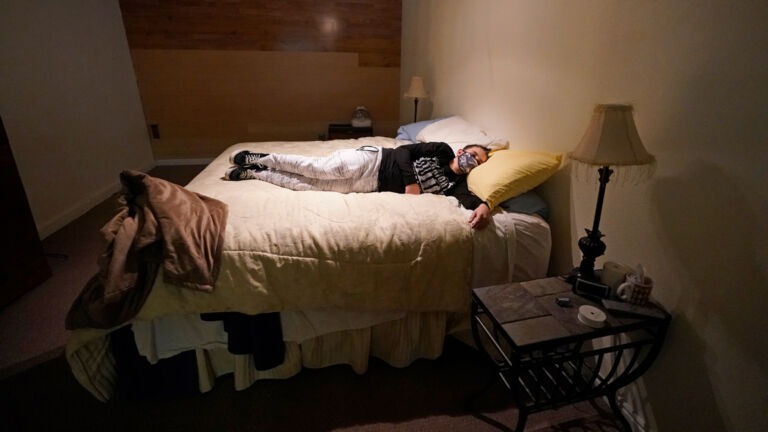
“So, it’s kind of like long COVID is the perfect storm,” Dickerman said. “You have all of these components that we know exist in other chronic medical illnesses like pain and all the inflammatory responses, then plus you have these social stressors as well, and it all comes together into this perfect storm that is kind of a setup for impaired mental health in some way.”
Having the support of other people in the recovery process is vitally important for sustaining mental health, according to Boyd.
“Knowing that you have people who are there to support you, to be there to help you get through that rough road that you may be going through is vital to your mental strength and your mental well-being,” he said. “Because your mental well-being does play a role in you getting better and if you feel like you’re just out here in the world totally alone, not having anybody, that can make or break how you recover and whether you … live or die.”
