
 Credit: (AP Photo/Rogelio V. Solis, File)
New Jersey has taken significant steps to improve birth outcomes — particularly among Black residents. But more funding is needed to continue this work at the state and community level, create a diverse and sustainable workforce and improve coordination and communication among maternal health stakeholders.
Those were among the common themes expressed during the first lady’s 5th Annual Black Maternal and Infant Health Leadership Summit, an online event that brought together nearly 300 participants Tuesday. And Murphy, who has spearheaded this effort, is keenly aware the clock is ticking on this work, given that her husband, Gov. Phil Murphy, has just over three years left in office.
“I would be lying if I told you I was comfortable (with the timeline for reforms) from day one,” Tammy Murphy told NJ Spotlight News after Tuesday’s summit. “From day one, this has been an urgent warning, there is no time, hair-on-fire moment,” Murphy said. “We have moved mountains in the last three to five years. But we have a lot more to do.”
Coordination, education saves lives
New Jersey is ranked 47th nationwide for its maternal mortality rate and the risk of death for Black women here is seven times that of white mothers, according to the Murphy team. A report released early this month showed that a majority of the 125 maternal health fatalities recorded from 2016 through 2018 could have been prevented with better care coordination and appropriate patient education.
Tammy Murphy launched the Nurture NJ campaign in 2019 to address these gaps and released a plan in early 2021 that called for reducing the maternal mortality rate by 50% and eliminating racial disparities within five years. Murphy launched the Black maternal health leadership summit series 2018 and she said ideas from these sessions — like the need to screen all patients for recent pregnancies, now required by state law — have informed the policy goals and reforms ever since.

NJ set a sweeping plan for maternal health, but one that takes time
Gov. Phil Murphy has signed dozens of laws and committed tens of millions in state and federal funding to improve maternal and infant health since he took office in 2017; many of New Jersey’s 49 birthing centers have also taken steps to improve clinical outcomes. But changes take time to implement; a new universal home visitation program for newborns approved early this year won’t engage families until next fall, at the earliest.
A long way to go
“It feels like we’ve got some great traction in our ability moving forward,” Tammy Murphy said Tuesday, noting she is thankful that her husband was reelected in 2020, giving her another four years to implement this agenda. “I’m grateful for what we have, but we have much more to do.”
That to-do list includes creating the Maternal and Infant Health Innovation Center in Trenton, a crown jewel in the Nurture NJ plan. The vision for that center includes a policy research component, plus clinical maternal health services and supports. New Jersey has committed at least $55 million in state and federal funds to the project, and Tammy Murphy said it continues its search for a director while working with the community to identify a location and finalize the vision. Last month the Greater Mount Zion AME church in Trenton announced it would also work with partners to open a birthing center early next year with a mix of state and private funds.
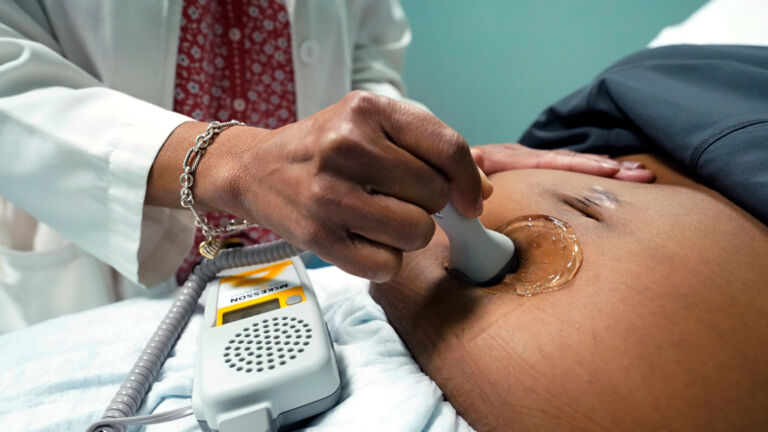
Plan is aimed at focusing efforts to cut deaths during pregnancy, aid health overall
At Tuesday’s summit, breakout groups worked through details of the Nurture NJ plan and discussed how to better understand the racial disparities in outcomes, collaborate more with trusted community groups and ensure lasting changes are codified in state policies and laws. Participants stressed a range of needs, from improving education about oral health to using social media to reach younger people to including incarcerated women in their work.
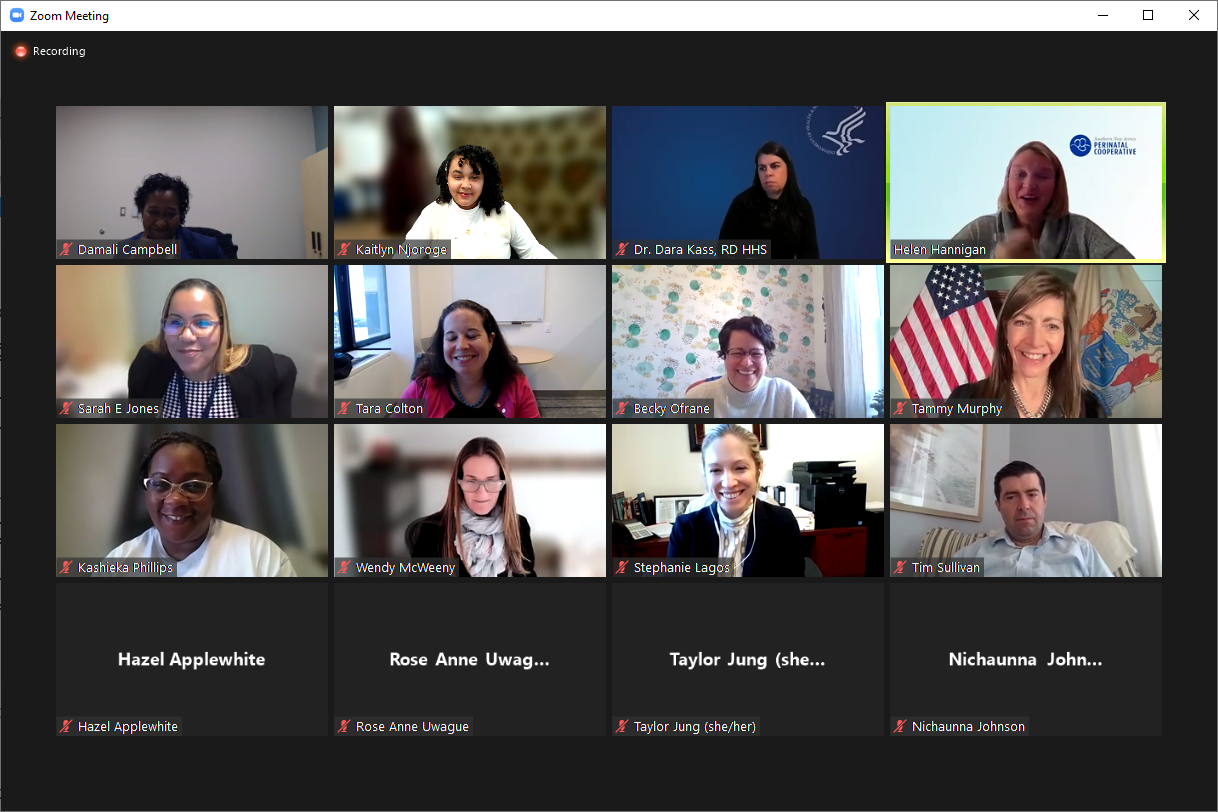 Credit: Office of the First Lady
Many agreed that more funding was needed to support this work, particularly to expand and enhance the maternal health workforce. This means better pay for professionals like midwives, doulas and community health workers who are “integral to good outcomes,” said Jodi Green, with Community Doulas of South Jersey. “These changes need to be not measured and incremental, but large and transformative to meet the need,” she added.
Making sure maternal voices are heard
Clinical maternal health training should emphasize the role and voice of the person giving birth, summit participants said, and evolve and continue over a provider’s career. “So it’s not just a simple class, but embedded in the curriculum so it stays beyond this administration,” said Marilyn Cintron, CEO of Alliance Community Health Inc.
Several participants stressed the need for universal policies so maternal health workers could be licensed and midwives and doulas have full access at New Jersey birthing centers. Better child-care support could also enable more parents — particularly people of color — to access education and training to build a career in maternal health, they said.
Helen Hannigan of the Southern New Jersey Perinatal Cooperative underscored the importance of coordinating with nontraditional partners outside health care, places like nail salons, laundromats and English as a second language classes to help the campaign connect with pregnant people in need. It is also important to define progress and success for the Nurture NJ work, she said, and not just through concrete metrics, “but things like awareness and engagement.”
Many participants also highlighted the importance of elevating the voices of women, particularly women of color, and the communities involved, as opposed to dictating change from outside. Janelle Hobson, who works for Assemblywoman Linda Carter (D-Union),stressed “keeping in mind community members are not data points,” but real people who need to be heard. “We should be saying, ‘we have this data but what is it that you need to improve quality of care,’” she said.
