
 Credit: (AP Photo/Seth Wenig)
New Jersey’s emergency food system performed fairly well during the COVID-19 pandemic despite a huge increase in demand, but now it needs reforms that would improve its ability to feed the hungry, according to a new report.
The report from the Pandemic Relief Foundation and the Tepper Foundation examined how well food banks and pantries coped with surging demand for food assistance during the pandemic, and concluded that overall, people obtained the food they needed. “The system mostly held,” said the report, “Hunger and Critical Needs Outreach,” which assessed the system’s performance between April 2020 and September 2021.
The 40-page document noted that during the pandemic, there were “spikes” in client demand, “vast” changes in food-distribution practices, disruptions to the emergency food supply chain, and a significant loss of support at food pantries by volunteers, many of whom are seniors who stayed away because they were afraid of getting the virus.
But the system of food banks, pantries and soup kitchens succeeded in meeting an increase in demand that jumped by 50% or more compared with pre-pandemic levels.
Still, the analysis discovered many grounds for improvement, and produced a list of recommendations for food banks, their distribution partners, and state and local government leaders.
Among other things, it urged pantries to conduct “succession planning” in which new teams of trained volunteers would be available in case the older workers who traditionally dominate pantry teams become unavailable as they did in droves during the pandemic.
Severely depleted teams of volunteers
Without that reform, food pantries risk a rerun of the recent pandemic experience when many volunteer teams were severely depleted, leaving a few remaining members to do the work.
“Numerous pantry leaders told tales of physical exhaustion, in addition to the psychological toll inflicted by the ominous and ongoing feeling that if they let up, members of their community may miss meals or worse,” the report said.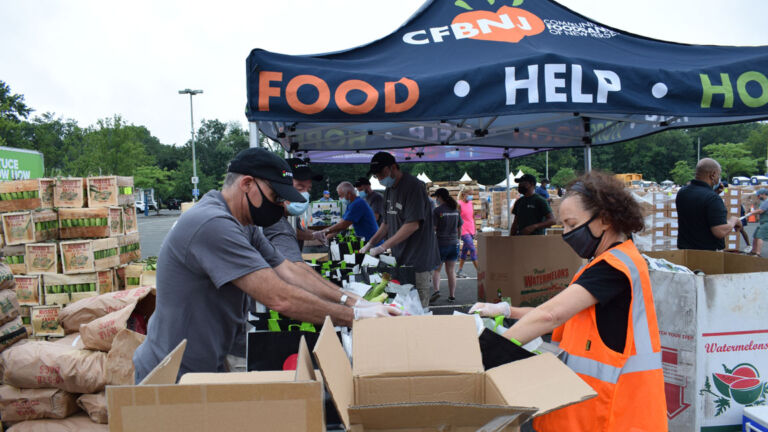
It also found that many pantries operate with obsolete equipment such as refrigerators that may have faulty wiring or operate at varying temperatures and threaten to spoil food if they break down. The report urged pantries to invest in new equipment to help them prepare for any new surge in demand.
When the pandemic struck, nearly all pantries started distributing food outdoors to reduce virus exposure for their workers and their clients, the report said. While many have now resumed indoor operations, some have permanently switched to outdoor distribution. That pattern should be recognized and funded now, it recommended.
Demand on food banks and pantries is persisting at above pre-pandemic levels as many people continue to rely on food assistance because of debt taken on during the pandemic.
“Because few pantries operated outdoors prior to the pandemic, and many pantry leaders have not had a breather since the pandemic began, they may not have thought through or may not be aware of the ways in which certain outdoor equipment items can create meaningful efficiencies and upgrades to the client and volunteer experience,” the report said. Although the system worked well overall, food banks did not always equitably distribute food to pantries in their area because of the strains of operating during the pandemic, according to the report. It said some pantry workers would be given notice of the availability of certain food items at a food bank and required to pick them up within a short time, sometimes resulting in that pantry simply not collecting the item.
Strain caused by the pandemic
“The model by which emergency food providers procured food — especially fresh, perishable food — from food banks prior to the pandemic did not hold up well under the strain of the pandemic for many providers,” the report said. It encouraged food banks and funders to explore more sustainable models such as a “hub-and-spoke” system which improves local access.
Even though COVID-19 has receded, demand on food banks and pantries is persisting at above pre-pandemic levels as many people continue to rely on food assistance because of debt taken on during the pandemic, food bank leaders say.
The report’s recommendations were welcomed by Mark Dinglasan, New Jersey’s new director of the Office of Food Security Advocate, a new position that’s designed to coordinate the efforts of the state’s hunger-related agencies.
“This administration really believes in creating multisector holistic partnerships,” Dinglasan said in an interview. “This position has been created because this state believes that we have this opportunity to make connections among multiple sectors that are already doing good work.”
For example, Dinglasan said he will be working to combine the efforts of agencies that work on childhood obesity and maternal health, both of which are related to the availability of healthy food.
Overwhelming demand
Dinglasan, formerly the executive director of CUMAC, an anti-hunger nonprofit in Passaic County, said he hopes his office will ease the strain on emergency food leaders who are typically overwhelmed by the number of demands facing them.
“Everybody is looking at needs and saying, ‘There’s so much that needs to get done, and how do I clone myself?’” he said. “Now, my hope is that this office can at least alleviate that out of the gate and say, ‘You don’t have to worry about cloning yourself and worrying about how to get to this meeting and that meeting.’”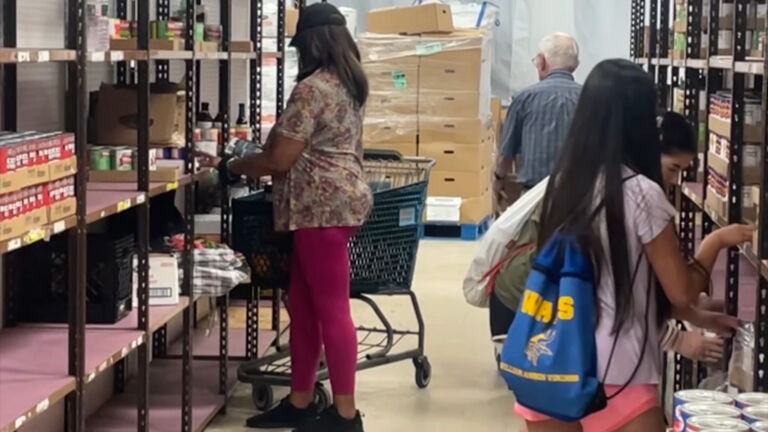
Dinglasan welcomed the PRF/Tepper report as a “road map” for improving the emergency food system and said he will work to make its recommendations happen even though his office does not have spending authority to do so.
“I don’t think we’ll be the magic bullet to anything that was highlighted but I do consider myself an expert in trying, and I know that we can push the conversation to look at some of the things that we were looking at even before COVID,” he said.
With his knowledge of the emergency food system, Dinglasan said he will encourage relevant state agencies to respond to related issues such a transportation, which can limit people’s ability to obtain healthy food, or mental health, which can be worsened by the stress of not having access to food.
“This is the system we’ve created,” he said. “Can it be enhanced to rise to the challenge of what we’re all seeing?”
Persistent issues
Joyce Campbell, executive director of the Trenton Area Soup Kitchen, said she had not seen the report but welcomed Dinglasan’s appointment as a new opportunity to address persistent food-aid needs.
She said the new position comes as the state’s Economic Development Authority works to cut the number of “food deserts” — towns with no local access to sources of healthy food like supermarkets — which include Trenton even though it’s the state capital.
‘It’s really hard for me to think about a solution to food insecurity without thinking about solutions to poverty.’ — Joyce Campbell, Trenton Area Soup Kitchen
“Any work that can be done to pull together the various departments in the state to address food insecurity is really important,” she said.
Within the emergency food system, soup kitchens are sometimes overlooked as playing an important role, whereas they provide services such as social contact that go beyond merely feeding people, said Campbell, whose agency provides between 8,000 and 10,000 meals a week to kitchens in the Trenton area.
“We are food first, but we are not food only,” she said.
The top priority for improving access to food is to allow participants in the federal SNAP food-aid program to be able to use their vouchers to buy food online, Campbell said. Not all food retailers accept online orders by SNAP recipients, and that can worsen food-access problems for people who live in food deserts and don’t have a car to get to the nearest supermarket, she said.
And any effort to improve access to emergency food should not be separated from the poverty that underlies demand. “It’s really hard for me to think about a solution to food insecurity without thinking about solutions to poverty” and that’s why her organization continues to provide “wrap-around services” such as adult education and job search which have the potential to lift people out of poverty, she said.
