
 Credit: (Sekhena Sembenu)
These candidates are not trending on social media or appearing in the seemingly never-ending ads currently airing on television. And they have little to do directly with legislation on hot-button issues like inflation and abortion.
But the candidates running for local office in communities throughout the state this year will have a major impact on a perennial pocketbook issue for many New Jersey residents: the state’s sky-high property-tax bills.
For starters, candidates seeking to fill positions on local school boards often appear at the bottom of many ballots in New Jersey. But for those who care a lot about property taxes, these candidates are worthy of more attention.
In addition to serving in a key policymaking role for local and regional schools, the members of New Jersey’s many school boards routinely evaluate and cast votes on district budgets.
And in New Jersey, roughly half of the revenue raised annually via local property taxes typically goes to funding local and regional schools, according to data collected by the state Department of Community Affairs. Last year alone, the total haul from property taxes for local and regional schools was nearly $17 billion, a sum that equals roughly a third of the total state budget, which is funded largely through taxes on sales, incomes and business.
Local officials who have a say
Staying at the local level, spending by municipal governments — which are run by elected mayors and members of town councils and committees — accounted for nearly 30% of the total New Jersey property-tax levy in 2020, according to the state data.
It’s the elected officials who serve at the municipal and county level and on school boards throughout the state who typically play the biggest role in determining both how much New Jersey property owners will pay in local property taxes and where exactly those resources will be deployed on an annual basis.
So the candidates running for municipal office this year will help decide how to spend another big share of the revenue raised through property taxes, an amount that totaled some $9 billion last year, counting library and open-space taxes, according to the state data. And those dollars controlled by municipal government leaders also fund some of the services that residents rely on the most in New Jersey, such as police departments, libraries, snow removal and trash pickup.

Meanwhile, New Jersey’s 21 county governments, which are administered by boards of elected county commissioners, also have a say in what property-tax bills will look like.
That’s because county governments, which operate jails and parks systems and maintain extensive road networks, among other services, also rely on a portion of the revenue — nearly $6 billion, counting library and open-space taxes — that’s raised annually through local property taxes.
In all, New Jersey’s numerous municipal governments, county governments and school boards raised more than $31 billion last year through local property taxes, according to the state data.
That adds up to more than half of what the state generates annually using its many different tax sources to fund what’s become a more than $50 billion annual budget.
Record-high property taxes
For individual taxpayers in New Jersey, the average property-tax bill last year hit a record-high $9,284. Over the last decade, the size of the average New Jersey property-tax bill has grown steadily and is up overall by roughly $1,500, before adjusting for inflation, according to a recent NJ Spotlight News analysis.
To be sure, decisions made at higher levels of government do matter when it comes to New Jersey property-tax bills.
A decision to cap a long-standing federal tax deduction for local property taxes that was made by a then-Republican Congress in 2017 is also still reverberating throughout New Jersey, where the average property-tax bill is now nearly as high as the cap on the federal tax deduction for state and local taxes (SALT).
For example, in recent years, Gov. Phil Murphy and fellow Democrats who control both houses of the Legislature have been increasing the amount of funding the state provides annually to public schools. That funding, generated through the levying of state income taxes, is intended to ease pressure on local school-tax levies, which are typically the largest single portion of a local property-tax bill in New Jersey.
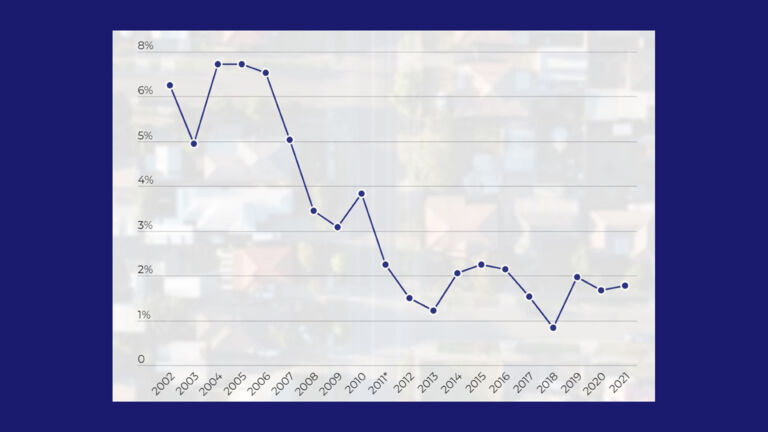
In addition, a 2% cap on annual property-tax levy increases signed into law about a decade ago by then-Gov. Chris Christie, a Republican, has also coincided with a period of slowed growth in the average property-tax bill, according to the NJ Spotlight News analysis.
Federal aid on the local level
Congress can also be influential, including by providing federal grants that help offset what local governments spend on everything from police salaries to affordable-housing initiatives.
A decision to cap a long-standing federal tax deduction for local property taxes that was made by a then-Republican Congress in 2017 is also still reverberating throughout New Jersey, where the average property-tax bill is now nearly as high as the cap on the federal tax deduction for state and local taxes (SALT), which is currently set at $10,000.
So if you care about property taxes, don’t ignore the candidates running at the top of the ticket in New Jersey this year.
But also remember: It’s the elected officials who serve at the municipal and county levels and on school boards who typically play the biggest role in determining both how much property owners will pay in local property taxes and where exactly those resources will be deployed on an annual basis.
Election Day is Nov. 8. Mail-in voting has already begun in New Jersey, and early in-person voting begins Oct. 29.
