
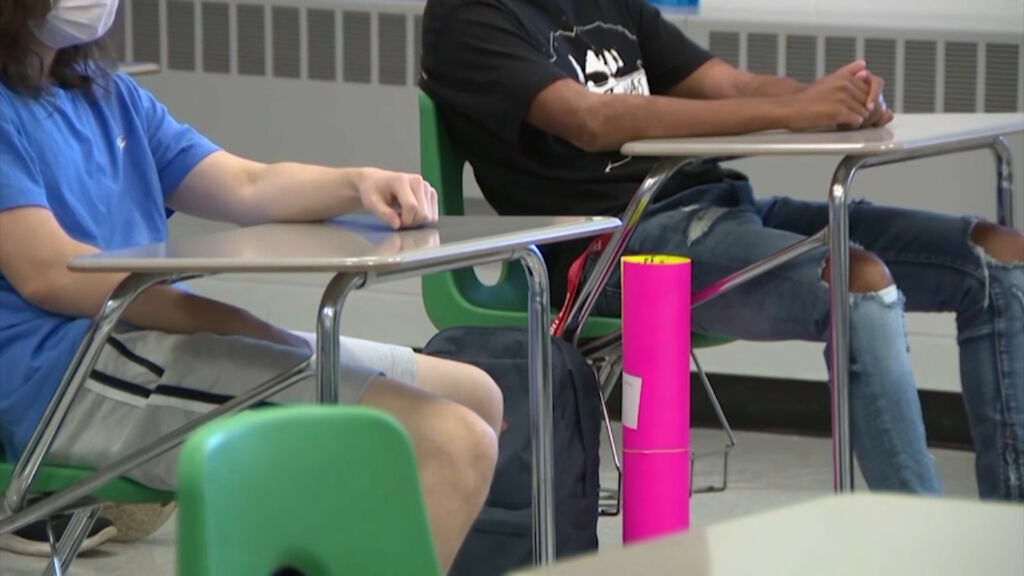
Black and Hispanic students in New Jersey don’t have the same access to mental health staff in schools as white students, a change from a decade ago, according to a new report.
During that time, the ability for white and Asian students to see mental health staff in schools increased, that report said.
“Over the past decade and a half, there’s been a sharp decrease in access to mental health support staff for students of color, but now students of color need those staff more than they ever have,” said Dr. Mark Weber, the author of the report and an analyst for education policy at New Jersey Policy Perspective. “So, we are really in, unfortunately, a crisis of our own making here in New Jersey, and we need to take some really consequential steps in order to be able to solve it.”
Across the state, Black and Hispanic students are more likely to live in poverty, according to the report, which is another stressor that adds to increased mental health issues. And they are more likely to be suspended from school even as their access to mental health professionals is decreasing, according to the report.
Youth mental health crisis
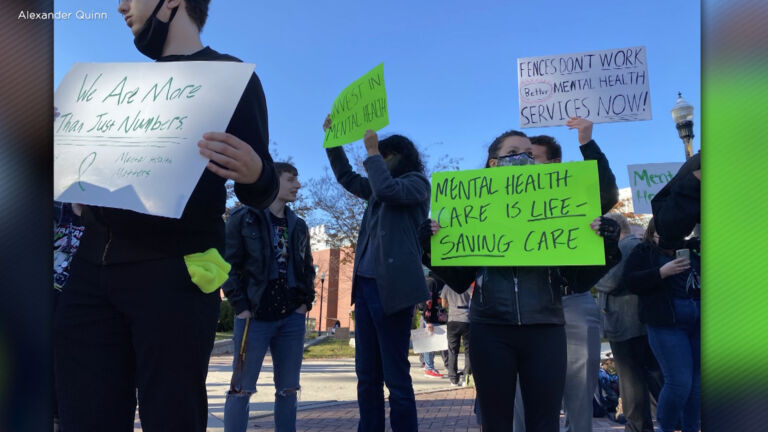
The report, published by New Jersey Policy Perspective, a nonpartisan think tank based in Trenton, comes during an unprecedented youth mental health crisis compounded by the pandemic that has drawn the attention of state leaders and policymakers as students across the state begin the school year in earnest this week. Earlier this summer, Gov. Phil Murphy announced his “Strengthening Youth Mental Health” initiative as the new chairman of the National Governors Association to address the concern. State lawmakers also allocated $480.5 million in grants-in-aid money to the Division of Mental Health and Addiction Services within the Department of Human Services in the fiscal year 2023 budget.
All public schools in New Jersey had an average of 8.2 mental health staff per 1,000 students in 2008, and this figure rose to 8.6 in 2020, according to the report. But over this same time period, the mental health staff per 1,000 Black students decreased from 10.3 to 8.5, while the mental health staff per 1,000 white students rose from 7.4 to 8.5. The mental health staff for Hispanic students went down from 9 to 8.4.
“One thing you might think in looking at the report is, well, aren’t we moving toward parity because now we have a situation where white students and Black students have roughly the same number of support staff available to them across the state,” Weber said. “And I would caution readers to remember two things. The first (is) that poverty is much more likely to be visited on students of color,” he said.
The poverty rate for Black students and Hispanic students is much higher than the poverty rate for white students in New Jersey, according to Weber. Nearly one-third of Black students came from families living in poverty (32%) in 2018, compared with 10% of white students, according to the National School Boards Association.
Poverty, discipline
“And there is no question there is a correlation between student mental health and poverty,” Weber added. “Poverty puts all sorts of stresses on students and families, and these are the families that need more support.”
Students of color are unfairly disciplined at a higher rate than white students, according to Weber. “And we have very good evidence that student mental health is actually linked to discipline in schools,” Weber said. “When students feel safe in their schools, when they feel supported, they are less likely to have disciplinary consequences visited on them.”

In addition to these numbers, the report says that greater access to school staff of all sorts is directly influenced by school funding policies. New Jersey’s students of color are much more likely to attend schools that are underfunded, according to the state’s own school funding law, than white students, the report states.
“This (report) tracks … exactly with a lot of the research that we’ve done over the past couple of years, showing that when the state and the school funding formula are not followed, this is the consequence for kids,” said Danielle Farrie, the research director at the Education Law Center in Newark.
School funding
When school districts don’t have the money that they need to staff their schools, there’s going to be cuts, she said, and these typically happen first to support positions. “It’s not surprising to us that the school counselor ratios have worsened over this time period because, especially in a lot of the majority Black school districts, they were not getting the state aid or the local revenue, honestly, that they are entitled to under the school funding formula,” Farrie said.
Without this additional money, these school districts were operating on the same budget for many years, according to Farrie. With costs and salaries going up, mental health is one of the first places where school districts look to cut, she said.
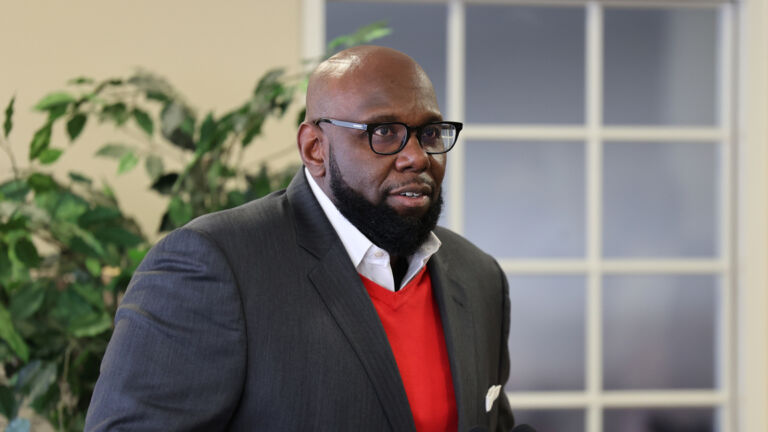
“There’s been a lot of talk about federal funds to New Jersey schools, through ESSER (Elementary and Secondary School Emergency Relief Fund) and through other programs,” said Weber, the author of the report. “It’s a little bit north of $4 billion, which is a significant amount of money. There’s no question about that. But it’s one shot. It is a one-time stream of funding. This is a problem that has been occurring over a decade and a half, and if we have a long-term problem, we have to have a long-term solution.”
Weber said that while it’s very useful to have these federal funds, they cannot be relied upon as the sole solution for this problem. “We have got to look at a longer-term solution in terms of making sure that students of color get the mental health support staff that they need.”
