
 Credit: (AP Photo/Julio Cortez)
The soaring inflation that has increased the cost of everything from food to energy over the last year is generating a silver lining for some of New Jersey’s lowest-wage workers.
The state’s minimum hourly wage for many workers will increase by $1.13, to $14.13, beginning on Jan. 1, the Department of Labor and Workforce Development announced earlier this week.
The increase will come as a result of state wage rules that require the minimum hourly rate for the next several years to be adjusted annually by the rate of inflation, or $1, depending on whichever figure is larger.
Since inflation has been running high over the last year, those rules require an annual adjustment that’s 13 cents higher than the $1 minimum increase. The higher rate is to go into effect for eligible workers in 2023, labor officials said.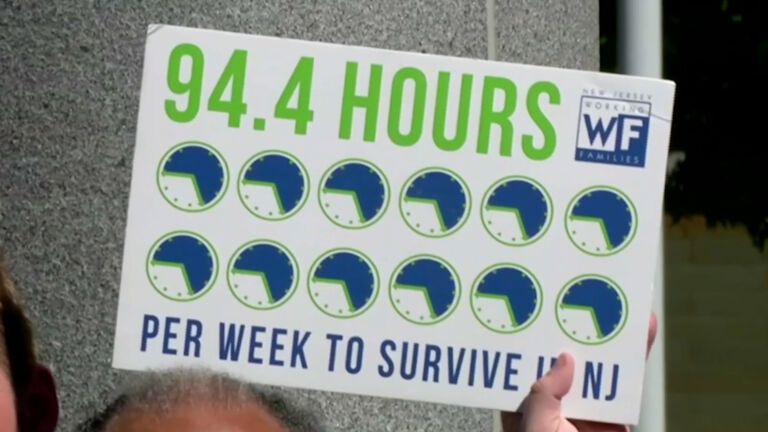
New Jersey is legally required to reach a $15 minimum wage by 2024. But wage rules written into the state Constitution will require annual inflationary adjustments in ensuing years.
That means low-wage workers won’t remain stuck at $15 — a goal established by Gov. Phil Murphy and lawmakers in 2019 — if inflation continues to rise.
What the law requires
Under the 2019 law, New Jersey’s minimum hourly wage was increased from $8.85 to $10 on July 1, 2019, and to $11 on Jan. 1, 2020.
From there, the law requires annual increases totaling at least $1 through 2024 to get to the $15 benchmark.
Any increases after the $15 benchmark is reached will come as a result of a constitutional amendment that New Jersey voters approved in 2013 that requires the minimum wage to be bumped up automatically at the beginning of each year following a year-over-year increase in inflation.
In the years that followed the adoption of the 2019 wage law, annual inflation, which is measured using the consumer price index, or CPI, was modest.
New Jersey’s wage law allows exceptions to the general minimum wage for several groups of workers.
But in the last year, inflation has been running high due to, among other factors, supply chain shortages tied to the COVID-19 pandemic and Russia’s military invasion of Ukraine, which has prompted economic sanctions and other policies that have roiled energy markets.
In the New York-New Jersey region, annual inflation hit 6.6% through the end of August, according to the federal Bureau of Labor Statistics. The national rate of annual inflation was 8.3% through the end of August, according to the BLS data.
Inflationary pressure
The $1.13 minimum-wage increase required for 2023 in New Jersey will be the first since the 2019 law was enacted that will come because of year-over-year inflation instead of the $1 floor that was set in the law.
“The Governor and Legislature had the forethought to account for the possibility of rising costs,” said state Labor Commissioner Robert Asaro-Angelo as the increased minimum wage for 2023 was announced earlier this week.
“Every extra dollar in the paychecks of our lowest wage workers is helpful,” Asaro-Angelo said.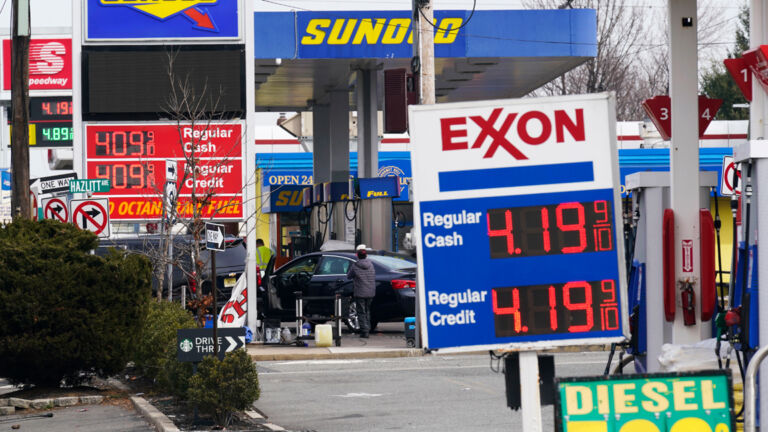
But not everyone will receive the jump to $14.13 on Jan. 1. New Jersey’s wage law allows exceptions to the general minimum wage for several groups of workers.
Among them are people employed by seasonal and small businesses, which are defined as having five or fewer workers. That group won’t reach the $15 rate until 2026. And under the latest calculations, the minimum wage for this group will increase on Jan. 1 from $11.90 to $12.93, according to labor officials.
There are also exceptions for farmworkers and workers who earn a “tipped” wage, such as bartenders and waitresses. The minimum hourly wage for farmworkers will increase on Jan. 1 from $11.05 to $12.01, labor officials said. At the same time, the minimum wage for tipped workers will go from $5.13 to $5.26, the officials said.
