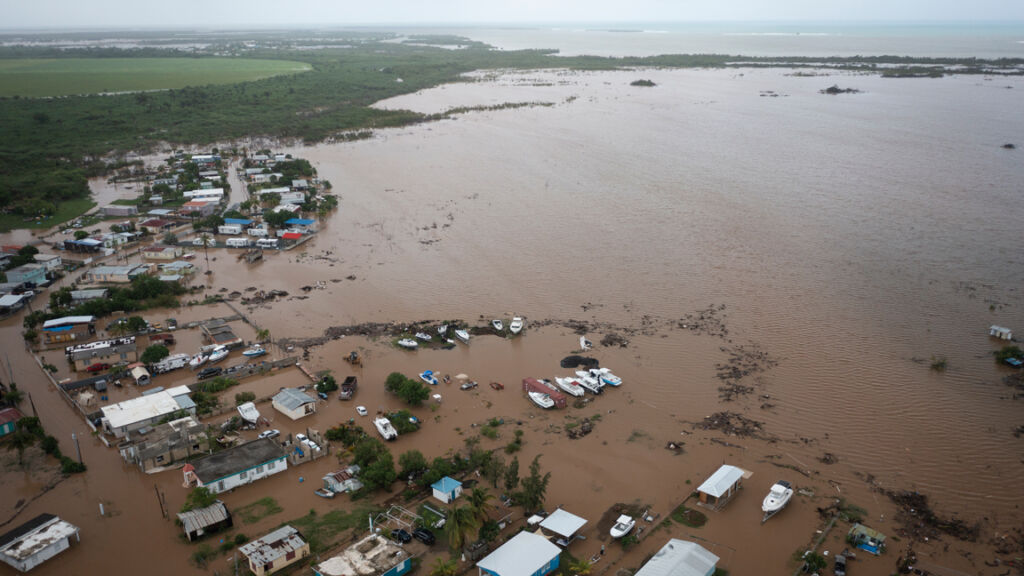
When Hurricane Fiona struck Puerto Rico on Sunday, Puerto Ricans on the island and on the mainland U.S. began to brace themselves. The storm happened just two days before the fifth anniversary of Hurricane Maria, a Category 4 tempest that ravaged the island.
Maria tore down buildings, bridges, farms and more, killing nearly 3,000 people on the island and displacing many more. The island hasn’t recovered, with Fiona undoing any progress that had been made.
“On Saturday, just having people sending me images and family sending me videos … it’s almost like a post-traumatic stress, like the last time,” said Senate Majority Leader Teresa Ruiz (D-Essex).
Although Fiona was only a Category 1 storm, it gained energy fast, and the National Weather Service warned of “catastrophic” flooding from rainfall. As Monday arrived, some parts of the island that didn’t flood during Maria were covered with water. Two-thirds of the island still has no running water because of power outages that started on Saturday, before the storm even made landfall. At one point during the storm, the entire island was without power.
‘We were the shield to the United States. When it’s beneficial, you tap in. When it’s not, you pretend like we don’t exist.’ — Senate Majority Leader Teresa Ruiz
And so for those living far from the island — like here in New Jersey, which is thought to have the third-largest population of Puerto Ricans in the U.S. — seeing images of bridges being swept away, roofs being torn off homes and water engulfing streets was painful. They weren’t just reliving Maria; they were reliving how they feel the federal government has ignored Puerto Rico, which is very much a part of the U.S.
“You feel powerless. Grief. And then you have those visions of paper towels being thrown,” said Ruiz, tearing up as she recalled former President Trump’s photo op during Maria.
Imagine an 100% blackout in your country in the year 2022. Now imagine you are controlled by the richest country in the history of the world.
— Marlon Bishop (@MarloniousThunk) September 19, 2022
A tie between island and mainland
When Puerto Rico is hurting, so too are Puerto Ricans — boricuas — everywhere. There is a tie between the people and the land, a resonance that crosses the Atlantic Ocean to those part of the diaspora now living on the mainland U.S. To some Puerto Ricans stateside, Fiona and Maria’s destruction represents decades of a crumbling government and infrastructure, coupled with feeling like a pawn of the U.S. government — part of the reasons their families left the island. They say that some people think colonialism is over, but that the U.S. is still colonizing the island.
“We were the shield to the United States. That was why we were deemed so lucrative. It was because in times of war, that would have been the focal point for protection,” Ruiz said. “When it’s beneficial, you tap in. When it’s not, you pretend like we don’t exist.”
By the time Hurricane Fiona hit Puerto Rico, only 21% of infrastructure repairs from Maria had been completed, with just a small piece of FEMA’s $28 billion in Maria recovery money actually making it to the island. A temporary bridge built after Maria was swept away by Fiona’s floodwaters, which Ruiz noted looked like it was simply “erased” off a picture.
 Credit: (AP Photo/Stephanie Rojas)
Electricity became privatized as a result of the damage Maria did to an already crumbling power grid, which has yet to be fixed; residents have reported regular outages even on sunny days. Ruiz said she jokes that the power goes off if you sneeze. While it may seem hyperbolic, residents have reported power going out randomly and without warning. In the last few years, people have died because they lack electricity to power their medical devices that keep them alive.
LUMA, the company that owns Puerto Rico’s grid and is in charge of distributing power to the island, has come under criticism for being ineffective and for charging exorbitant amounts to residents of the island, where the median household income is $21,000.
A larger issue
But LUMA is only one part of the issue, residents say. Tax incentives drive stateside Americans to the island, creating lucrative opportunities for real estate developers to construct and sell luxury buildings — taking away public beaches, shutting down schools, wiping away farmland and more. Without farmland, Puerto Ricans now depend on food imports, driving up the cost of necessities. Island residents say access to goods is bound to get more complicated, and expensive, as the island recovers from Fiona.
Tax incentives drive stateside Americans to the island, creating lucrative opportunities for real estate developers — and taking away public beaches, shutting down schools and wiping away farmland.
New York state, which has the second-highest population of Puerto Ricans stateside, has been outspoken about the help it has given Puerto Rico after Hurricane Fiona. Gov. Kathy Hochul spoke earlier in the week about providing Spanish-speaking law enforcement on the island, and New York Attorney General Letitia James requested on Wednesday that the federal government investigate LUMA. NJ Spotlight News reached out to the New Jersey attorney general’s office to see if it would join James’ call, but the office declined to comment. It’s unclear what action the federal government will take, or how New Jersey and Gov. Phil Murphy will aid those efforts. Murphy’s office did not respond to requests for comment.
“I am alive.” #FionaPR pic.twitter.com/7Nw8Idjz4X
— Angélica Serrano-Román🇵🇷 (@angelicaserran0) September 19, 2022
Puerto Ricans in New Jersey are already springing into action. For Cuqui Rivera, of the Puerto Rican Action Board and the Latino Action Network, there was no question that she would help organize similar recovery missions to those she carried out during Hurricane Maria. They will involve fundraising and volunteers taking time away from their jobs to fly to Puerto Rico. And she worries that more damage will come, since hurricane season is not yet over.
“This is hurricane season, this is not the only (storm), so we kind of have to pace ourselves,” Rivera said.
Federal hurricane aid
When it comes to federal help, only time will tell as Puerto Rico assesses the damage from Fiona. While Ruiz and others on social media were thankful that the Biden administration immediately called an emergency in Puerto Rico to help with recovery efforts, many Puerto Ricans criticized U.S. news outlets for not covering more of the hurricane’s damage.
‘This is hurricane season, this is not the only (storm), so we kind of have to pace ourselves.’ — Cuqui Rivera, Puerto Rican Action Board and Latino Action Network
As the island woke up to no power or running water on Monday, and as people had to be saved from mudslides and flooded homes, stateside news outlets streamed hours of Queen Elizabeth’s funeral and analyzed small details, like the presence of a spider on the queen’s coffin.
While Puerto Rico is in agony I hear and see so much nonsense coverage about this waste of space monarchy that on top of everything else has nothing to do with us. Colonialism split-screen.
— Alana Casanova-Burgess (@AlanaLlama) September 19, 2022
Witnessing injustice and that tie to the land are what move the Puerto Rican community to speak out. They’re what moved Rivera to jump into action and to help the residents she now calls her “chosen family.” It’s the same feeling that tugs Ruiz’s heart back to the island, thinking of her relatives and hoping they are safe.
“It’s kind of my home. It’s kind of like my sacred place … and there’s so much pain there,” Rivera said.