Credit: (Duke Farms Foundation)
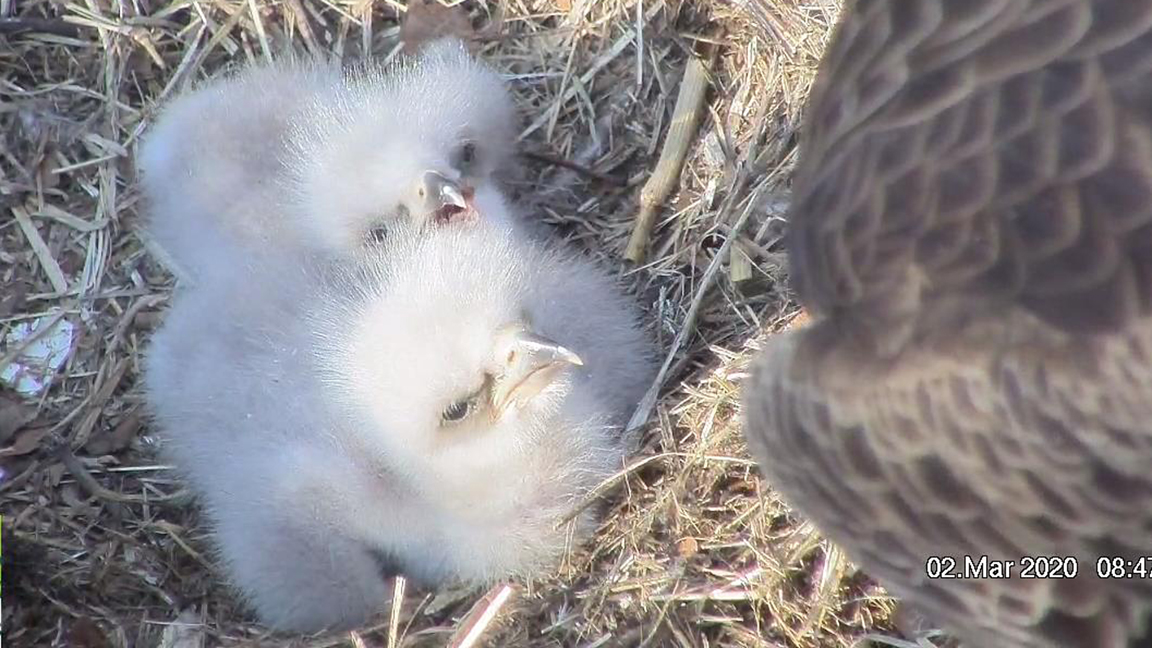
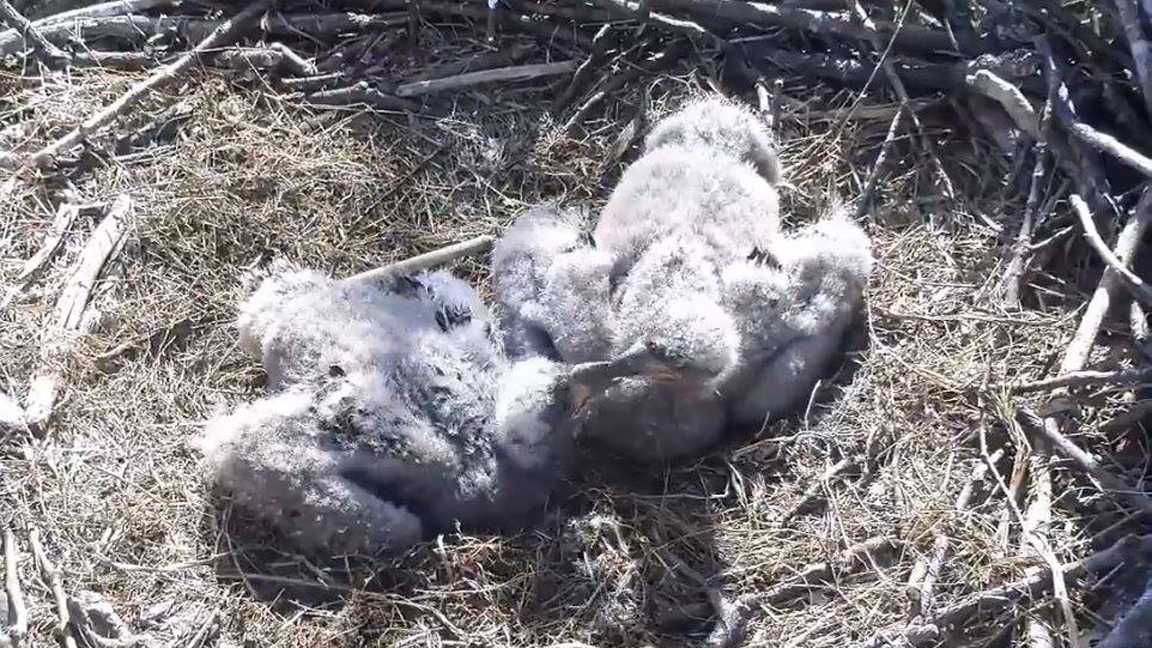
Viewers who log on to Duke Farms’ Eagle Cam at almost any time of day are likely to be joined by dozens of others, all there to see the latest nesting bald eagles — and their fluffy, 5-week-old chick, which was banded and measured on Monday — going about daily life. Since the Somerset County estate installed its first “eagle cam” in 2008, millions of people have remotely watched a total of 29 chicks successfully fledge, according to programs director, Nora DiChiara.
“We’re logging about a million views per year,” DiChiara said. “So far, they’ve come from 104 different countries.”
Duke Farms is not the only location in the state that has streaming, live footage of nesting eagles. In Hunterdon County’s Three Bridges community, a pair of adults camped out on top of an electric transmission tower until March 9, when they disembarked for another site. The Three Bridges nest has also been prolific. Since its web cam was installed in 2015, the nest has had bald eagle pairs hatch and raise 14 chicks.
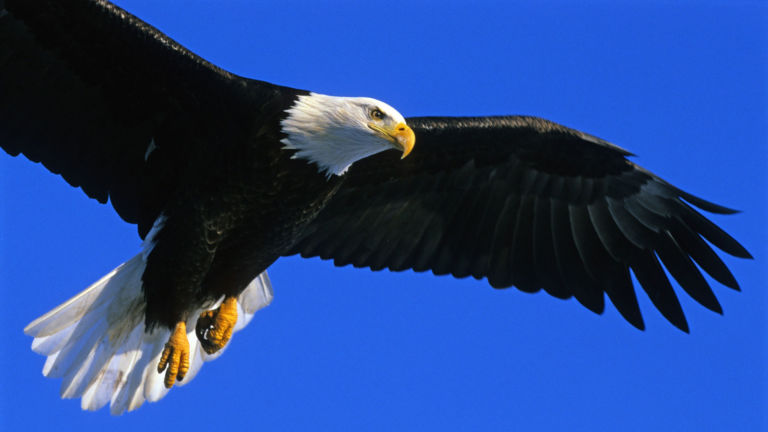
The successful nesting documented by the Duke Farms and Three Bridges cameras is reflective of the overall success of New Jersey’s bald eagle population, which has rebounded from a single pair in the 1970s and early 1980s to 247 pairs last year, 222 of which laid eggs that resulted in 296 chicks fledged — the most since the state began doing annual nest surveys in 1985.
But as bald eagle numbers increase in New Jersey — the nation’s most densely populated state — so too does a potential new risk: close encounters with humans.
Nesting in older urban areas
“We’re starting to see them in these uber urban areas,” said Kathy Clark, a zoologist in the Department of Environmental Protection’s Endangered and Nongame Species Program who co-authors the state’s annual Bald Eagle Report. “They’re nesting in older residential neighborhoods, because, in some cases, they have trees that are very old.”
Clark also said that the improving health and biodiversity of some waterways in the state are attracting the raptors. She pointed specifically to Bogota, in Bergen County, where last year a nesting pair of bald eagles successfully fledged two chicks.
“Bergen County has the Hackensack River and the Meadowlands,” Clark said. “That area has rebounded with fish and waterfowl populations, so it’s natural that eagles would respond to that.”
‘But once they are in an area for a long time, unless something happens to the tree, or the nest, they’re usually going to stay.’
While she admits that conflicts “have happened, obviously, as more eagles have chosen to nest,” she says very few have been a “massive kind of train wreck you can’t work out.”
One of those few is in Monroe Township, Middlesex County.
 Credit: (Duke Farms Foundation)
In 2017, a proposed 215-unit residential development was ground to a halt after a bald eagle nest was discovered adjacent to the site. Under the federal Bald and Golden Eagle Protection Act, any new construction must be at least 660 feet away from nests, and anyone caught “molesting or disturbing” these raptors can be subject to a fine of $100,000 or a one-year prison sentence — or both for repeat offenders. State rules are less specific. Under the Endangered and Nongame Species Act, all native birds in the state are protected from being taken through hunting, and their nests protected from disturbance or destruction. New Jersey property owners are advised to create a 1,000-foot buffer zone around bald eagle nests, if at all possible.
Controversy in Middlesex County
When the two LLCs — soon to be dubbed the “Bald Eagle Developer” — behind the project reconfigured their plans to accommodate the nesting pair in 2019 and filed for a variance, Monroe’s zoning board denied the proposed adjustment. In response, the would-be developers filed an appeal with Middlesex County Superior Court, which overturned the zoning board’s decision. This enraged the township’s then-mayor, Gerald Tamburro, who called on residents to oppose the development. (Tamburro died last year.)
“All we can do, all we want to do, and what we will do is strictly enforce whatever the DEP regulations are that are designed to protect endangered species,” said Kevin McGowan, Monroe’s assistant business administrator. “In this case, that 660-foot buffer that prevented development within it — the township will do everything possible to enforce that buffer and any other regulations.”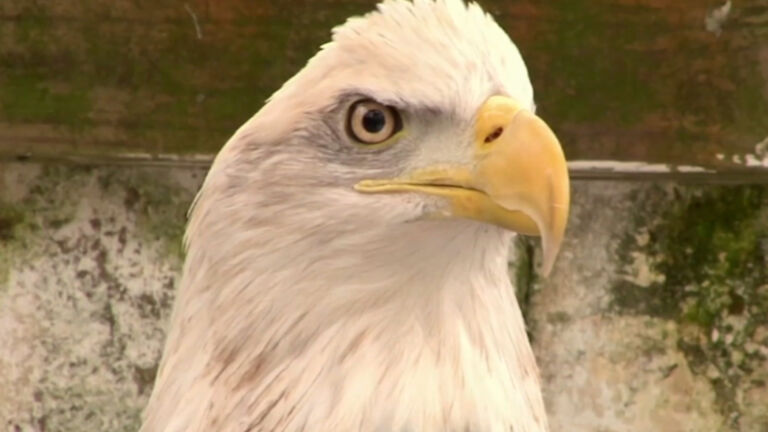
Last month, a public meeting was held at the Middlesex County Courthouse to go over the developer’s final site plan application. The decision on whether the adjusted site plan will move forward is now in the hands of a special hearing officer, who will make a recommendation to a judge.
“It is township’s intention to appeal the court’s decision that overturned the zoning board’s denial of the variance,” McGowan said. “We don’t have a sense of how long [the process] is going to take.”
Meanwhile, the nest remains in the same tree it did when the eagle pair was first spotted in 2017, according to McGowan.
 Credit: (Dukes Farm Foundation)
“Sometimes eagles move after the first year,” said Clark. “But once they are in an area for a long time, unless something happens to the tree, or the nest, they’re usually going to stay.”
Fortunately, about half of all the bald eagle nests in New Jersey are located in rural areas of Cumberland, Salem and Cape May counties, where the raptors, which prefer to nest about a mile apart, have large tracts of undeveloped woods and wetlands to choose from. But even here, bald eagles, along with other once nearly extinct birds of prey, like the osprey, are nudging ever closer to humans.
At Eastern Fresh Growers, in Cumberland’s Lawrence Township, multiple nests sit in the trees throughout the farm, which runs to the edges of the Delaware Bay marshlands. “We’ve got asparagus fields right up to them,” said Tom Sheppard, who owns the farm with his brother, Erwin. “They get a little nervous if you get too close or stop under the tree, but they keep producing, so obviously we’re not bothering them to any degree.”
Volunteers keep track
On a recent early Monday morning, volunteer nest monitors Donna and Heiki Poolake were staked out in their car, watching one of the pairs on the Sheppards’ farm. Donna Poolake said the bald eagles seem happy to set up home along the field edges.
“The nest has been here for years now,” said Donna Poolake, who, along with Heiki, is monitoring 27 other nests in Cumberland County — the most they’ve ever seen in their 20 years of volunteering. “The farmworkers come really close to the nests and go about their business in the tractors and it doesn’t seem to bother them.”
The Poolakes are just two of over 100 volunteer nest monitors with the Bald Eagle Project, which is a collaboration between the state’s Division of Fish & Wildlife and the nonprofit Conserve Wildlife Foundation of New Jersey. Like most of the volunteers, they are local to the area they survey — which, according to Clark, is key to the overwhelming amicability between landowners and the state when it comes to protecting bald eagles.
‘Being at the top of the food chain has its pros and cons.’
“On the whole, we have great relationships with private landowners,” Clark said. “I have to credit the volunteers — they live locally, they know the landowners, and they’re great at maintaining those good relationships.”
 Credit: (Duke Farms Foundation)
Though 945,000 of New Jersey’s 4.7 million acres are parks, Clark said about 75% of the state’s current bald eagle nests are on private land. “The landowners really are our partners in protecting eagles from disturbance, and from the any number of bad things that could happen,” she said.
In recent years, several states, including Pennsylvania, have delisted bald eagles from their endangered or threatened lists. And while the bald eagle was removed from the federal endangered species list in 2007, the government maintains strict protection of the raptor through the Bald and Golden Eagle Protection Act. New Jersey has not yet taken the step of delisting.
Emerging threats
One of the reasons for this, Clark said, is that there always remain emerging threats. A study published in February that examined over 1,000 bald and golden eagles from 38 states found that a majority suffered from chronic lead poisoning, due in large part to their scavenging on the carcasses of animals shot by hunters. Such a level of poisoning, the study’s researchers concluded, suppresses the bald eagle population’s growth rate by 3.8%.
In Chester County, Pennsylvania, last month, a bald eagle that was found dead had a “highly pathogenic” avian flu, according to the state’s Game Commission. Eagles in other states have also recently been infected with severe avian flu. The raptors pick up the pathogen by feeding on waterfowl and shorebirds.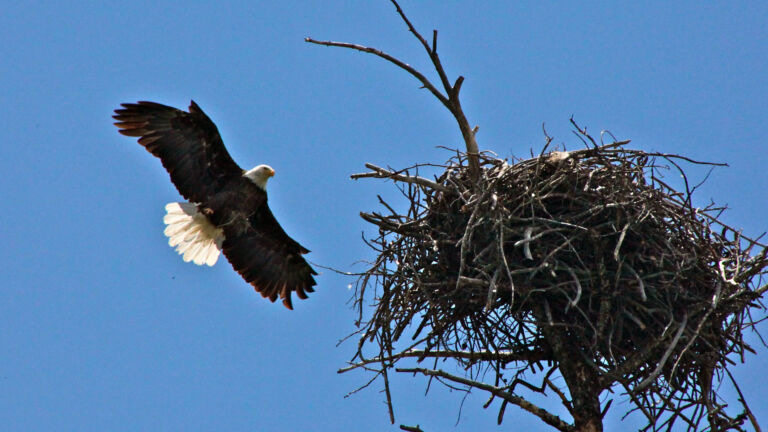
“Being at the top of the food chain has its pros and cons,” Clark said. “That’s one of the cons.”
For now, however, it seems the biggest threat to New Jersey’s bald eagles is not disease or even would-be developers, but insatiable curiosity.
“Sometimes photographers can be their worst enemy,” Clark said. “There are too many people who just feel like you always have to get closer, and that’s a problem for eagles.”
Donna Poolake agreed with Clark. “Where we observe, the only issue we have are the hikers that may get too close to the nest, whether they realize it or not,” she said. “Sometimes we have signs posted, and on occasion we’ve had people just go right past and up to the nest area, anyway. You can’t monitor that 24/7.”