
 Credit: Creative Commons
Air quality is slowly improving in New Jersey, but many people of color still breathe unhealthy air in communities already overburdened with pollution, a new analysis by the American Lung Association found.
Nationwide, more than 137 million people, a slight tick upward from last year’s 135 million, live in counties with unhealthy levels of ground-level ozone or smog pollution, and particle pollution, also known as soot.
Communities of color are disproportionately exposed to unhealthy air, according to the report, the 22nd annual analysis of air quality across the nation by the association. The report found that people of color were 61% more likely than white people to live in a county with a failing grade for one of the pollutants.
While those statistics are nationwide, and not necessarily applicable to New Jersey, Mike Seilback, national assistant vice president for state policy for the ALA, said “it is fair to assume there remain disparities’’ among people of color and white people in the state.
Clean air: a moving target
‘’Environmental justice is a very real concern to us,’’ said Seilback, referring to the nationwide effort to reduce pollution in disadvantaged communities. Despite marked improvements in some areas, every neighborhood does not have robust air monitoring and healthy air to breathe, he said.
Gov. Phil Murphy signed a law giving those communities more tools to block projects that contribute to air pollution problems. But several projects to build power plants in those communities are still pending.
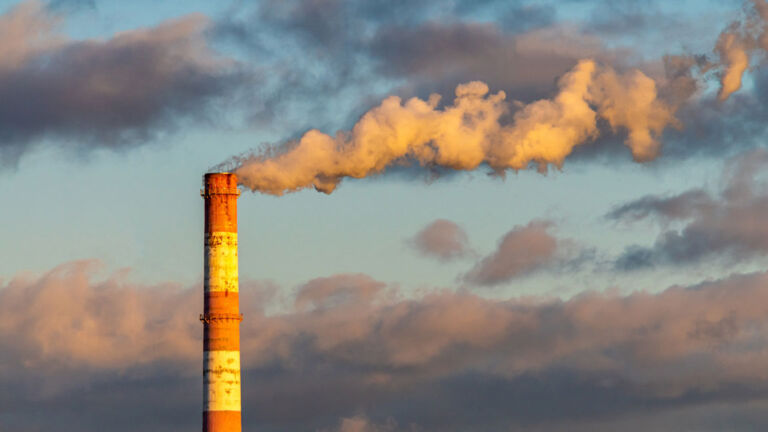
“Both ozone and particle pollution can cause premature death and other serious health effects, such as asthma attacks, cardiovascular damage and development and reproductive harm,’’ Seilback said. Particle pollution can also cause lung cancer, he added.
There was, however, marked improvement in air quality in areas throughout New Jersey. This year’s report covers air monitoring data between 2018 and 2020, the first year to look at air-quality trends during the COVID-19 pandemic. The shutdowns in early 2020 had no obvious improvement in air quality, the report said.
The 2022 report noted that the Philadelphia/Reading/Camden and New York/Newark/CT metro areas, including all but one of New Jersey’s 21 counties, improved their best-ever results for ozone, one of the most harmful and widespread types of air pollution. New Jersey has never met the federal health-quality standard for the pollutant.
Compared with the 2021 report, most New Jersey counties improved for ozone smog and none got worse, although six counties (Bergen, Camden, Hudson, Mercer, Middlesex and Ocean) continued to post failing grades. Gloucester and Hunterdon counties both posted their first passing grades (D’s) under the current ozone standard.
Monmouth scores countrywide
Notably, Monmouth County produced the state’s first-ever A grade for ozone, placing the county among the cleanest in the country with zero days of unhealthy levels of the pollutant. Even the two worst metro areas, New York and Philadelphia, saddled with failing grades, posted their fewest unhealthy days of high levels of ozone.
“From a trend perspective, we are moving in the right direction,’’ Seilback said, referring to New Jersey. The report recommended the state continue to pursue its clean-energy agenda — developing offshore wind and solar power as well as building out the infrastructure to move the transportation fleet to electric vehicles.
Particle pollution levels in the Garden State were generally very good, with only Essex County worsening, doing so for both the daily and year-round measures of the pollutant. Fifteen counties earned A grades for posting zero days with unhealthy days of fine particulates.
Nationwide, it was a different story with nearly 9 million more people impacted by deadly particle pollution than was reported last year. The data also showed more days with “very unhealthy’’ and “hazardous’’ air quality than ever before in the two-decade history of the report.