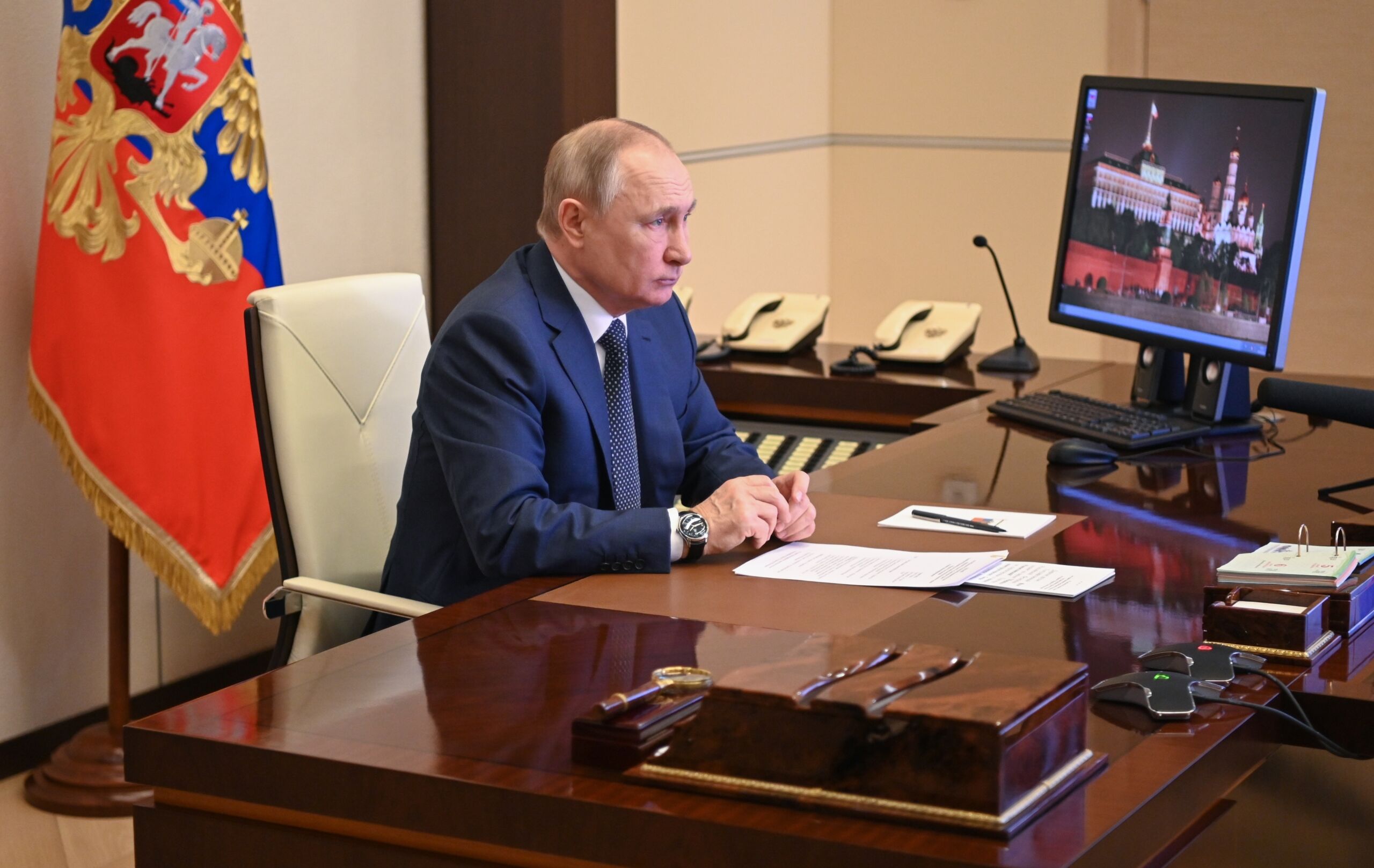
 Credit: (Andrei Gorshkov, Sputnik, Kremlin Pool Photo via AP)
A law enacted by Gov. Phil Murphy earlier this week requires New Jersey’s public-worker pension fund to cut financial ties with companies owned by the Russian government in response to the ongoing invasion of Ukraine.
The law, which received strong bipartisan support as it moved quickly through the Legislature in recent days, also prohibits the state and local governments in New Jersey from having other business links to Russia, as well as Belarus, a neighboring military ally.
The imposition of state-level economic sanctions against Russia and Belarus come as President Joe Biden recently announced that his administration was adding a ban on Russian oil to a list of measures by the federal government to apply economic pressure on Russia in response to the invasion that began last month.
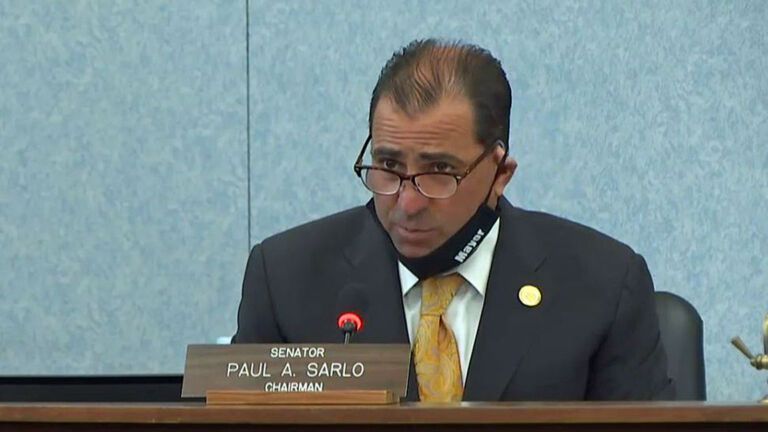
Bill would bar pension fund, local governments from deals with Russia, Belarus
Legislative sponsors of the new law said it gives New Jersey a way to support “the courageous people of Ukraine,” while also punishing Russian President Vladimir Putin and those with close ties to him for ordering the invasion.
“They obviously have no respect for human rights, but we can make them pay an increasingly heavy price for their actions,” said Senate Budget and Appropriations Committee Chair Paul Sarlo (D-Bergen).
Reviewing Russian investments
An initial review of New Jersey’s $93.8 billion public-worker pension fund flagged investments with links to Russia that were valued at approximately $50 million as of earlier this month, according to Department of Treasury officials.
Under the law Murphy enacted Wednesday, the pension fund is not allowed to invest directly in any company that is “owned or controlled by” the governments of Russia or Belarus. The ban is in place for the next four years, beginning immediately, according to the law.
“New Jersey cannot and will not stand idly by as a tin-pot dictator invades the free and independent nation of Ukraine,” Murphy said in a social-media post that announced his signing of the law.
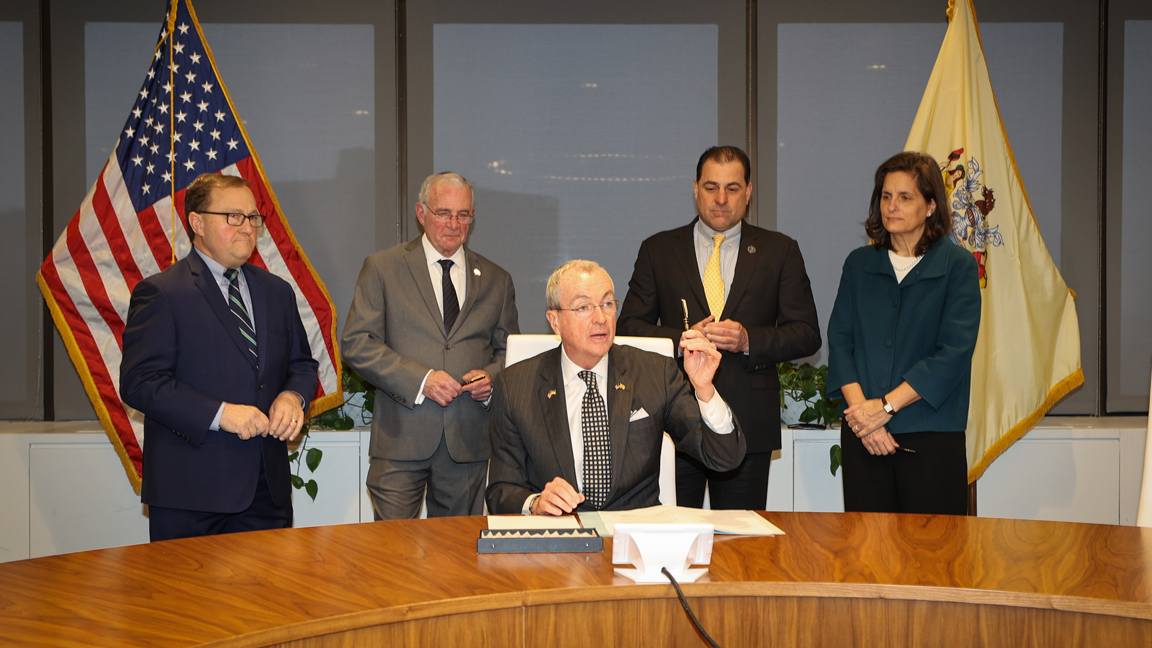 Credit: (Edwin J. Torres/NJ Governor’s Office)
To enforce the ban, the head of Treasury’s Division of Investment must file a report with the Legislature within 90 days that details all the investments that would no longer be allowed, according to the law.
The “sale, redemption, divestment, or withdrawal” of investments that run afoul of the ban is also required within two years, the law says.
It’s unclear what, if any, financial impact the new investment ban will have on the pension fund.
A fiscal analysis prepared by the nonpartisan Office of Legislative Services before the law was enacted said it wasn’t immediately known how well any existing investments with ties to Russia or Belarus may have been performing. It also noted the recently enacted federal sanctions would likely have prohibited any new financial ties involving the pension fund and Russia.
Economic penalties
“Widespread economic sanctions against Russia and Belarus have caused substantial damage to their economies, and likely led to a devaluation of many investments related to those countries,” according to the OLS analysis.
“It is unknown how the value of those assets may continue to change before the bill is enacted, or during the following years during which the bill would be in effect,” the analysis said.
This isn’t the first time that lawmakers have proposed the divestment of pension-fund assets in response to actions taken by a foreign government that have been deemed abhorrent.
The pension fund has been banned from investing in companies with ties to Iran as it pursues nuclear ambitions and Sudan’s Khartoum regime in response to its treatment of villagers in the Darfur region more than a decade ago.
Meanwhile, in addition to banning pension-fund investments with Russia and Belarus, the new law also prohibits anyone who “engages in investment activity” with Russia or Belarus from contracting with the state-government agencies or from receiving economic-development subsidies through programs administered by the New Jersey Economic Development Authority.
The same individuals would also be barred from receiving tax breaks through the state’s local redevelopment laws, and the state itself can no longer do any banking or receive insurance coverage from any financial institution that has an equity tie to the governments of Russia or Belarus.
“These unified actions are not intended to hurt peaceful Russian citizens but to send a strong message to the oligarchs and others in positions of power that their leader has crossed a line with his war in Ukraine that the international community will not tolerate,” said Sen. Declan O’Scanlon (R-Monmouth).