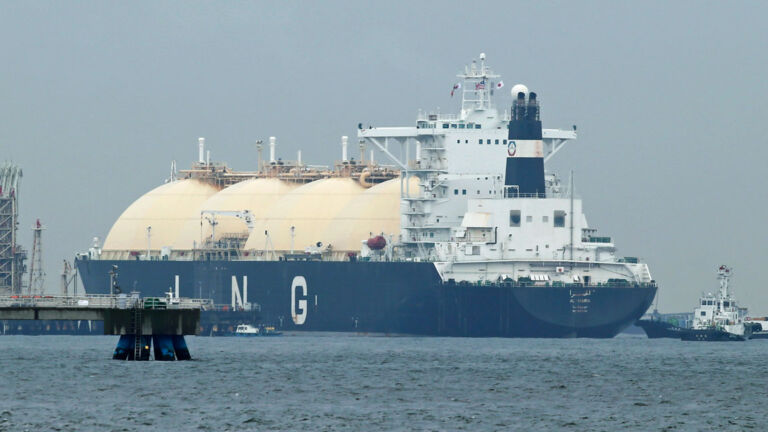
Credit: (AP Photo, File)
Plans to build New Jersey’s first terminal to export liquefied natural gas took a step back when the developer of a plant where natural gas would be turned into liquid agreed not to build it under a current permit.
Bradford County Real Estate Partners said it wouldn’t have time to build the plant at Wyalusing, Pennsylvania before its air-quality permit expires in July. As part of a court settlement last week, the company will let that permit expire and apply for a new one if it decides to revive the project.
That settlement came after three environmental groups in Pennsylvania challenged the project which would export liquefied natural gas from a new terminal on the Delaware River at Gibbstown in Gloucester County to overseas markets where the price of natural gas is much higher than in the U.S.
Gas would be pumped from the abundant Marcellus Shale field in northeastern Pennsylvania to the Wyalusing plant. It would then be shipped via train or truck about 175 miles to a former DuPont explosives-manufacturing site at Gibbstown where it would be loaded onto ocean-going tankers.
Construction of the dock has been approved by the Delaware River Basin Commission but is on hold from March 15 to Sept. 15 to protect migratory fish, including the endangered Atlantic sturgeon, to comply with permit conditions set by the Army Corps of Engineers.
Other possible delays
The project also faces a possible study of its environmental impacts by the federal government if the Federal Energy Regulatory Commission decides in a current review that it has jurisdiction. Any such review would add another delay.
The project is fiercely opposed by environmentalists who say it would encourage more production of climate-warming natural gas by fracking, expose residents along the route to the risk of catastrophic explosions, and subject residents near the terminal to round-the-clock truck and train traffic.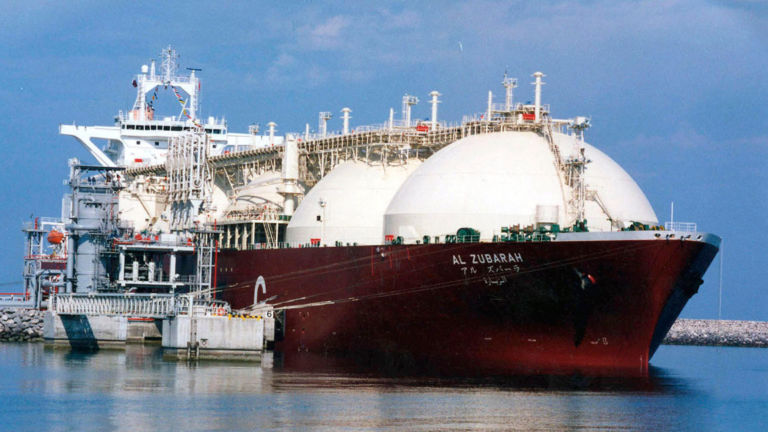
“This is a great victory for the environment and people’s health because the liquefaction plant is highly polluting and would spur new fracking to feed the LNG trains to Gibbstown, causing more pollution and health harms,” said Tracy Carluccio, deputy director of the environmental group Delaware Riverkeeper Network.
While the project appears to be on hold at both ends of the route, it has not been abandoned by New Fortress Energy, parent of the Bradford County group, and of Delaware River Partners, which heads construction of the Gibbstown terminal.
New Fortress told the Federal Energy Regulatory Commission that it plans to ship the liquefied gas to Gibbstown from the proposed Wyalusing plant, or from unspecified “third-party liquefaction facilities.”
The company did not respond to a request for comment on the settlement, or to identify which third-party facilities it meant.
Arguments against the Pennsylvania plant
If built, the Wyalusing plant would have been allowed to emit more than 1 million tons of greenhouse gases every year, and other pollutants under the current permit, according to the environmental groups — PennFuture, Clean Air Council, and the Sierra Club — that argued their case before the Environmental Hearing Board, a court in Pennsylvania.
The groups said the builder of the Wyalusing plant had not begun construction there, as required by law, so there was no justification for Pennsylvania environmental officials to extend the permit, as sought by the company. They also contended that the company would have used an “outdated and inappropriate” pollution-control technology if the permit extension had been granted.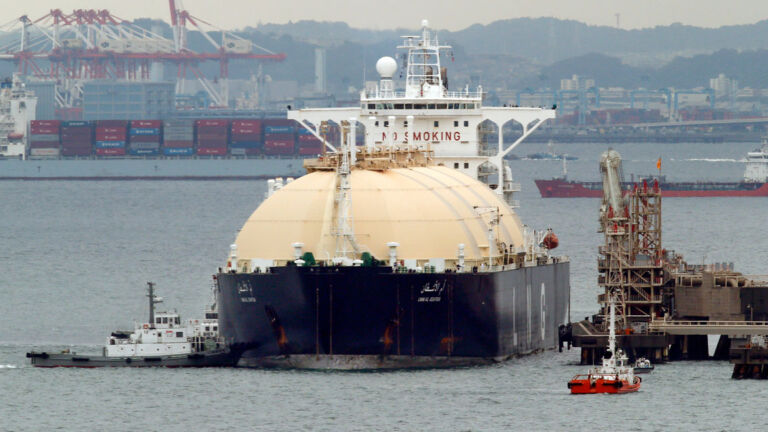
In return for the company’s agreement to allow the permit to expire, the environmental groups said they would end their appeal of an extension of the current air permit, issued by Pennsylvania’s Department of Environmental Protection.
The advocates welcomed the settlement as a step toward reducing greenhouse gases.
“Fracked gas poisons our communities and exacerbates the climate crisis by spreading pollution and degradation,” said Kelsey Krepps of the Sierra Club.
Gov. Murphy’s position
Although the U.S. price of natural gas futures has spiked to its highest in eight years because of concerns about energy supplies during Russia’s invasion of Ukraine, prices are several times higher in Europe.
In New Jersey, environmental officials recently approved a plan to build a rail yard at Gibbstown to take the long “unit” trains that would haul liquefied gas from Wyalusing. But Delaware River Partners still needs an air permit from the New Jersey Department of Environmental Protection, and an agreement with the state under the Toxic Catastrophe Prevention Act, before the highly explosive liquefied gas can be brought onto the Gibbstown site.
In December 2020, Gov. Phil Murphy voted as part of the Delaware River Basin Commission to approve construction of the Gibbstown dock but said later that month that he would do everything in his power as governor to stop liquefied gas being shipped through the port.