
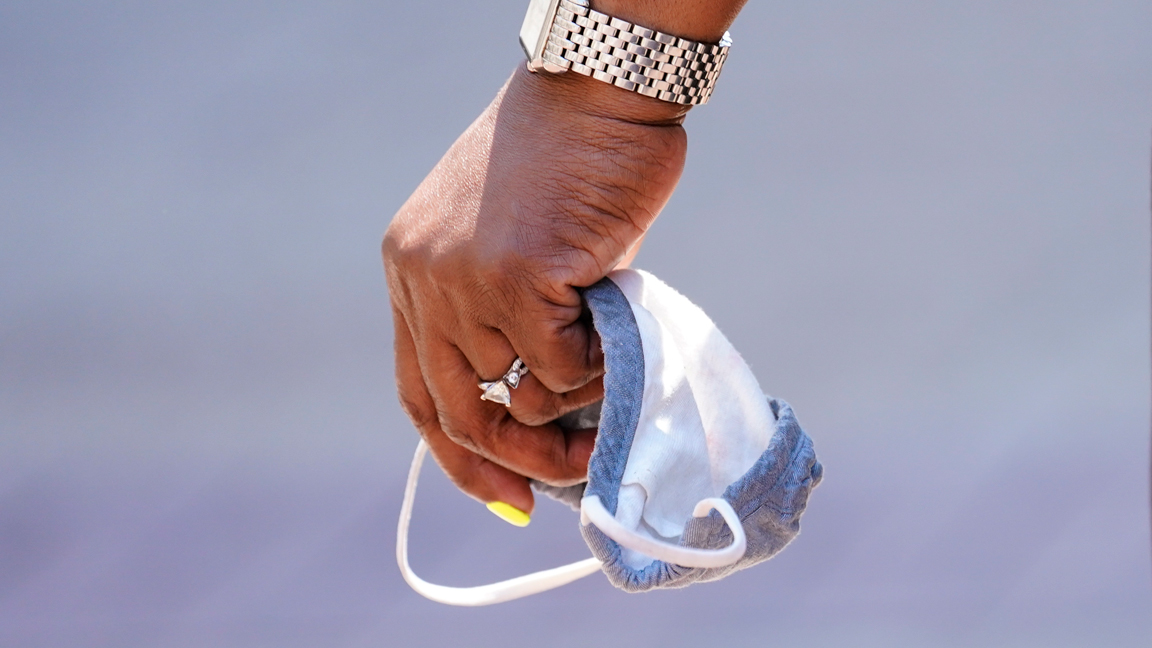
 Credit: (AP Photo/Matt Rourke, File)
Most New Jerseyans can now ditch face coverings anywhere in the Garden State, according to new federal guidance. But within just a few hours’ drive are communities where COVID-19 is still spreading at a rate that calls for indoor masking, according to those same guidelines.
The decision to wear a mask is now largely being left to individuals, with more state governments lifting public-health requirements in the wake of Friday’s recommendations from the Centers for Disease Control and Prevention. New Jersey’s mask mandate for schools and day care centers is still scheduled to expire on March 7, while New York state and Connecticut will end the requirement this week.
The CDC’s COVID-19 community-level data assigns each U.S. county one of three colors — orange, yellow or green — based on the level of viral spread and regional hospital capacity. Indoor masking is recommended for everyone in an orange, high-spread county. Those at high risk — like elderly or immunocompromised people — should consult a doctor about masking practices if they live or work in yellow, medium-spread areas. Face coverings are not necessary in the green, low-spread zones, the CDC notes, but vaccination and testing should remain available everywhere, regardless of the risk level.

However, the CDC’s definition of high risk is extremely broad. In addition to health factors like cancer and heart disease, the agency warns that individuals who are overweight or obese, depressed, pregnant or smokers, even in the past, face worse outcomes if they are infected with COVID-19. People with these conditions, or who live in close contact with others who are at high risk, are urged to talk to a health care professional about their need to wear masks indoors.
In New Jersey, all northern counties are green zones, except for Union County, which is yellow. South Jersey is entirely yellow, other than Ocean County, in green. New York City is green; Philadelphia is yellow. But 11 counties in upstate New York — including parts of the Finger Lakes region — are still orange hot zones, along with parts of Vermont and New Hampshire and most of Maine. Fourteen of Pennsylvania’s counties are still orange, as well as most of Virginia and almost all of West Virginia, according to the CDC.
‘COVID-19 is not gone. We must remain adaptable and vigilant in confronting this unpredictable virus.’
While many have welcomed the CDC recommendations as good news, some health care leaders are worried that — with COVID-19 immunization rates still lagging in some areas — the shift will harm immunocompromised individuals and children under age 5, who aren’t yet eligible for the vaccines. The American Medical Association’s Dr. Gerald Harmon said while the change underscores the vaccines’ power, he would continue to wear a mask in many public settings.
“Wearing a mask, physical distancing, and staying home if you’re sick are small, but important protective measures that can help us all stay safe,” Harmon said. “While the Omicron surge has declined, COVID-19 is not gone. We must remain adaptable and vigilant in confronting this unpredictable virus.”
Purpose of CDC data tool
According to the CDC, the new data tool is designed to help health officials plan their pandemic response and individuals to decide on their behavior. The agency encourages everyone to consider “the potential for strain on the local health system and COVID-19 cases in the community,” as well as their own personal risk for disease.
New Jerseyans can also review COVID-19 case rates, hospitalizations and trends over time — broken down by county — on the NJ Spotlight News data page, which is updated daily based on figures from the state. Cases and hospitalizations have declined significantly since the omicron peak nearly overwhelmed the health care system early this year, but the coronavirus continues to spread.
According to the case rate over the last seven days, the virus is growing fastest in Cumberland County, which reported 4.3 new cases per 1,000 residents, or a total of 648 new diagnoses and six deaths in a week. Middlesex County showed the second-highest spread, with a case-rate increase of 1.8 and nearly 1,500 additional diagnoses and 116 deaths in that period. Close behind were Union, with a new case rate of 1.7 and Hudson, with 1.6. Together, these counties reported some 2,000 new cases and more than a dozen deaths in seven days.
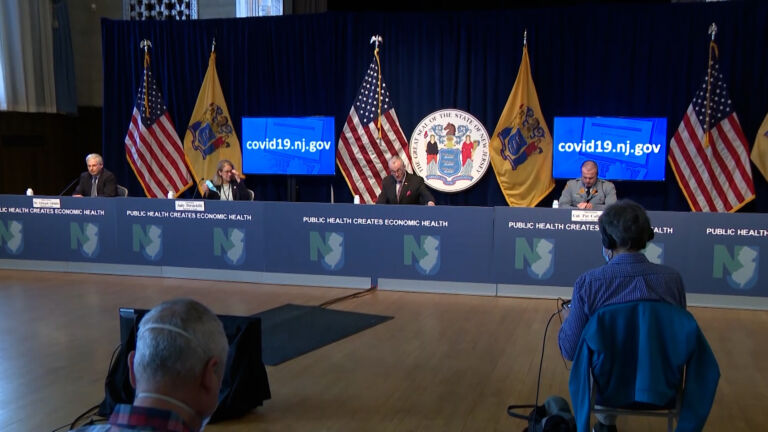
While nearly eight in 10 eligible New Jerseyans have been fully immunized against COVID-19, Cumberland County has the third-lowest vaccination rate in the state, with less than 56% of all residents vaccinated, the data shows. Under 55% of those living in Warren County have had their COVID-19 shots, and just over 53% of those in Ocean County, a figure that could be skewed by the abundance of children under age 5 in Lakewood, the county’s largest community and home to many Orthodox Jewish families.
The state data shows COVID-19 vaccination rates are high in Union and Middlesex counties, where more than 71% and 72% of residents are fully vaccinated, respectively, a factor that could help tamp down the viral spread. Bergen County’s immunization rate is nearly 75%, while in Morris County it’s above 75%, and Sussex County tops 76%.
