
 Credit: (AP Photo/Wayne Parry)
For the nation’s most densely populated state, it is almost remarkable that New Jersey still retains nearly 2 million acres of forested land. Whether those woodlands, most of which are in private hands, are well managed, however, has been a source of intense debate over the past two decades.
So far, the question has yet to be resolved. But a newly established task force will try to determine how the state can best manage its forests, an issue of critical importance in an era of accelerating climate change that threatens healthy and diverse forests.
“We have tried to develop a good forestry program for the last 20 years,’’ said Sen. Bob Smith, the chair of the Senate Environment and Energy Committee, who set up the task force by naming four co-chairs. “We’re not there yet. Our forests are at risk.’’
There are many good reasons to protect and enhance the state’s woodlands: They are critical to protecting drinking-water supplies, preserving critical habitat for wildlife and providing recreational opportunities for the public.
“But they are more than that — they are places to hike and celebrate nature, cultural heritage for indigenous communities and a big part of the solution to climate change,’’ said Anjuli Ramos-Busot, New Jersey chapter director of the Sierra Club and one of the co-chairs of the task force.
Capturing CO2
At a time when the climate crisis is worsening, forests also serve an urgent function by storing many tons of carbon from greenhouse-gas emissions in their trees and soil. In New Jersey, the state Department of Environmental Protection estimates woodlands, wetlands and agricultural acreage store 8.1 million metric tons of carbon dioxide equivalents.
Environmentalists object, say measure would mean more logging and more habitat loss
The DEP’s plan to achieve an 80% reduction in greenhouse-gas emissions below 2006 levels by 2050 includes a goal of achieving another 2 million to 3 million metric tons of carbon sequestration per year by actively managing, enhancing and protecting the state’s natural and working lands.
Enhancing carbon capacity
“The goal is not to lose the carbon already stored in forests, but to figure out how to store” millions more metric tons, Gilbert said. The proposed strategies include reforestation, avoiding conversion of natural lands, enhancing salt marsh and seagrass restoration, and improving sequestration on agricultural land.
Approximately 40% of New Jersey is covered by forests; 62% is owned privately and 38% is owned by the state.
For the most part, the threats to forests are well-recognized. They include forest fires, woodland pests like gypsy moths and encroaching development. Another potential threat — how much, if any, logging should be allowed on those lands — has divided the environmentalists in the past.
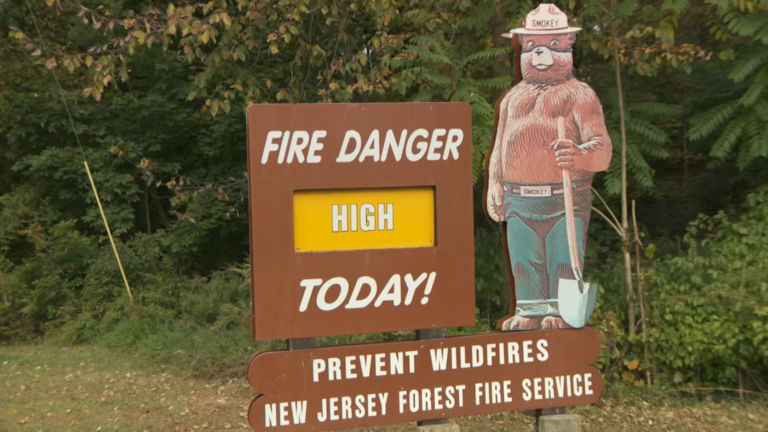
Climate change is creating warmer temperatures and deeper droughts, according to scientists. Those conditions likely increase the frequency and intensity of forest fires, particularly in South Jersey in the 1-million-acre Pinelands. Last year there were 900 wildfires in New Jersey, an amount described as shocking by DEP Commissioner Shawn LaTourette.
In naming the task force, Smith turned to an option used in the past to gather experts in the field to try and reach a consensus on difficult environmental issues. It worked when a task force reached agreement on widening beach access in the state but was unsuccessful in forging a compromise on fixing problems with natural-resources damage claims.
Smith said he hopes the task force can come to a consensus on how to move forward on forest management by the end of the year and propose reforms that could form the basis for future legislation.
