Credit: (NJDCA)
More than 1.3 million New Jerseyans live in so-called food deserts where regular access to healthy food is hindered by factors including the absence of supermarkets, poor public transit, low internet use, and high poverty rates, according to a new analysis by the state’s Economic Development Authority.
The agency issued the state’s first ranking of 50 communities that it says have the biggest challenges to food supply. It found the worst conditions in three sections of Camden, closely followed by Atlantic City, two sections of Newark, and Paterson. The least challenged in the table were Bound Brook, High Bridge and Montague in Sussex County.
The rankings in draft form for now — are based on 24 factors that also include obesity, walkability, ethnic makeup, and the percentage of households headed by a single mother. Another contributing factor is the presence of food “swamps” where a neighborhood has many options for fast food or convenience stores but little access to grocery stores or supermarkets that offer a range of healthy food including fruits and vegetables.
Map of draft list of NJ ‘food deserts’
The project, made public on Jan. 4, is a response to the state’s Food Desert Relief Act, which was signed into law as part of the Economic Recovery Act by Gov. Phil Murphy in January 2021. The food law provides up to $40 million a year over six years for tax breaks, loans, grants and technical assistance to stimulate the opening of physical or online food stores serving communities that currently lack them. The EDA plans public meetings this week to get response to the project.
Of the 1.32 million people that live in the identified areas, the vast majority are either receiving the Supplemental Nutrition Assistance Program (SNAP) — the federal plan that replaced food stamps — or are eligible for it, said Tara Colton, the EDA’s senior vice president for economic security, in an interview with NJ Spotlight News.
Impediments for some SNAP recipients
But some SNAP recipients are unable to exchange their coupons for food simply because they want to place orders online and their local supermarket or grocery store does not accept online orders.
The number of SNAP recipients in New Jersey rose to more than 887,000 in September last year, 15% higher than a year earlier, according to the Department of Human Services.
The shift in the way people shop for food has prompted the EDA to focus on improving the ability of residents in food deserts to shop online for food.
“We’re recognizing that bringing people to brick-and-mortar grocery stores may not be the primary way that we solve this issue,” Colton said. “Grocery retailers in New Jersey and nationally aren’t necessarily building new freestanding stores, more likely warehouses and fulfillment centers because so many people are getting their food differently than they were a couple of years ago.”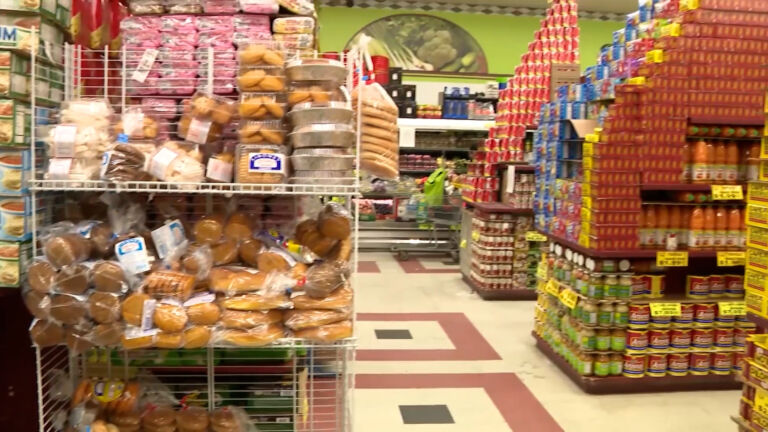
Colton said the analysis is the most comprehensive of any such project yet undertaken by state or federal governments.
It reflects a need to identify in greater detail the causes of hunger in New Jersey, and that work has been facilitated by the new funding.
“Pre-COVID, there was always a growing awareness of food deserts being described more as food insecurity, and as we realized we needed to cast a wider net and think about the issue more broadly, we would have got to something like this, but I don’t think we would have got to this level of detail,” she said.
No supermarket in Trenton
In Trenton, a poor city without a supermarket, residents must go to Ewing or Hamilton, each at least two miles away, to buy groceries from a retailer that is not a bodega or a convenience store, said Joyce Campbell, executive director of Trenton Area Soup Kitchen, which serves meals to about 1,500 people a day across 32 sites.
“For some residents, it could take over two hours to get to a grocery store on various buses,” she said. “How many groceries can you get if you are on a bus and you have to bring children? If people use local corner stores, what’s available can be limited. It impacts people’s health, it impacts their wallets, and for those who are living in poverty, not having easy access to food is always an issue for their health.”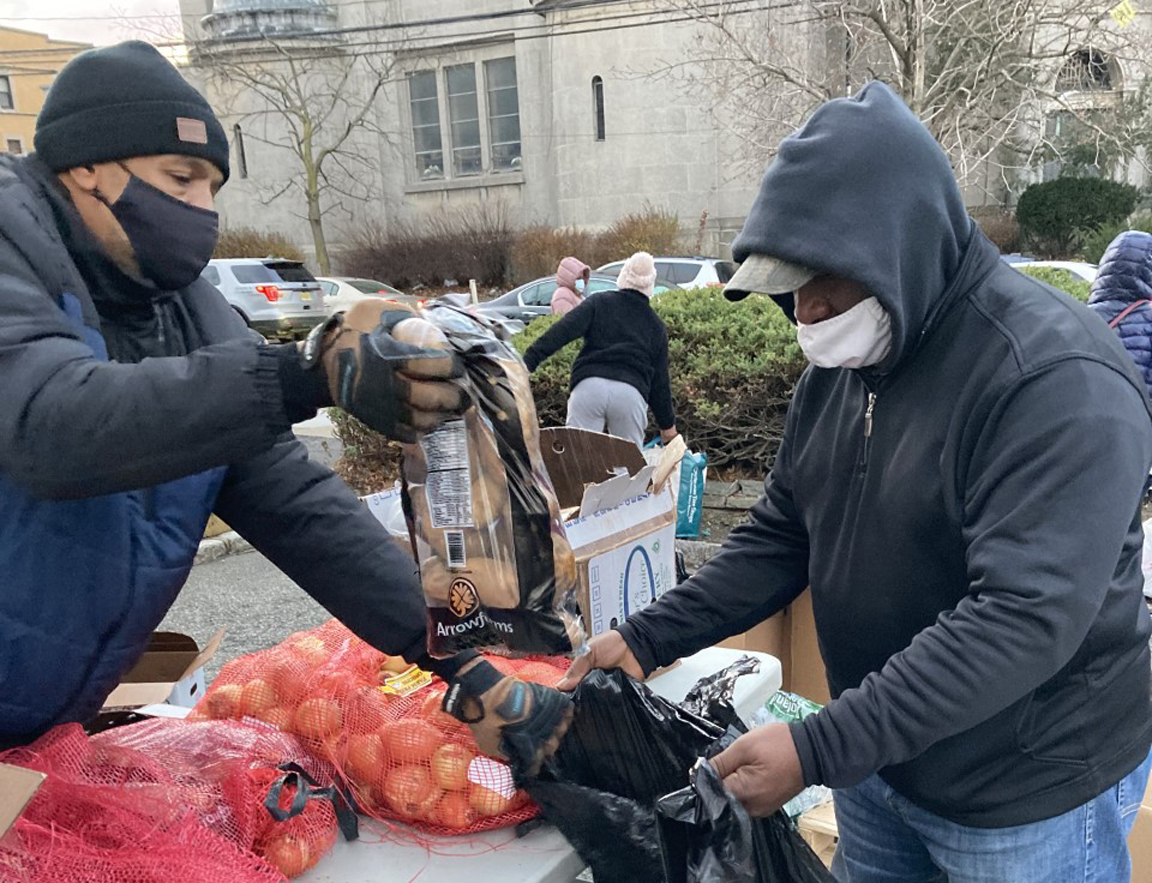
With a population of about 82,000, Trenton might be seen as a good market for food retailers but many are deterred by the possibility of theft in a city where some 28% of the population live at or below the federal poverty line, and so the city remains without its own supermarket, Campbell said.
Any new supermarket should be accompanied by other facilities such as social services to help build trust in the local community and increase the chances that the new food outlet is sustainable, she said.
“There should be a real community presence and other services for people,” Campbell said. “They don’t just need food.”
Continuing high demand at food banks
Food deserts like Trenton may help to explain the current high demand for food assistance seen by food banks like the Community FoodBank of New Jersey, the state’s biggest, said its president, Carlos Rodriguez. While the COVID-19 pandemic has driven a demand increase of at least 30% for the bank and others, the difficulty of living in a food desert may also have contributed, he said.
At least 35 of the identified food deserts are in areas where the Community FoodBank already operates, and the organization is going to look at whether the EDA’s program will provide relief, Rodriguez said.
“Folks who live in food deserts have economic challenges to begin with and then have to travel just to get food,” he said. “It may cost them more because of distance or limited availability. It may result in disproportionate pantry use. We don’t know that yet but we suspect that’s the truth. We hope to see less need as the desert environment gets addressed.”
Fred Wasiak, president of the Food Bank of South Jersey, said food deserts in his four-county region contribute to food insecurity — in which people are unsure whether they have sustained access to healthy food.
Urban and rural
“We see food deserts in urban and rural settings throughout the region and they directly impact food insecurity where one in seven adults are food insecure and one in five children face food insecurity every day in South Jersey,” he said.
The report is based in part on feedback from communities gathered in a Request for Information issued in March last year by the EDA and its partners in the Department of Community Affairs, the Department of Agriculture, and the Department of Human Services. More public comment will be sought in “listening sessions” on Jan. 12 and 13.
The new feedback will be used to finalize a draft which will be put before the EDA’s board in February. The EDA aims to codify the program by March, at which point it would be implemented.
“When it’s implemented, it’s going to determine which parts of the state are eligible for very substantial amounts of money,” Colton said.