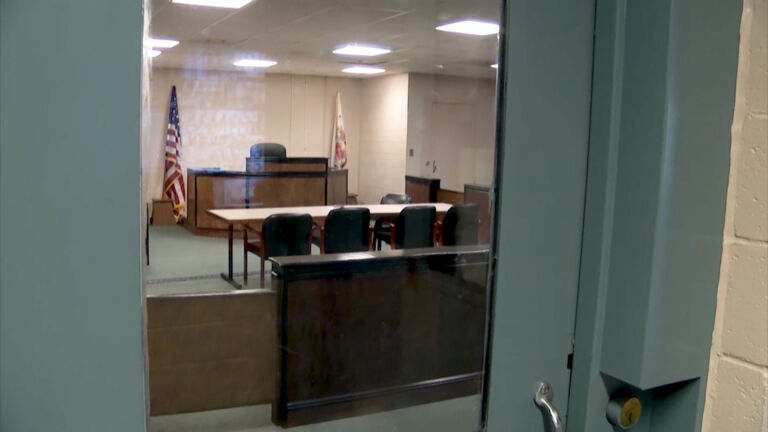
Credit: (AP Photo/Brennan Linsley, File)
All criminal jury trials should be held in person, while some other court actions will continue virtually in a post-COVID-19 world, the New Jersey Supreme Court said Thursday.
In its order, the court gave judges the ultimate discretion in the conduct of other matters. But it said business such as juvenile delinquency matters, sentencing hearings, significant municipal trials and hearings involving guardianships or the termination of parental rights should occur in courtrooms as well, unless all parties agree to virtual hearings.
The order also notes that courts have been able to conduct significant business remotely since the onset of the COVID-19 pandemic in the state in mid-March 2020 and it makes sense to continue to conduct a wide array of matters virtually. These include routine motion arguments, first appearances for those in custody, landlord-tenant proceedings and uncontested divorces.
Signed by Chief Justice Stuart Rabner, the order “contemplates a transition from almost all in-person court proceedings before the pandemic to a future that uses technology to provide expanded options for access, participation, timeliness, and justice.”

“Attorneys, parties, and judges have praised the reduced time and cost associated with virtual proceedings for brief and straightforward matters,” the order states. “They also noted there are fewer scheduling conflicts and requests for continuances.”
On the other hand, input from judges, attorneys and the public also “highlighted the value of bringing parties together in person at certain critical junctures, including settlement conferences and proceedings that involve especially serious penalties or consequences.”
Some in-person trials resumed in June
After shutting their doors early in the pandemic, the courts conducted most business remotely for about a year, with in-person criminal jury trials and some in-person civil jury trials resuming in mid-June of this year. Because the state essentially ended cash bail several years ago, criminal jury trials for defendants who were being held in custody were given top priority with the courts’ reopening.
Under the order, settlement conferences and oral arguments before the Supreme Court and the Appellate Division, also should generally take place in person, as should evidentiary hearings, criminal bench trials, trials on final restraining orders and protective orders and Megan’s Law hearings regarding sexual offenders.
The order allows for flexibility. Even when a matter is being heard in a courthouse, a judge may allow participants to appear virtually. Similarly, for virtual matters, judges may allow individuals to appear in person.
“It is important to balance consistency and predictability in court operations with the need to exercise discretion based on the facts and circumstances of individual cases,” Rabner wrote.
The order notes that the guidelines for in-person and remote proceedings are subject to change.